
细菌产物引发α-突触核蛋白病变:一项体外研究
Bacterial products initiation of alpha-synuclein pathology: an in vitro study.
作者信息
Ioghen Octavian Costin, Gaina Gisela, Lambrescu Ioana, Manole Emilia, Pop Sevinci, Niculescu Teodora Maria, Mosoia Oana, Ceafalan Laura Cristina, Popescu Bogdan Ovidiu
机构信息
"Victor Babeș" National Institute of Pathology, 050096, Bucharest, Romania.
"Carol Davila" University of Medicine and Pharmacy, 050474, Bucharest, Romania.
出版信息
Sci Rep. 2024 Dec 5;14(1):30306. doi: 10.1038/s41598-024-81020-x.
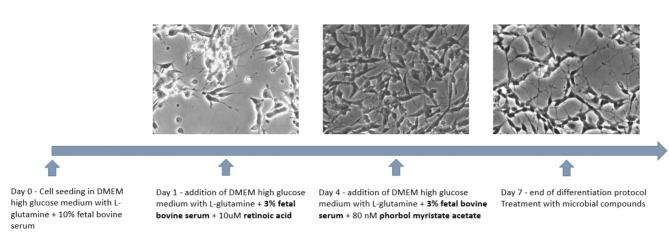
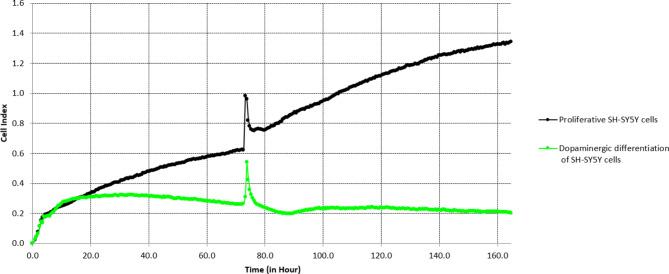
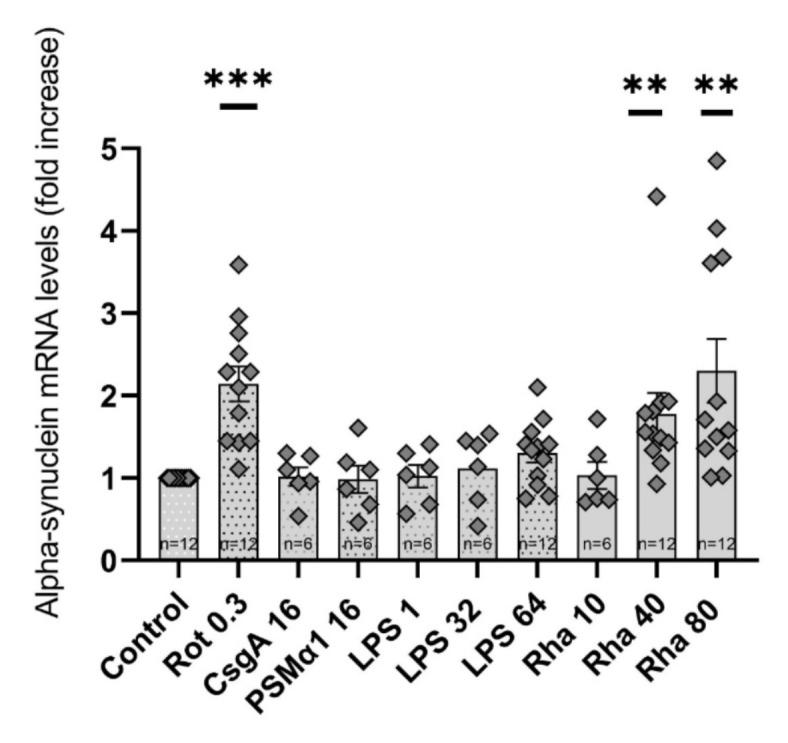
Parkinson's Disease (PD) is a prevalent and escalating neurodegenerative disorder with significant societal implications. Despite being considered a proteinopathy, in which the aggregation of α-synuclein is the main pathological change, the intricacies of PD initiation remain elusive. Recent evidence suggests a potential link between gut microbiota and PD initiation, emphasizing the need to explore the effects of microbiota-derived molecules on neuronal cells. In this study, we exposed dopaminergic-differentiated SH-SY5Y cells to microbial molecules such as lipopolysaccharide (LPS), rhamnolipid, curli CsgA and phenol soluble modulin α-1 (PSMα1). We assessed cellular viability, cytotoxicity, growth curves and α-synuclein levels by performing MTS, LDH, real-time impedance readings, qRT-PCR and Western Blot assays respectively. Statistical analysis revealed that rhamnolipid exhibited concentration-dependent effects, reducing viability and inducing cytotoxicity at higher concentrations, increasing α-synuclein mRNA and protein levels with negative effects on cell morphology and adhesion. Furthermore, LPS exposure also increased α-synuclein levels. Curli CsgA and PSMα-1 showed minimal or no changes. Our findings suggest that microbiota-derived molecules, particularly rhamnolipid and LPS, impact dopaminergic neurons by increasing α-synuclein levels. This study highlights the potential involvement of gut microbiota in initiating the upregulation of α-synuclein that may further initiate PD, indicating the complex interplay between microbiota and neuronal cells.
帕金森病(PD)是一种普遍且日益严重的神经退行性疾病,具有重大的社会影响。尽管它被认为是一种蛋白病,其中α-突触核蛋白的聚集是主要的病理变化,但PD发病的复杂性仍不清楚。最近的证据表明肠道微生物群与PD发病之间可能存在联系,强调了探索微生物衍生分子对神经元细胞影响的必要性。在这项研究中,我们将多巴胺能分化的SH-SY5Y细胞暴露于微生物分子,如脂多糖(LPS)、鼠李糖脂、卷曲菌毛蛋白CsgA和酚溶性调节素α-1(PSMα1)。我们分别通过进行MTS、LDH、实时阻抗读数、qRT-PCR和蛋白质免疫印迹分析来评估细胞活力、细胞毒性、生长曲线和α-突触核蛋白水平。统计分析显示,鼠李糖脂表现出浓度依赖性效应,在较高浓度下降低细胞活力并诱导细胞毒性,增加α-突触核蛋白mRNA和蛋白质水平,对细胞形态和黏附产生负面影响。此外,暴露于LPS也增加了α-突触核蛋白水平。卷曲菌毛蛋白CsgA和PSMα-1显示出最小变化或无变化。我们的研究结果表明,微生物衍生分子,特别是鼠李糖脂和LPS,通过增加α-突触核蛋白水平影响多巴胺能神经元。这项研究突出了肠道微生物群在启动可能进一步引发PD的α-突触核蛋白上调中的潜在作用,表明微生物群与神经元细胞之间存在复杂的相互作用。



 Zotero 插件