
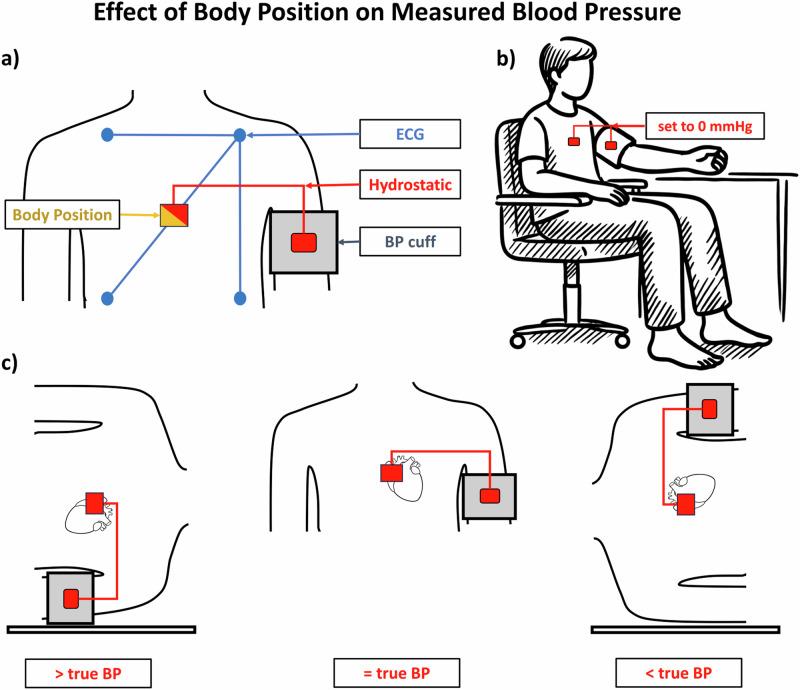
血压测量和夜间血压下降模式会受到身体姿势的严重影响,这是由于手臂与心脏之间的流体静压发生了变化。
Blood pressure measurement and nocturnal dipping patterns are heavily affected by body posture through changes in hydrostatic pressure between the arm and the heart.
作者信息
Pilz Niklas, Narkiewicz Krzysztof, Wolf Jacek, Kario Kazuomi, Visser Tinta, Opatz Oliver S, Reuter Alma, Dippel Laura J, Fesseler Leon, Heinz Viktor, Patzak Andreas, Bothe Tomas L
机构信息
Charité-Universitätsmedizin Berlin, Institute of Physiology, Center for Space Medicine and Extreme Environments Berlin, Berlin, Germany.
Department of Cardiology and Angiology, Hannover Medical School, Hannover, Germany.
出版信息
Hypertens Res. 2025 Mar;48(3):1144-1154. doi: 10.1038/s41440-024-02056-0. Epub 2024 Dec 6.
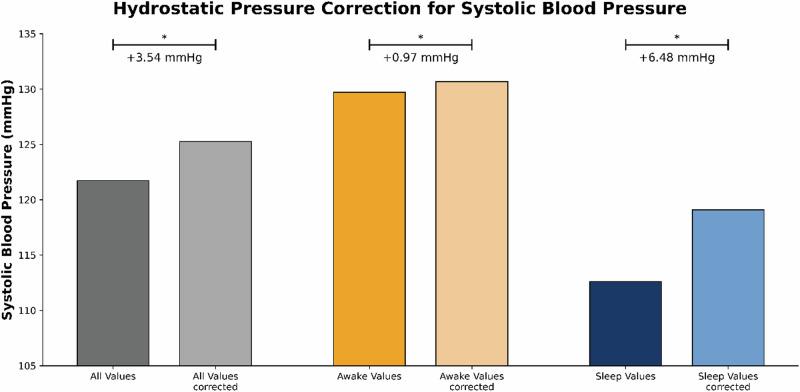
Nocturnal blood pressure (BP) shows the highest predictive power for cardiovascular events. However, there is a poor reproducibility of personalized dipping patterns in single individuals. We hypothesize that changes in body position during sleep cause variations in hydrostatic pressure,leading to incorrect BP values and dipping classifications. 26 subjects aged 18-30 years, as well as 25 participants aged 50 years and older underwent ambulatory BP measurements on the left arm, as well as determination of the hydrostatic pressure difference between the cuff and heart level during BP measurement. We observed that the BP measurement cuff was above the heart level (negative hydrostatic pressure) mostly through the night. Laying on the right side revealed the largest hydrostatic pressure difference and maximum incorrect BP measurement, with a mean of -9.61 mmHg during sleep. Correcting for hydrostatic pressure led to reclassification of nocturnal hypertension in 14 subjects (27.5%). Dipping patterns changed in 19 participants (37.3%). In total, 25 subjects (49.0%) changed either their nocturnal hypertension and/or their dipping classification. Our findings underscore the importance of accounting for hydrostatic pressure in ambulatory BP monitoring. Changes in body posture during sleep provide a plausible reason for the variability seen in nocturnal dipping patterns. Further research should focus on incorporating hydrostatic pressure compensation mechanisms in 24-h BP measurement. Limiting the noticeable effect of hydrostatic pressure differences could greatly improve hypertension diagnosis, classification, and treatment monitoring.
夜间血压对心血管事件具有最高的预测能力。然而,个体的个性化血压波动模式的可重复性较差。我们推测睡眠期间身体姿势的变化会导致静水压的变化,从而导致血压值和血压波动分类出现错误。26名年龄在18至30岁之间的受试者以及25名50岁及以上的参与者进行了左臂动态血压测量,并在血压测量期间测定了袖带与心脏水平之间的静水压差。我们观察到,大部分夜间血压测量袖带高于心脏水平(静水压为负)。右侧卧位时静水压差最大,血压测量错误最多,睡眠期间平均为-9.61 mmHg。校正静水压后,14名受试者(27.5%)的夜间高血压分类发生了改变。19名参与者(37.3%)的血压波动模式发生了变化。总共有25名受试者(49.0%)改变了他们的夜间高血压和/或血压波动分类。我们的研究结果强调了在动态血压监测中考虑静水压的重要性。睡眠期间身体姿势的变化为夜间血压波动模式的变异性提供了一个合理的原因。进一步的研究应集中在将静水压补偿机制纳入24小时血压测量中。限制静水压差的显著影响可以大大改善高血压的诊断、分类和治疗监测。




 Zotero 插件