
MAM介导的线粒体自噬与内质网应激:缺血性中风的隐藏调节因子
MAM-mediated mitophagy and endoplasmic reticulum stress: the hidden regulators of ischemic stroke.
作者信息
Jia Ziyi, Li Hongtao, Xu Ke, Li Ruobing, Yang Siyu, Chen Long, Zhang Qianwen, Li Shulin, Sun Xiaowei
机构信息
The First Clinical Medical College, Heilongjiang University of Chinese Medicine, Harbin, China.
The First Affiliated Hospital, Heilongjiang University of Chinese Medicine, Harbin, China.
出版信息
Front Cell Neurosci. 2024 Nov 21;18:1470144. doi: 10.3389/fncel.2024.1470144. eCollection 2024.
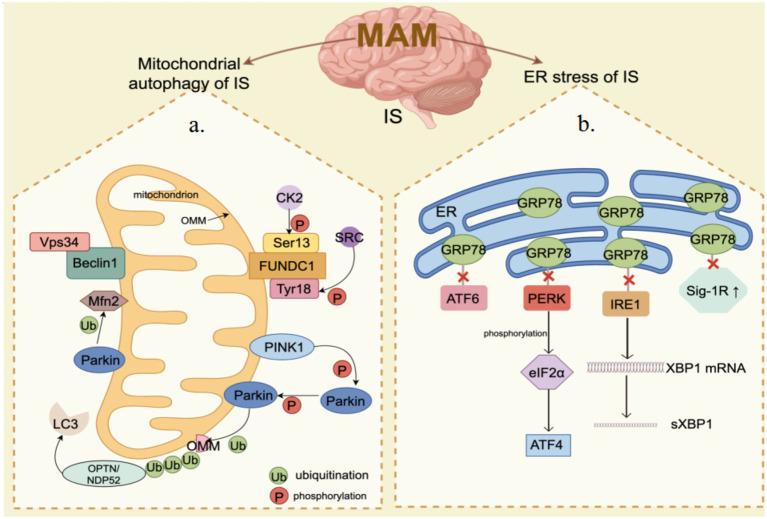
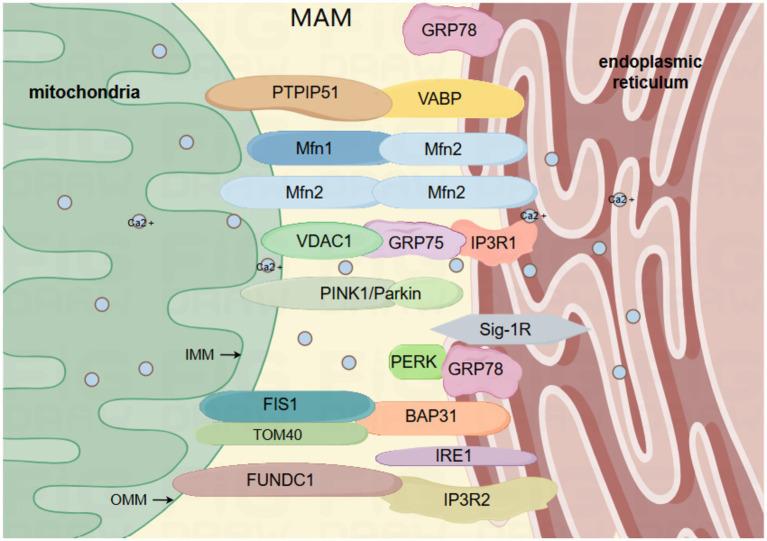
Ischemic stroke (IS) is the predominant subtype of stroke and a leading contributor to global mortality. The mitochondrial-associated endoplasmic reticulum membrane (MAM) is a specialized region that facilitates communication between the endoplasmic reticulum and mitochondria, and has been extensively investigated in the context of neurodegenerative diseases. Nevertheless, its precise involvement in IS remains elusive. This literature review elucidates the intricate involvement of MAM in mitophagy and endoplasmic reticulum stress during IS. PINK1, FUNDC1, Beclin1, and Mfn2 are highly concentrated in the MAM and play a crucial role in regulating mitochondrial autophagy. GRP78, IRE1, PERK, and Sig-1R participate in the unfolded protein response (UPR) within the MAM, regulating endoplasmic reticulum stress during IS. Hence, the diverse molecules on MAM operate independently and interact with each other, collectively contributing to the pathogenesis of IS as the covert orchestrator.
缺血性中风(IS)是中风的主要亚型,也是全球死亡率的主要促成因素。线粒体相关内质网膜(MAM)是促进内质网与线粒体之间通讯的特殊区域,并且已经在神经退行性疾病的背景下进行了广泛研究。然而,其在IS中的具体作用仍不清楚。这篇文献综述阐明了MAM在IS期间的线粒体自噬和内质网应激中的复杂作用。PINK1、FUNDC1、Beclin1和Mfn2高度集中在MAM中,并在调节线粒体自噬中起关键作用。GRP78、IRE1、PERK和Sig-1R参与MAM内的未折叠蛋白反应(UPR),在IS期间调节内质网应激。因此,MAM上的各种分子独立运作并相互作用,作为隐蔽的协调者共同促成IS的发病机制。
 Zotero 插件