
提高疟疾项目资金的透明度:肯尼亚连接诊断的商业案例。
Improving transparency in malaria programme funds: A business case for connected diagnostics in Kenya.
作者信息
Dieteren Charlotte M, Milimo Emmanuel, Siteyi Angela, van Duijn Shannen, Stijvers Leon, Dayo Lilyana, Ganda Gregory, de Wit Tobias F Rinke
机构信息
PharmAccess Foundation, Amsterdam, the Netherlands.
Amsterdam Institute for Global Health and Development (AIGHD), Amsterdam, the Netherlands.
出版信息
J Public Health Afr. 2024 Nov 29;15(1):653. doi: 10.4102/jphia.v15i1.653. eCollection 2024.
BACKGROUND
International vertical health financing programmes risk functioning in parallel with existing domestic funding in low- and middle-income countries (LMICs), leading to inefficient service delivery and concomitant poor health outcomes.
AIM
We assessed the opportunities offered by digitalised diagnostics (ConnDx) to target and monitor health funds to those in need objectively and transparently.
SETTING
ConnDx was rolled out in five private health facilities in Kisumu, Kenya.
METHODS
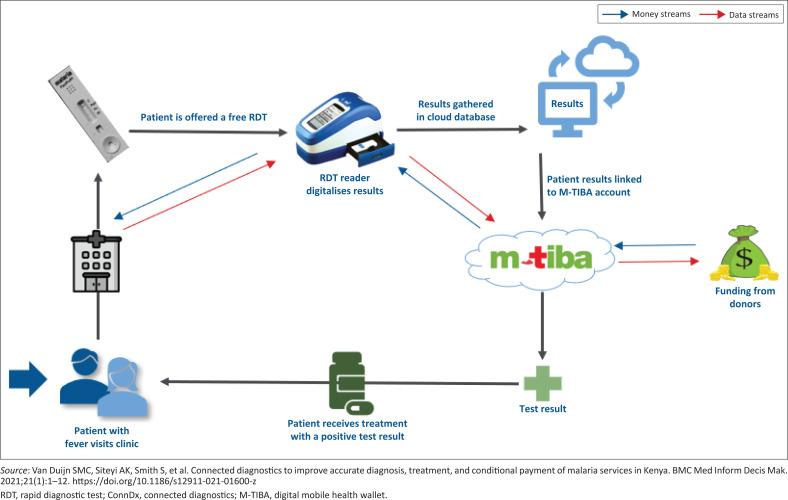
The ConnDx process was codeveloped with the local Department of Health of Kisumu. We used the quantitative data generated by ConnDx. We also calculated the costs for ConnDx and standard care to assess potential cost reductions.
RESULTS
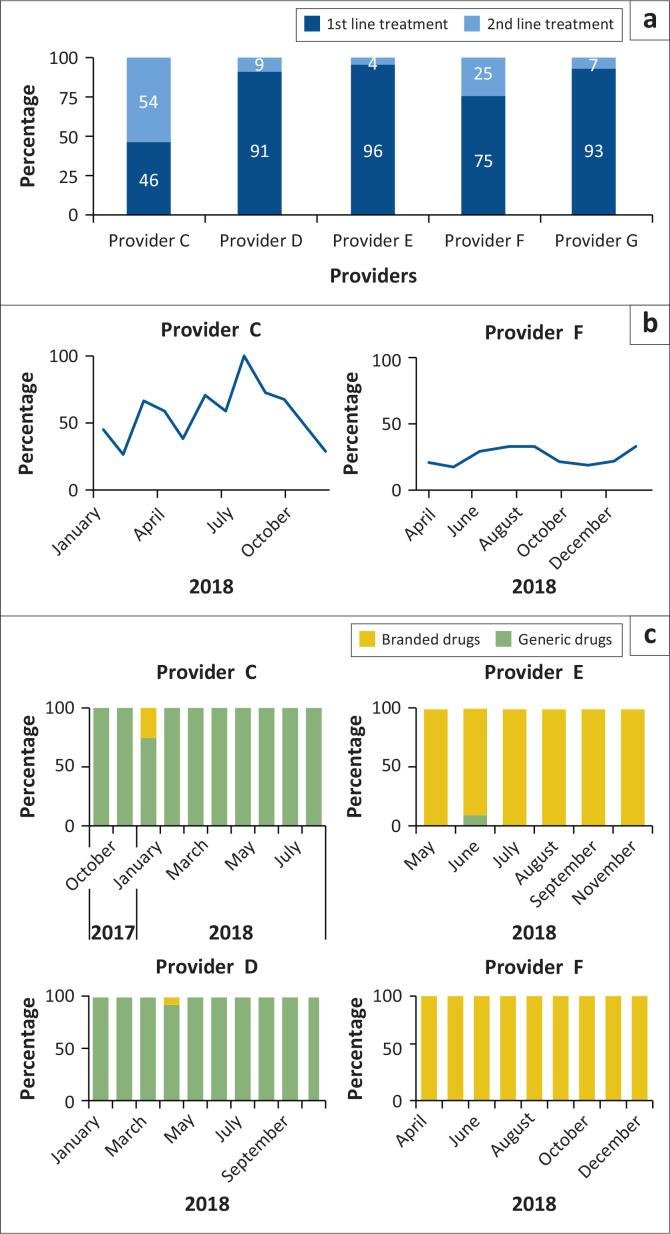
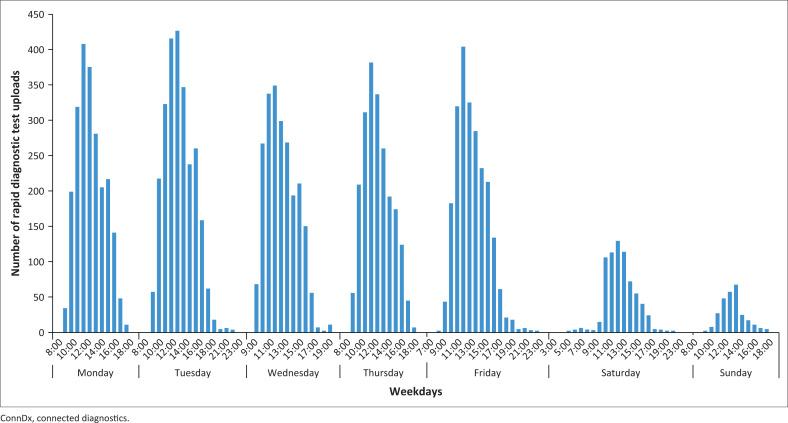
In total, 2199 malaria cases were detected among 11 689 patients with fever. ConnDx allowed for the identification of malaria hotspots, semi-real-time assessment of patient health seeking behaviour across facilities and insights in doctor's prescription behaviours. Based on these insights, we estimated a 25% reduction in costs can be realised, while simultaneously better quality indicators can be monitored.
CONCLUSION
The concept of ConnDx can be used for any medical condition that can be diagnosed in a digital manner and linked to mobile payment systems. The generated data can contribute to better quality services for individual patients while at the same time support local health policy makers and managers for more targeted interventions.
CONTRIBUTION
The ConnDx approach can help decision makers in LMICs to channel disease-specific funds to the right patients for the right disease at the right time, which can potentially accelerate the way to universal health coverage.
背景
在低收入和中等收入国家(LMICs),国际垂直卫生融资计划有可能与现有的国内资金并行运作,导致服务提供效率低下,进而产生不良的健康结果。
目的
我们评估了数字化诊断(ConnDx)所提供的机会,以便客观、透明地将卫生资金定向用于有需要的人群并对其进行监测。
背景情况
ConnDx在肯尼亚基苏木的五家私立卫生机构中推行。
方法
ConnDx流程是与基苏木当地卫生部共同开发的。我们使用了ConnDx生成的定量数据。我们还计算了ConnDx和标准护理的成本,以评估潜在的成本降低情况。
结果
在11689名发热患者中,共检测出2199例疟疾病例。ConnDx有助于识别疟疾热点地区,对各机构患者的就医行为进行半实时评估,并深入了解医生的处方行为。基于这些见解,我们估计可以实现25%的成本降低,同时可以监测更好的质量指标。
结论
ConnDx的概念可用于任何能够以数字方式诊断并与移动支付系统相连接的医疗状况。所生成的数据可为个体患者提供更高质量的服务,同时支持当地卫生政策制定者和管理者进行更具针对性的干预。
贡献
ConnDx方法可以帮助低收入和中等收入国家的决策者在正确的时间将特定疾病的资金用于患有正确疾病的正确患者,这有可能加快实现全民健康覆盖的进程。


 Zotero 插件