
源自用于可食用紫苏叶上福美双农药鉴定的 l-半胱氨酸修饰碳点
l-Cysteine-Modified Carbon Dots Derived from for Thiram Pesticides Identification on Edible Perilla Leaves.
作者信息
Bhattacharya Tanima, Joshi Rahul, Tufa Lemma Teshome, Goddati Mahendra, Lee Jaebeom, Tewari Ameeta, Cho Byoung-Kwan
机构信息
Department of Biosystems Machinery Engineering, Chungnam National University, 99 Daehak-ro, Yuseong-gu, Daejeon 34134, Republic of Korea.
Faculty of Applied Science, Lincoln University College, Wisma Lincoln, No.12-18, SS 6/12, Petaling Jaya, Selangor 47301, Malaysia.
出版信息
ACS Omega. 2024 Nov 21;9(48):47647-47660. doi: 10.1021/acsomega.4c07090. eCollection 2024 Dec 3.
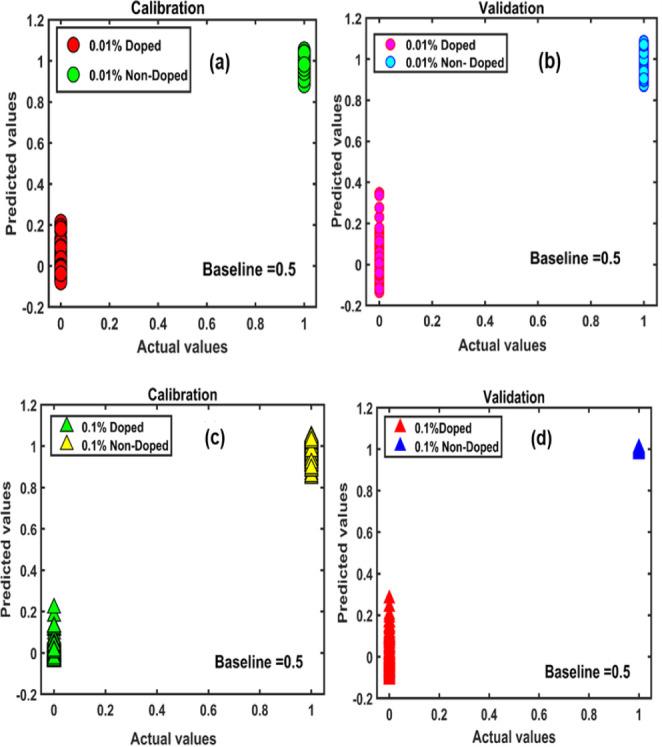
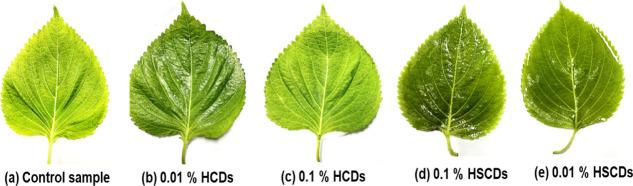
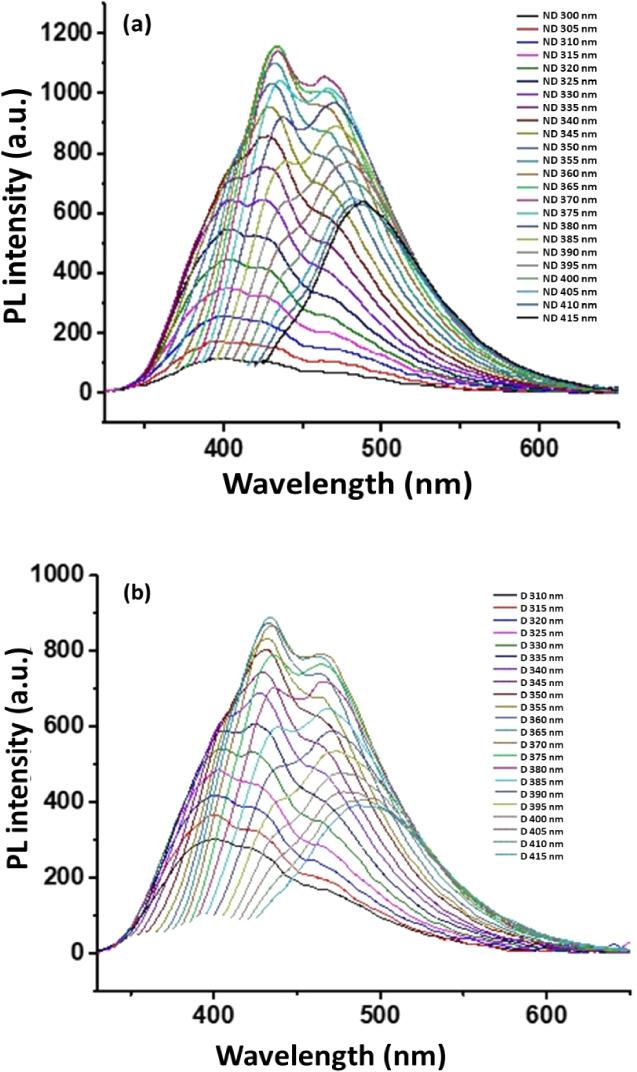
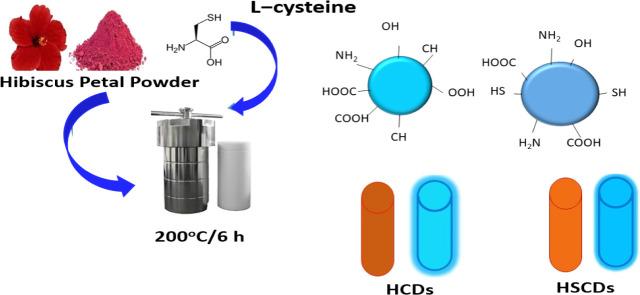
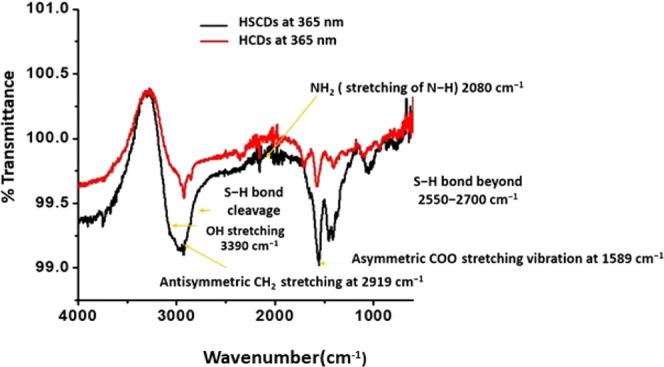
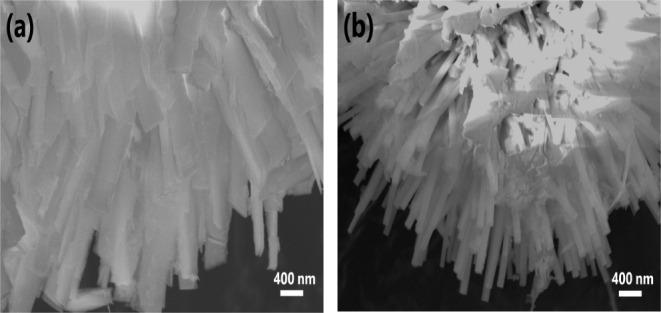
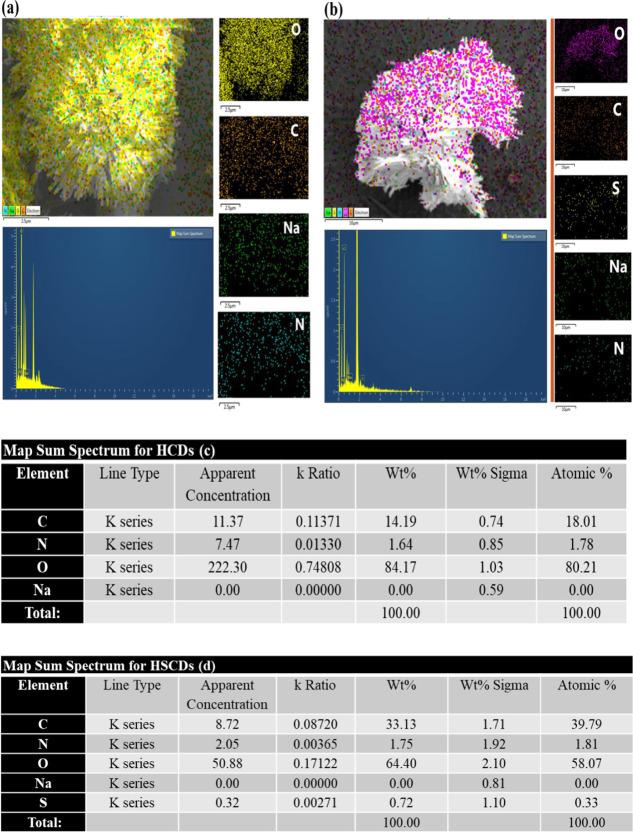
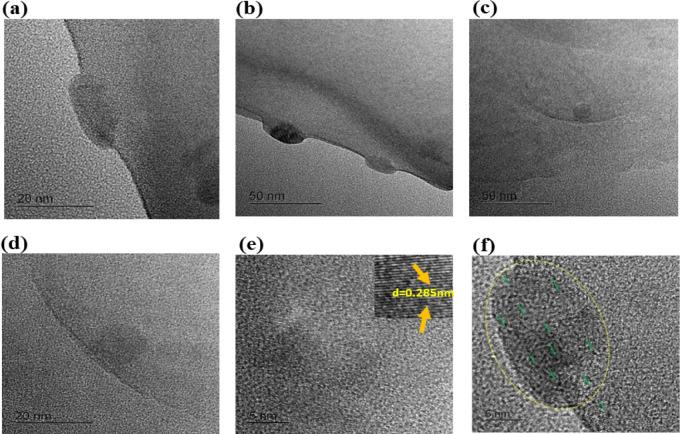
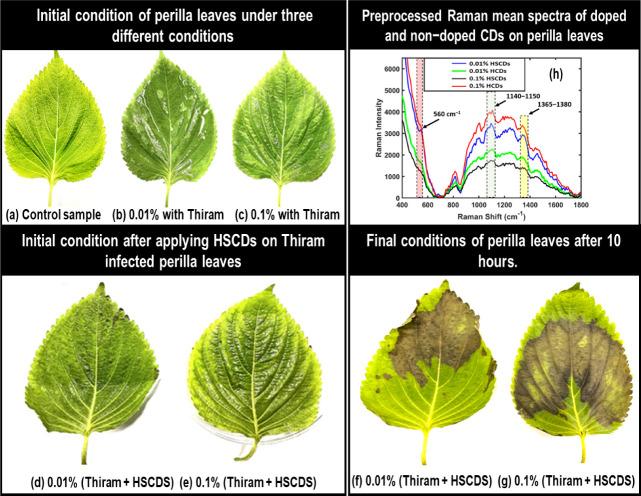
In this work, environmentally friendly fluorescent carbon dots (C-dots) were developed for the purpose of thiram identification in the leaves of perilla plants. Powdered plant petals from were hydrothermally combined to create C-dots. Analytical techniques, such as scanning electron microscopy, energy dispersive X-ray spectroscopy, high resolution transmission electron microscopy, Raman spectroscopy, ultraviolet spectroscopy, Fourier transmission infrared spectroscopy, and photoluminescence were employed to examine the properties of C-dots. To enhance their functionality, an l-cysteine dopant was added to the C-dots. Since this process produces highly soluble C-dots in water, it is simple, inexpensive, and safe. The excitation process and the size of the blue luminescent C-dots both affect their photoluminescent activity. Furthermore, thiram in aqueous solutions was effectively identified by using the generated C-dots. Additionally, the ImageJ program was used to measure the colors red, green, and blue. High-resolution TEM (HR-TEM) revealed that the l-cysteine-doped carbon dots had an average particle size of 2.208 nm. Additionally, the lattice fringes observed in the HRTEM image showed a -spacing of around 0.285 nm, which nearly corresponds to the (100) lattice plane of graphitic carbon. A Raman spectrum study was also performed to investigate the relationship between carbon dots and pesticides in the actual samples. In the end, thiram levels in perilla leaves with nondoped and doped C-dots could be distinguished with 100% accuracy using the constructed partial least-squares discriminant analysis machine learning model. The information gathered therefore demonstrated that the synthetic C-dots successfully and efficiently provide rapid and sensitive detection of hazardous pesticides in edible plant products.
在这项工作中,为了鉴定紫苏叶片中的福美双,制备了环境友好型荧光碳点(C点)。将植物花瓣粉末进行水热合成以制备C点。采用扫描电子显微镜、能量色散X射线光谱、高分辨率透射电子显微镜、拉曼光谱、紫外光谱、傅里叶变换红外光谱和光致发光等分析技术来研究C点的性质。为了增强其功能,向C点中添加了l-半胱氨酸掺杂剂。由于该过程能产生在水中高度可溶的C点,所以简单、廉价且安全。蓝色发光C点的激发过程和尺寸都会影响其光致发光活性。此外,利用生成的C点可有效鉴定水溶液中的福美双。另外,使用ImageJ程序测量红色、绿色和蓝色。高分辨率透射电子显微镜(HR-TEM)显示,l-半胱氨酸掺杂的碳点平均粒径为2.208 nm。此外,在HRTEM图像中观察到的晶格条纹显示出约0.285 nm的晶面间距,这几乎对应于石墨碳的(100)晶格平面。还进行了拉曼光谱研究,以探讨实际样品中碳点与农药之间的关系。最后,使用构建的偏最小二乘判别分析机器学习模型,能够100%准确地区分未掺杂和掺杂C点的紫苏叶中的福美双含量。因此,所收集的信息表明,合成的C点成功且高效地实现了对可食用植物产品中有害农药的快速灵敏检测。





 Zotero 插件