
一名接受达沙替尼治疗B细胞急性淋巴细胞白血病的儿童出现对二氮嗪有反应的低血糖症。
Diazoxide-Responsive Hypoglycemia in a Child Receiving Dasatinib for Treatment of B-Cell Acute Lymphoblastic Leukemia.
作者信息
Berra Madalin, Biro Juliana, Kashmiri Himala, Daniels Mark
机构信息
Division of Pediatric Endocrinology, University of California Irvine: Children's Hospital of Orange County, Orange, CA 92868, USA.
出版信息
JCEM Case Rep. 2024 Dec 4;2(12):luae219. doi: 10.1210/jcemcr/luae219. eCollection 2024 Dec.
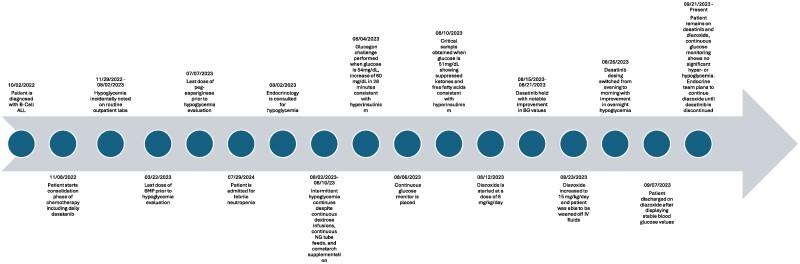
Tyrosine kinase inhibitors (TKIs) are being used more regularly in treatment regimens for pediatric cancers. They have distinct side effect profiles, including endocrinopathies. Here we present a 2-year-old boy with Philadelphia chromosome-like (Ph-like) B-cell acute lymphoblastic leukemia (ALL) who developed refractory hypoglycemia after using dasatinib. His evaluation was suggestive of hyperinsulinism, and his symptoms were ultimately controlled with diazoxide. There have not been any published data exploring the relationship between TKIs and glycemic profiles in pediatric patients. In adults, there is research indicating that patients using TKIs could experience both hyperglycemia and hypoglycemia. The pathophysiology of these side effects is not well described, nor are the risk factors for development. More research is needed to understand these relationships in general, but particularly in the pediatric population.
酪氨酸激酶抑制剂(TKIs)在儿童癌症治疗方案中的使用越来越频繁。它们有独特的副作用,包括内分泌病。在此,我们报告一名2岁患有费城染色体样(Ph样)B细胞急性淋巴细胞白血病(ALL)的男孩,他在使用达沙替尼后出现难治性低血糖。对他的评估提示为高胰岛素血症,其症状最终通过二氮嗪得到控制。目前尚无已发表的数据探讨TKIs与儿科患者血糖状况之间的关系。在成人中,有研究表明使用TKIs的患者可能会出现高血糖和低血糖。这些副作用的病理生理学尚未得到充分描述,其发生的危险因素也不清楚。总体而言,需要更多研究来了解这些关系,尤其是在儿科人群中。
 Zotero 插件