
金属氢氧化物上单原子钛位点的电子调控用于促进光催化CO还原
Electronic regulation of single-atomic Ti sites on metal hydroxide for boosting photocatalytic CO reduction.
作者信息
Huang Ning-Yu, Li Bai, Wu Duojie, Chen Di, Zheng Yu-Tao, Shao Bing, Wang Wenjuan, Gu Meng, Li Lei, Xu Qiang
机构信息
Shenzhen Key Laboratory of Micro/Nano-Porous Functional Materials (SKLPM), SUSTech-Kyoto University Advanced Energy Materials Joint Innovation Laboratory (SKAEM-JIL), Department of Chemistry, Department of Materials Science and Engineering, Southern University of Science and Technology Shenzhen 518055 China
Shenzhen Key Laboratory of Micro/Nano-Porous Functional Materials (SKLPM), Department of Materials Science and Engineering, Southern University of Science and Technology Shenzhen 518055 China
出版信息
Chem Sci. 2024 Dec 5;16(3):1265-1270. doi: 10.1039/d4sc07257j. eCollection 2025 Jan 15.
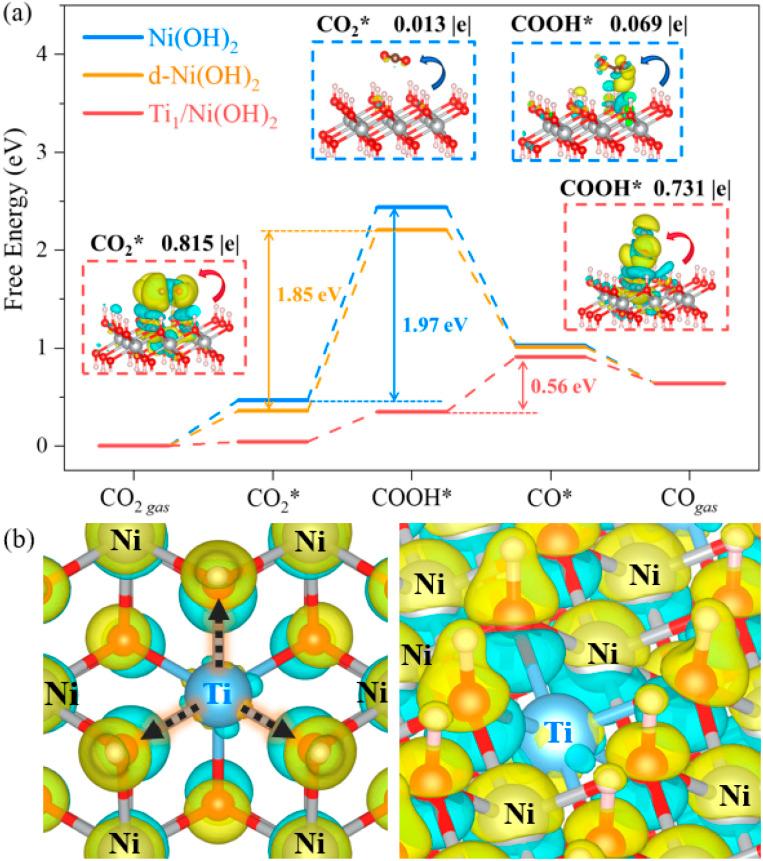
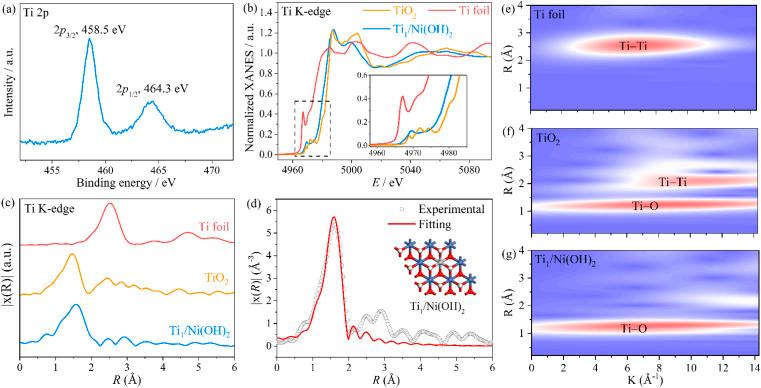
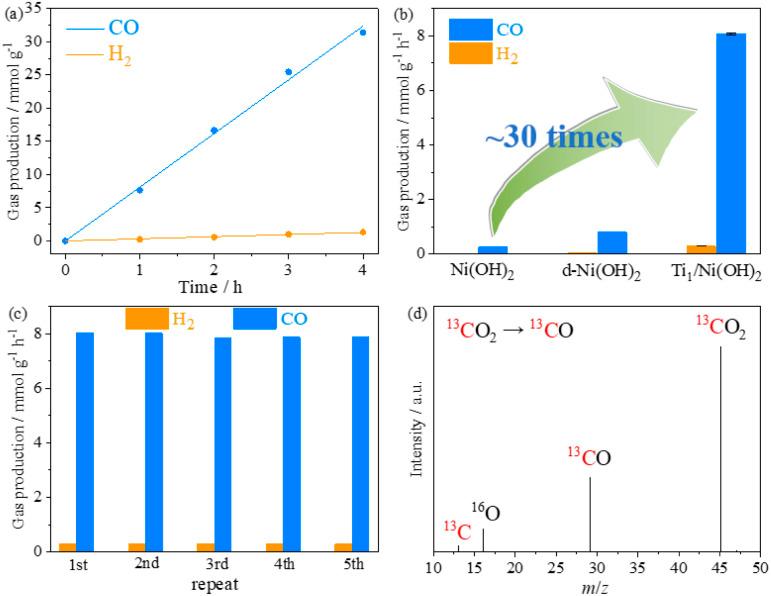
Photocatalytic CO reduction is considered a sustainable method to address energy and environmental issues by converting CO into fuels and chemicals, yet the performance is still unsatisfactory. Single atom catalysts hold promising potential in photocatalysis, but the selection of metal species is still limited, especially in early transition metals. Herein, inspired by the structure of anatase TiO, single Ti sites were successfully incorporated into a metal hydroxide support for the first time cationic defects, significantly enhancing the photocatalytic performance by more than 30 times (from 0.26 to 8.09 mmol g h). Based on the theoretical calculation and characterization, the enhancement of photocatalytic performance can be attributed to the regulation of the electronic structure by the introduction of atomically dispersed Ti sites, leading to stronger binding with intermediates and enhanced charge transfer.
光催化CO还原被认为是一种通过将CO转化为燃料和化学品来解决能源和环境问题的可持续方法,但其性能仍不尽人意。单原子催化剂在光催化方面具有广阔的潜力,但金属物种的选择仍然有限,尤其是在早期过渡金属中。在此,受锐钛矿TiO结构的启发,首次成功地将单个Ti位点引入金属氢氧化物载体中,形成阳离子缺陷,显著提高了光催化性能30多倍(从0.26提高到8.09 mmol g h)。基于理论计算和表征,光催化性能的提高可归因于通过引入原子分散的Ti位点对电子结构的调节,导致与中间体的结合更强,电荷转移增强。

 Zotero 插件