
巨大轴索性神经病(GAN):来自德国队列的关于表型、基因型和蛋白质组学特征的横断面数据。
Giant axonal neuropathy (GAN): cross-sectional data on phenotypes, genotypes, and proteomic signature from a German cohort.
作者信息
Gangfuß Andrea, Goj Guido, Polz Silke, Della Marina Adela, Hentschel Andreas, Ahlbory Katja, Deba Timo, Kotzaeridou Urania, Schuler Elisabeth, Pechmann Astrid, Diebold Uta, Kurlemann Gerhard, Heinzkyll Lucas, Schmitt Dirk, Rostasy Kevin, Ruck Tobias, Böhm Johann, Roos Andreas, Schara-Schmidt Ulrike
机构信息
Department of Pediatric Neurology, Centre for Neuromuscular Disorders, C-TNBS, University Duisburg-Essen, Essen, Germany.
Department of Pediatric Neurology, Children's Hospital Datteln, University Witten/Herdecke, Datteln, Germany.
出版信息
J Neurol. 2024 Dec 16;272(1):63. doi: 10.1007/s00415-024-12744-z.
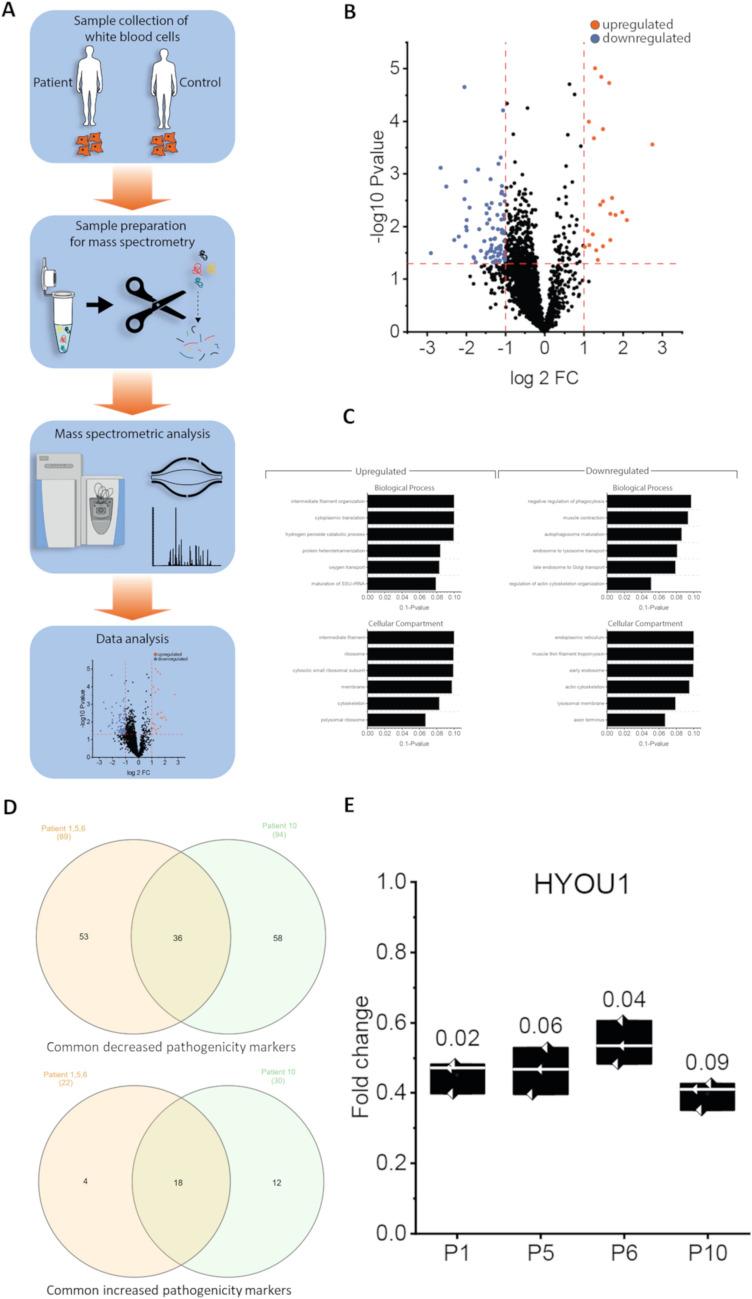
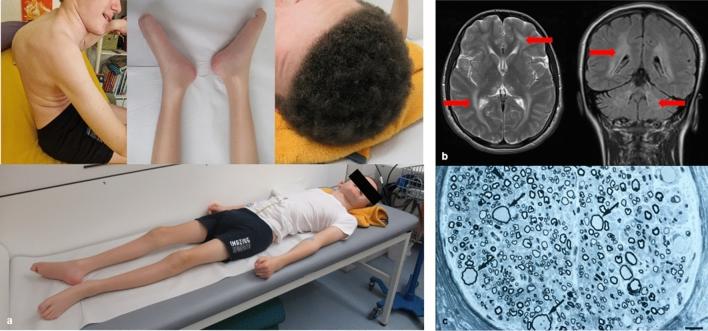
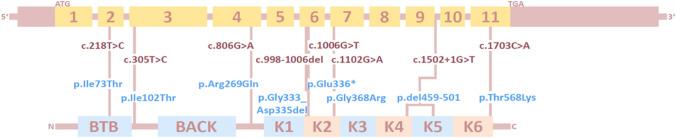
Giant axonal neuropathy (GAN) is a progressive neurodegenerative disease affecting the peripheral and central nervous system and is caused by bi-allelic variants in the GAN gene, leading to loss of functional gigaxonin protein. A treatment does not exist, but a first clinical trial using a gene therapy approach has recently been completed. Here, we conducted the first systematic study of GAN patients treated by German-speaking child neurologists. We collected clinical, genetic, and epidemiological data from a total of 15 patients representing one of the largest cohorts described thus far. Average age of patients was 11.7 years at inclusion. The most frequently reported symptoms (HPO coded) were gait disturbance and muscle weakness, abnormality of muscle size, and abnormal reflexes. In line with the frequency of homozygous variants, in five families, parents reported being at least distantly related. In 14 patients, diagnosis was confirmed by molecular genetic testing, revealing eight different GAN variants, four being reported as pathogenic in the literature. Proteomics of white blood cells derived from four patients was conducted to obtain unbiased insights into the underlying pathophysiology and revealed dysregulation of 111 proteins implicated in diverse biological processes. Of note, diverse of these proteins is known to be crucial for proper synaptic function and transmission and affection of intermediate filament organisation and proteolysis, which is in line with the known functions of gigaxonin.
巨大轴索性神经病(GAN)是一种影响外周和中枢神经系统的进行性神经退行性疾病,由GAN基因的双等位基因变异引起,导致功能性巨轴素蛋白缺失。目前尚无治疗方法,但最近一项使用基因治疗方法的首次临床试验已经完成。在此,我们对德语区儿童神经科医生治疗的GAN患者进行了首次系统性研究。我们收集了总共15名患者的临床、遗传和流行病学数据,这些患者代表了迄今为止描述的最大队列之一。患者纳入时的平均年龄为11.7岁。最常报告的症状(采用人类表型本体编码)为步态障碍、肌肉无力、肌肉大小异常和反射异常。与纯合变异的频率一致,在五个家庭中,父母报告至少有远亲关系。在14名患者中,通过分子遗传学检测确诊,发现了八种不同的GAN变异,其中四种在文献中被报告为致病性变异。对四名患者的白细胞进行蛋白质组学分析,以获得对潜在病理生理学的无偏见解,结果显示111种参与多种生物过程的蛋白质存在失调。值得注意的是,这些蛋白质中有多种已知对正常的突触功能和传递以及中间丝组织和蛋白水解的影响至关重要,这与巨轴素的已知功能一致。
 Zotero 插件