
情绪强度在条件学习上产生线性关系,但在情景记忆上产生倒U形效应。
Emotional intensity produces a linear relationship on conditioned learning but an inverted U-shaped effect on episodic memory.
作者信息
Ouyang Lingwei, Dunsmoor Joseph E
机构信息
Department of Psychiatry and Behavioral Sciences, University of Texas at Austin, Austin, Texas 78712, USA.
Department of Psychology, University of Texas at Austin, Austin, Texas 78712, USA.
出版信息
Learn Mem. 2024 Dec 16;31(12). doi: 10.1101/lm.053982.124. Print 2024 Dec.
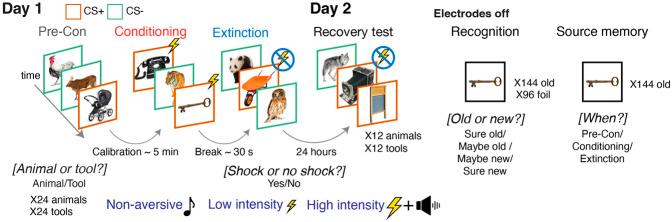
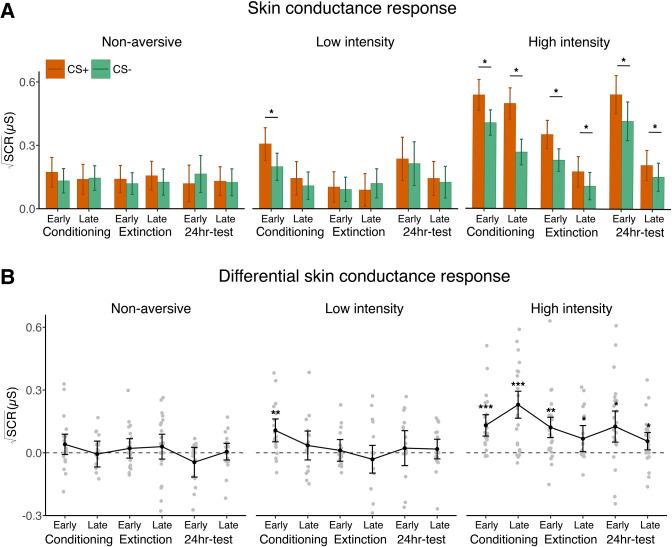
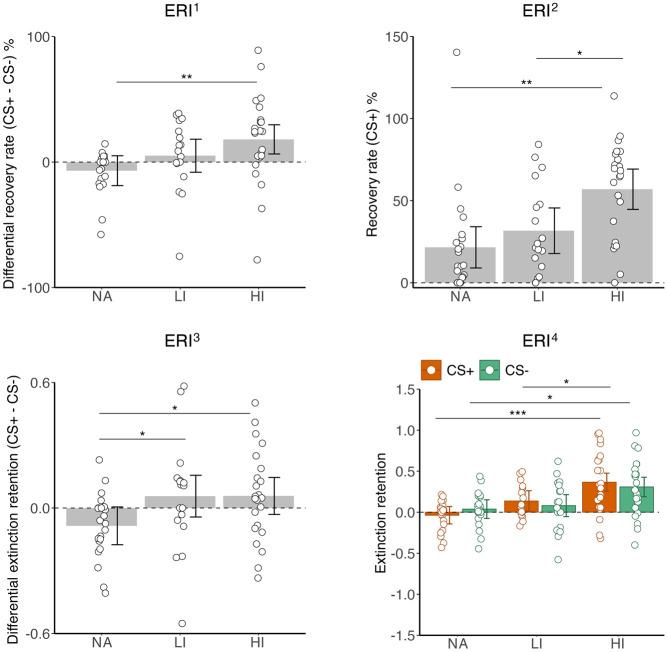
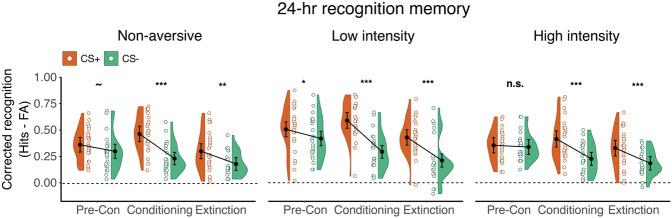
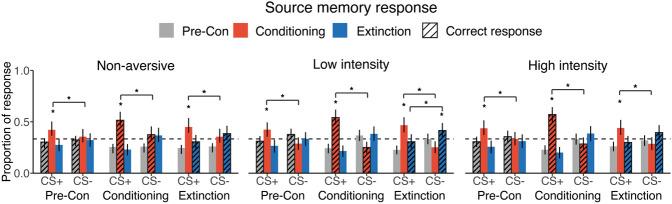
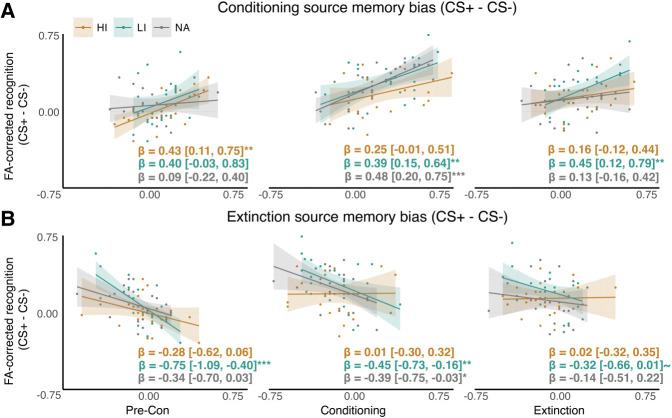
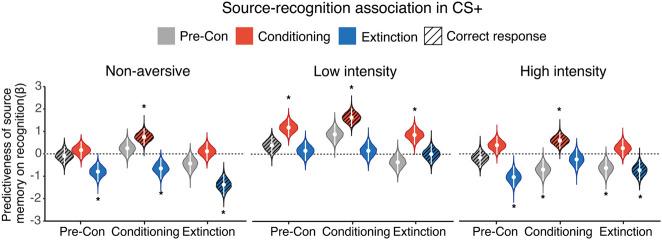
Emotional intensity can produce both optimal and suboptimal effects on learning and memory. While emotional events tend to be better remembered, memory performance can follow an inverted U-shaped curve with increasing intensity. The strength of Pavlovian conditioning tends to increase linearly with the intensity of the aversive outcome, but leads to greater stimulus generalization. Here, we combined elements of episodic memory and Pavlovian conditioning into a single paradigm to investigate the effects of varying outcome intensities on conditioned fear responses and episodic memory. Participants encoded trial-unique images from two semantic categories as conditioned stimuli (CS and CS) before (preconditioning), during, and after (extinction) acquisition. We systematically varied the intensity of the unconditioned stimulus (US) during acquisition between-groups as a nonaversive tone, a low-intensity electrical shock, or a high-intensity electrical shock paired with a loud static noise. Results showed that conditioned skin conductance responses scaled linearly with US intensity during acquisition, with a high-intensity US leading to greater resistance to extinction and stronger 24 h fear recovery. However, 24 h recognition memory produced an inverted U-shaped relationship, with better recognition memory for CSs encoded before (retroactive), during, and following conditioning using a low-intensity US. These findings suggest a dissociation between optimal levels of emotional intensity on explicit and implicit learning and memory performance.
情绪强度对学习和记忆既能产生最佳效果,也能产生次优效果。虽然情绪事件往往更容易被记住,但随着强度增加,记忆表现可能呈倒U形曲线。巴甫洛夫条件反射的强度往往会随着厌恶结果的强度线性增加,但会导致更大程度的刺激泛化。在此,我们将情景记忆和巴甫洛夫条件反射的元素结合到一个单一范式中,以研究不同结果强度对条件性恐惧反应和情景记忆的影响。参与者在习得前(预处理)、习得期间和习得后(消退)对来自两个语义类别的独特试验图像进行编码,作为条件刺激(CS和CS)。我们在组间习得过程中系统地改变无条件刺激(US)的强度,将其设置为非厌恶音调、低强度电击或与大声静电噪音配对的高强度电击。结果表明,在习得过程中,条件性皮肤电导率反应与US强度呈线性比例关系,高强度US导致对消退的抵抗力更强,24小时恐惧恢复更强。然而,24小时识别记忆呈现出倒U形关系,对于在使用低强度US进行条件反射之前(追溯性)、期间和之后编码的CS,识别记忆更好。这些发现表明,情绪强度的最佳水平在显性和隐性学习及记忆表现之间存在分离。

 Zotero 插件