
利用自然语言处理技术获取的西班牙慢性淋巴细胞白血病患者不良事件和医疗资源利用情况的真实世界证据:SRealCLL研究
Real-World Evidence on Adverse Events and Healthcare Resource Utilization in Patients with Chronic Lymphocytic Leukaemia in Spain Using Natural Language Processing: The SRealCLL Study.
作者信息
Abrisqueta-Costa Pau, García-Marco José Antonio, Gutiérrez Antonio, Hernández-Rivas José Ángel, Andreu-Lapiedra Rafael, Arguello-Tomas Miguel, Leiva-Farré Carolina, López-Roda María Dolores, Callejo-Mellén Ángel, Álvarez-García Esther, Loscertales Javier
机构信息
Haematology Department, Hospital Universitari Vall d'Hebron, 08035 Barcelona, Spain.
Haematology Department, Hospital Universitario Puerta de Hierro-Majadahonda, 28222 Madrid, Spain.
出版信息
Cancers (Basel). 2024 Nov 29;16(23):4004. doi: 10.3390/cancers16234004.
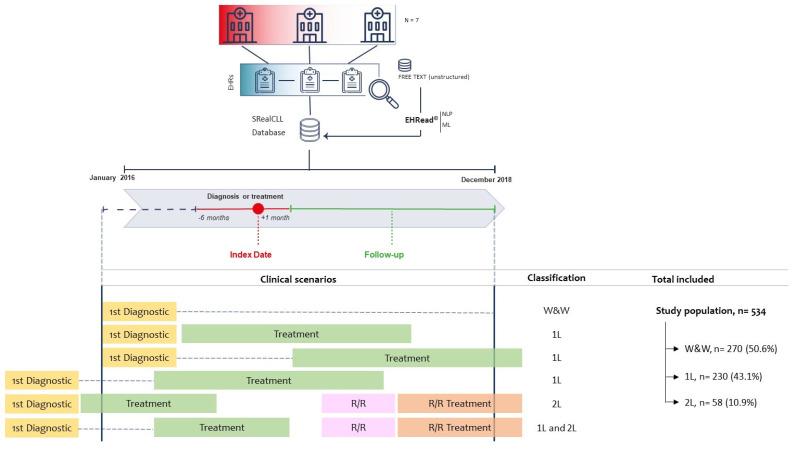
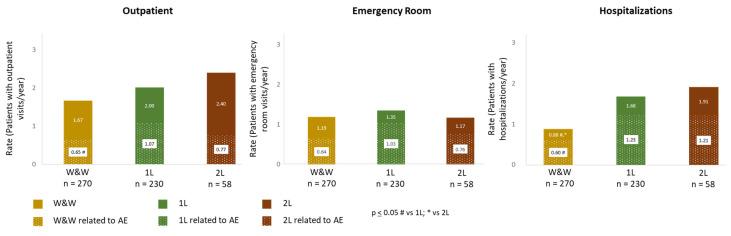
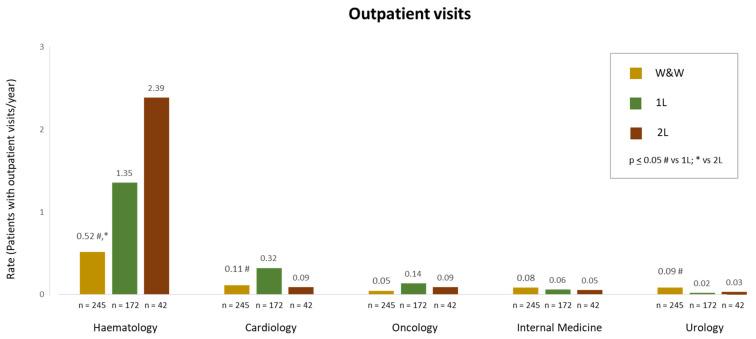
The SRealCLL study described the occurrence of adverse events (AEs) and healthcare resource utilization in patients with chronic lymphocytic leukaemia (CLL) using artificial intelligence in a real-world scenario in Spain. We collected real-world data on patients with CLL from seven Spanish hospitals between January 2016 and December 2018, focusing on their AE and healthcare service utilization. Data extraction from electronic health records of 385,904 patients was performed using the EHRead technology, which is based on natural language processing and machine learning. Among the 534 CLL patients finally included, 270 (50.6%) were categorized as watch and wait (W&W), 230 (43.1%) as first-line treatment (1L), and 58 (10.9%) as relapse/refractory with second-line treatment (2L). The median study follow-up periods were 14.4, 8.4, and 6 months for W&W, 1L, and 2L, respectively. The most common antineoplastic treatments were ibrutinib (64.8%) and bendamustine + rituximab (12.6%) in 1L, and ibrutinib (62.1%) and venetoclax (15.5%) in 2L. Among the most frequent AEs, anaemia and thrombocytopenia presented higher rates in the treated groups (1L and 2L) compared with W&W (2.01 and 2.32 vs. 0.93; ≤ 0.05 and 1.29 and 1.62 vs. 0.42; ≤ 0.05). Moreover, several AEs, such as major bleeding, digestive symptoms, general symptoms, or Richter syndrome, were more frequent in 1L than W&W (all ≤ 0.05). No differences were shown between groups in the rates of outpatient visits. However, rates of outpatient visits due to AE were higher in 1L than in W&W (1.07 vs. 0.65, ≤ 0.05). The rates of patients being hospitalized were higher in the treated groups compared to W&W (1.68 and 1.9 vs. 0.88; ≤ 0.05), and those due to AE were higher in 1L than W&W (1.23 vs. 0.60; ≤ 0.05). Patients with CLL in 1L or 2L treatments often require healthcare resources due to AEs, particularly cytopenias. The methodology used in this study likely enabled us to identify higher rates of AEs that may be underreported using other real-world approaches. Addressing AEs with effective agents that maximize patient safety and optimize healthcare resource use is crucial in this typically older and comorbid population.
SRealCLL研究描述了在西班牙的真实场景中,使用人工智能的慢性淋巴细胞白血病(CLL)患者的不良事件(AE)发生情况和医疗资源利用情况。我们收集了2016年1月至2018年12月期间来自西班牙七家医院的CLL患者的真实数据,重点关注他们的AE和医疗服务利用情况。使用基于自然语言处理和机器学习的EHRead技术,从385,904名患者的电子健康记录中提取数据。在最终纳入的534例CLL患者中,270例(50.6%)被归类为观察等待(W&W),230例(43.1%)为一线治疗(1L),58例(10.9%)为二线治疗(2L)的复发/难治性患者。W&W、1L和2L的中位研究随访期分别为14.4个月、8.4个月和6个月。1L中最常见的抗肿瘤治疗药物是伊布替尼(64.8%)和苯达莫司汀+利妥昔单抗(12.6%),2L中是伊布替尼(62.1%)和维奈克拉(15.5%)。在最常见的AE中,与W&W组相比,贫血和血小板减少在治疗组(1L和2L)中的发生率更高(分别为2.01和2.32对0.93;P≤0.05以及1.29和1.62对0.42;P≤0.05)。此外,一些AE,如大出血、消化症状、一般症状或Richter综合征,在1L组中比W&W组更常见(均P≤0.05)。各组间门诊就诊率无差异。然而,因AE导致的门诊就诊率在1L组高于W&W组(1.07对0.65,P≤0.05)。治疗组患者的住院率高于W&W组(1.68和1.9对0.88;P≤0.05),因AE导致的住院率在1L组高于W&W组(1.23对0.60;P≤0.05)。接受1L或2L治疗的CLL患者由于AE常常需要医疗资源,尤其是血细胞减少症。本研究中使用的方法可能使我们能够识别出比其他真实世界方法可能漏报的更高发生率的AE。在这个通常年龄较大且合并症较多的人群中,使用有效药物处理AE以最大限度提高患者安全性并优化医疗资源利用至关重要。


 Zotero 插件