
血管生成作为犬心丝虫病的一种生存机制:在体外内皮细胞模型中果糖二磷酸醛缩酶和肌动蛋白的作用
Angiogenesis as a Survival Mechanism in Heartworm Disease: The Role of Fructose-Bisphosphate Aldolase and Actin from in an In Vitro Endothelial Model.
作者信息
Collado-Cuadrado Manuel, Alarcón-Torrecillas Claudia, Balmori-de la Puente Alfonso, Rodríguez-Escolar Iván, Infante González-Mohino Elena, Pericacho Miguel, Morchón Rodrigo
机构信息
Zoonotic Diseases and One Health Group, Faculty of Pharmacy, Biomedical Research Institute of Salamanca (IBSAL), Centre for Environmental Studies and Rural Dynamization (CEADIR), University of Salamanca, 37007 Salamanca, Spain.
Department of Physiology and Pharmacology, Biomedical Research Institute of Salamanca (IBSAL), University of Salamanca, 37007 Salamanca, Spain.
出版信息
Animals (Basel). 2024 Nov 22;14(23):3371. doi: 10.3390/ani14233371.
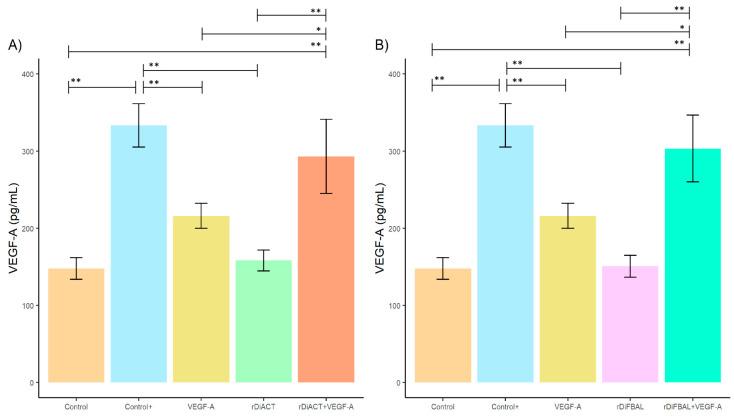
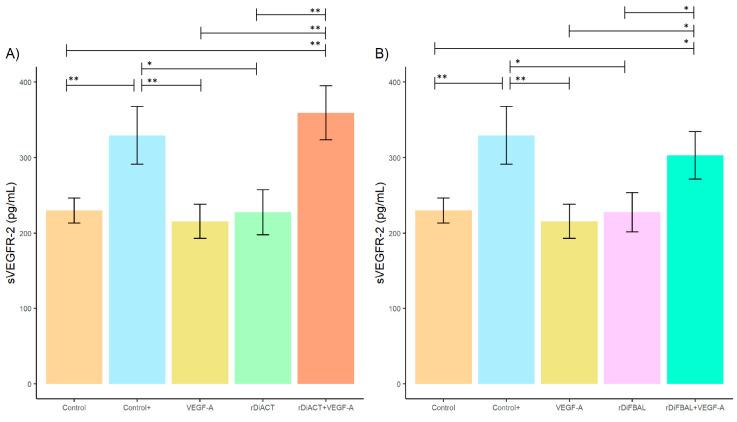
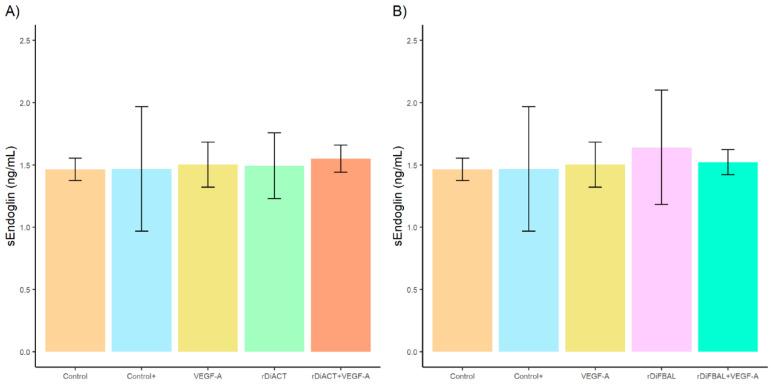
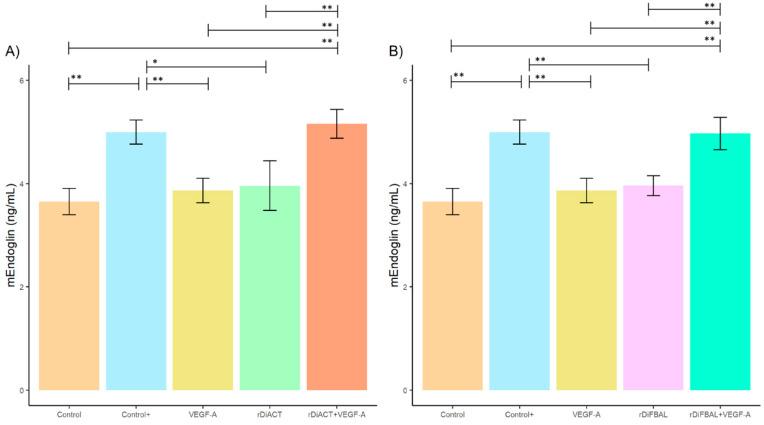
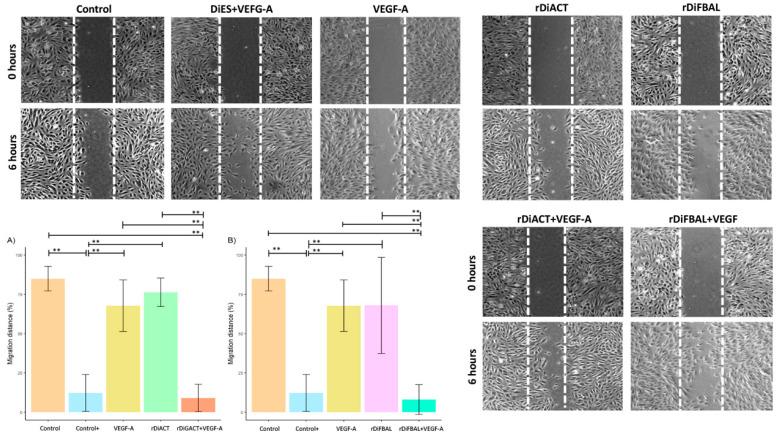
Heartworm disease, caused by is a vector-borne zoonotic disease, (mainly affecting canids and felids) causing chronic vascular and pulmonary pathology in its early stages, which worsens with parasite load and/or death of adult worms in the pulmonary artery or right heart cavity, and can be fatal to the host. Angiogenesis is a mechanism by which new blood vessels are formed from existing ones. The aim of this work was to study the effect of two molecules of the excretory/secretory antigen (DiES) on the angiogenic process, taking into account that this antigen is able to interact with this process and use it as a survival mechanism. For this purpose, an in vitro model of endothelial cells was used and treated with two recombinant proteins, i.e., actin (Act) and fructose-bisphosphate aldolase (FBAL) proteins belonging to DiES, and both pro- and antiangiogenic molecules were analyzed, as well as the cellular processes of cell proliferation, migration, and pseudocapillary formation. Act and FBAL proteins, together with vascular endothelial growth factor (VEGF-A), as an angiogenic precursor, are able to stimulate the production of proangiogenic factors as well as cellular processes of proliferation, migration, and pseudocapillary formation. This implies that these molecules could be produced by to facilitate its survival, and the relationship between parasite and canine host would be further elaborated.
心丝虫病是一种由媒介传播的人畜共患病(主要影响犬科动物和猫科动物),在早期会导致慢性血管和肺部病变,随着寄生虫负荷增加和/或肺动脉或右心腔内成虫死亡,病情会恶化,甚至可能对宿主致命。血管生成是一种由现有血管形成新血管的机制。本研究的目的是研究排泄/分泌抗原(DiES)中的两种分子对血管生成过程的影响,考虑到该抗原能够与这一过程相互作用并将其作为一种生存机制。为此,使用了内皮细胞的体外模型,并使用属于DiES的两种重组蛋白,即肌动蛋白(Act)和果糖二磷酸醛缩酶(FBAL)蛋白进行处理,同时分析了促血管生成和抗血管生成分子,以及细胞增殖、迁移和伪毛细血管形成等细胞过程。Act和FBAL蛋白与作为血管生成前体的血管内皮生长因子(VEGF-A)一起,能够刺激促血管生成因子的产生以及增殖、迁移和伪毛细血管形成等细胞过程。这意味着这些分子可能由[寄生虫名称未给出]产生以促进其生存,寄生虫与犬宿主之间的关系将得到进一步阐述。



 Zotero 插件