
肝细胞癌中的Wnt信号传导:生物学机制与治疗机遇
Wnt Signaling in Hepatocellular Carcinoma: Biological Mechanisms and Therapeutic Opportunities.
作者信息
Zhu Yingying, He Yajing, Gan Runliang
机构信息
Key Laboratory of Cancer Cellular and Molecular Pathology in Hunan, Cancer Research Institute, Hengyang Medical School, University of South China, Hengyang 421001, China.
出版信息
Cells. 2024 Dec 2;13(23):1990. doi: 10.3390/cells13231990.
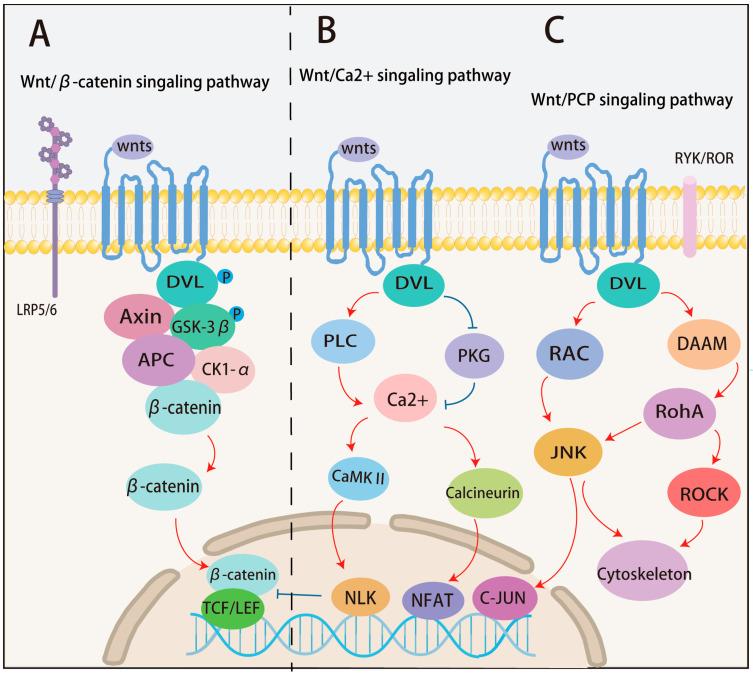
Hepatocellular carcinoma (HCC), characterized by significant morbidity and mortality rates, poses a substantial threat to human health. The expression of ligands and receptors within the classical and non-classical Wnt signaling pathways plays an important role in HCC. The Wnt signaling pathway is essential for regulating multiple biological processes in HCC, including proliferation, invasion, migration, tumor microenvironment modulation, epithelial-mesenchymal transition (EMT), stem cell characteristics, and autophagy. Molecular agents that specifically target the Wnt signaling pathway have demonstrated significant potential for the treatment of HCC. However, the precise mechanism by which the Wnt signaling pathway interacts with HCC remains unclear. In this paper, we review the alteration of the Wnt signaling pathway in HCC, the mechanism of Wnt pathway action in HCC, and molecular agents targeting the Wnt pathway. This paper provides a theoretical foundation for identifying molecular agents targeting the Wnt pathway in hepatocellular carcinoma.
肝细胞癌(HCC)具有较高的发病率和死亡率,对人类健康构成重大威胁。经典和非经典Wnt信号通路中配体和受体的表达在HCC中起重要作用。Wnt信号通路对于调节HCC中的多种生物学过程至关重要,包括增殖、侵袭、迁移、肿瘤微环境调节、上皮-间质转化(EMT)、干细胞特性和自噬。特异性靶向Wnt信号通路的分子药物已显示出治疗HCC的巨大潜力。然而,Wnt信号通路与HCC相互作用的确切机制仍不清楚。在本文中,我们综述了HCC中Wnt信号通路的改变、Wnt通路在HCC中的作用机制以及靶向Wnt通路的分子药物。本文为识别肝细胞癌中靶向Wnt通路的分子药物提供了理论基础。


 Zotero 插件