
苦荞芽提取物通过上调氧化还原系统减轻过氧化氢诱导的HepG2细胞氧化损伤。
Extracts from Tartary Buckwheat Sprouts Restricts Oxidative Injury Induced by Hydrogen Peroxide in HepG2 by Upregulating the Redox System.
作者信息
Li Xiaoping, Zhang Yuwei, Zhao Wen, Ren Tian, Wang Xiaolong, Hu Xinzhong
机构信息
College of Food Engineering and Nutritional Science, Shaanxi Normal University, Xi'an 710119, China.
School of Food Science and Engineering, South China University of Technology, Guangzhou 510640, China.
出版信息
Foods. 2024 Nov 21;13(23):3726. doi: 10.3390/foods13233726.
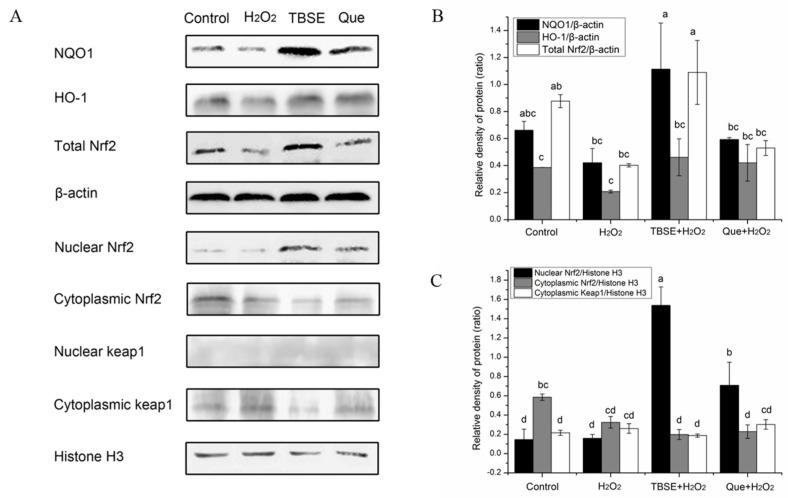
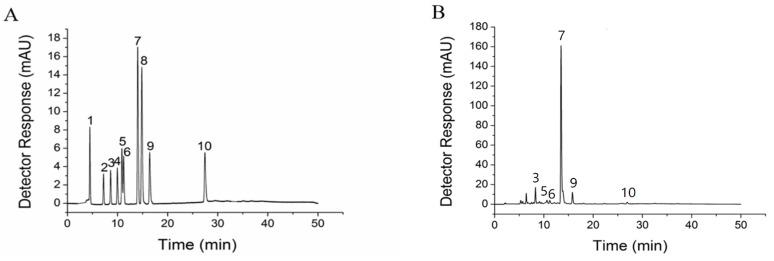
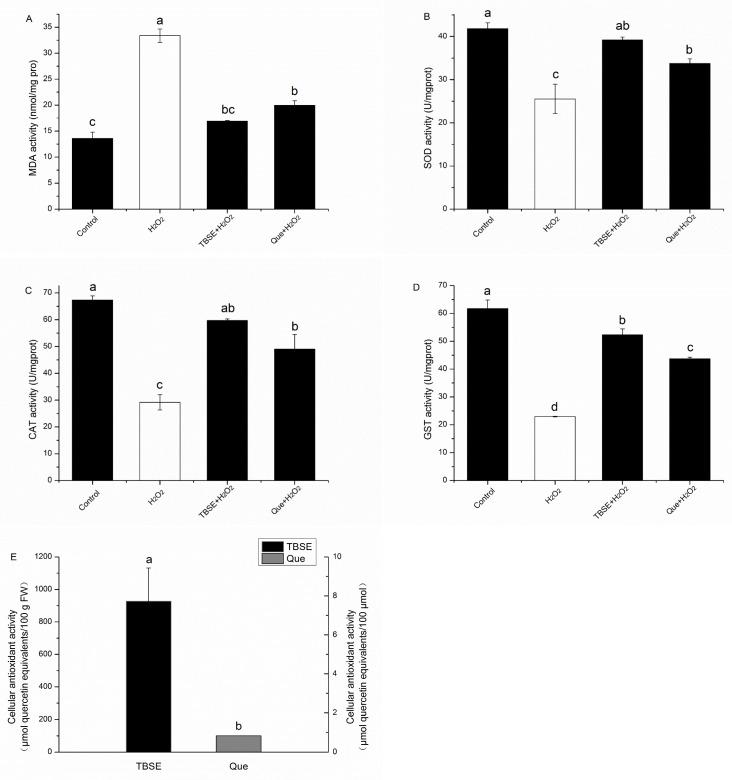
Oxidative stress, which results from an overproduction of reactive oxygen species (ROS), can cause damage that may contribute to a range of metabolic disorders. Antioxidants are considered to upregulate the activity of antioxidant enzymes, which are crucial for eliminating excess ROS and safeguarding the body against oxidative stress-induced damage. In the present study, the effect of polyphenol extracts from tartary buckwheat sprouts (TBSE) on the redox system of HepG2-cell-induced oxidative injury by hydrogen peroxide were investigated for evaluating the protective effect and mechanism of tartary buckwheat sprouts (TBS). The results revealed that TBSE that had sprouted for a period of 10 days possessed six predominant phenolic compounds, ranked from the most abundant to the least: chlorogenic acid, syringic acid, caffeic acid, rutin, ferulic acid, and quercetin. TBSE could successfully inhibit HO-induced ROS overproduction, restore and balance the mitochondrial membrane potential, while also significantly increasing cellular antioxidant activity (CAA) and the expression of protective enzymes such as SOD, CAT, and GST. More interestingly, treating HepG2 cells with TBSE triggered the translocation of Nrf2 to the nucleus, accompanied by a negative feedback mechanism involving Keap1. Therefore, it regulated the downstream production of antioxidant enzymes, including NQO1 and HO-1. Overall, this finding suggested that TBSE could restore the redox state of HO-resistant HepG2 cells, indicating TBSE protected cells from HO-induced oxidative stress significantly. Beneficial resistance and effects on redox balance were attributed to activation of Nrf2. Present work revealed the potential health benefits of TBS and provided a test basis for developing functional food of TBS.
氧化应激是由活性氧(ROS)产生过多引起的,可导致损害,可能促成一系列代谢紊乱。抗氧化剂被认为可上调抗氧化酶的活性,这些酶对于消除过量的ROS以及保护身体免受氧化应激诱导的损害至关重要。在本研究中,研究了苦荞芽多酚提取物(TBSE)对过氧化氢诱导的HepG2细胞氧化损伤的氧化还原系统的影响,以评估苦荞芽(TBS)的保护作用和机制。结果显示,发芽10天的TBSE含有六种主要酚类化合物,从含量最高到最低依次为:绿原酸、丁香酸、咖啡酸、芦丁、阿魏酸和槲皮素。TBSE能够成功抑制过氧化氢诱导的ROS过量产生,恢复并平衡线粒体膜电位,同时还能显著提高细胞抗氧化活性(CAA)以及超氧化物歧化酶(SOD)、过氧化氢酶(CAT)和谷胱甘肽-S-转移酶(GST)等保护酶的表达。更有趣的是,用TBSE处理HepG2细胞会触发核因子E2相关因子2(Nrf2)向细胞核的转位,并伴有涉及 Kelch样环氧氯丙烷相关蛋白1(Keap1)的负反馈机制。因此,它调节了包括醌氧化还原酶1(NQO1)和血红素加氧酶-1(HO-1)在内的抗氧化酶的下游产生。总体而言,这一发现表明TBSE可以恢复对过氧化氢有抗性的HepG2细胞的氧化还原状态,表明TBSE能显著保护细胞免受过氧化氢诱导的氧化应激。有益的抗性和对氧化还原平衡的影响归因于Nrf2的激活。目前的研究揭示了TBS潜在的健康益处,并为开发TBS功能性食品提供了试验依据。


 Zotero 插件