
用于评估废弃生物质酸碱、热和表面性质的多分析方法
Multi-Analytical Approach for the Acid-Base, Thermal and Surface Properties Assessment of Waste Biomasses.
作者信息
Raccuia Salvatore Giovanni Michele, Zanda Emanuele, Bretti Clemente, Formica Mauro, Macedi Eleonora, Melchior Andrea, Tolazzi Marilena, Sanadar Martina, Lascari Davide, De Luca Giovanna, Irto Anna, De Stefano Concetta, Cardiano Paola, Lando Gabriele
机构信息
Dipartimento di Scienze Chimiche, Biologiche, Farmaceutiche e Ambientali, Università degli Studi di Messina, 98168 Messina, Italy.
Dipartimento di Scienze Pure e Applicate, Università degli Studi di Urbino "Carlo Bo", 61029 Urbino, Italy.
出版信息
Molecules. 2024 Dec 5;29(23):5735. doi: 10.3390/molecules29235735.
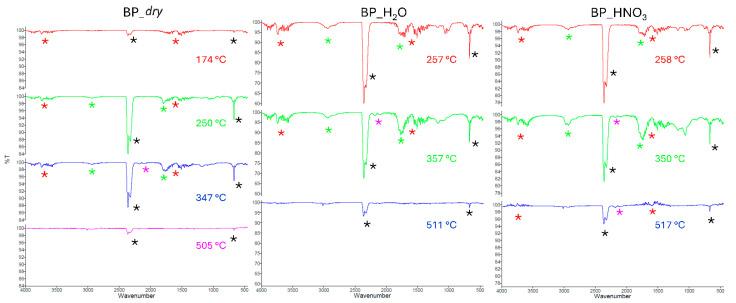
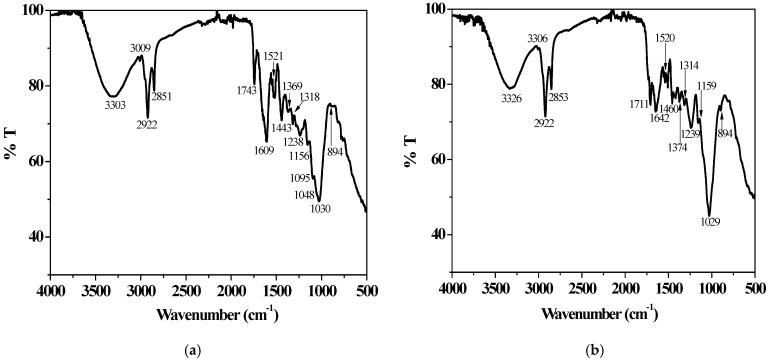
A multi-analytical approach was used to comprehensively characterize the acid-base, thermal, and surface properties of agri-food processing wastes (i.e., original and pre-treated bergamot, grape and olive pomaces). These biomasses, often underutilised and inadequately studied in terms of their physicochemical properties, were investigated under varying ionic strength conditions at = 25 °C. This investigation uniquely integrates multiple advanced techniques: Brunauer-Emmett-Teller porosimetry, Scanning Electron Microscopy, Thermogravimetric Analysis coupled with Fourier Transform Infrared Spectroscopy, Differential Scanning Calorimetry, Attenuated Total Reflectance Fourier-Transform Infrared, and potentiometry to provide a holistic understanding of these biomasses potential for environmental remediation. The modelling of ionic strength-dependent acid-base behaviour, established using an extended Debye-Hückel-type equation, revealed the dominant role of carboxylic groups as active sites across all pomace types, although with variations in abundances across the different samples. Additionally, morphological analysis highlighted the presence of irregularly shaped particles, heterogeneous size distributions, and distinct thermal stability trends, with grape pomace exhibiting the highest mass loss. These findings underscore the significant potential of these biomasses for the remediation of cationic pollutants from natural waters. Moreover, this comprehensive characterisation not only advances the understanding of agri-food waste valorisation but also provides a robust framework for designing targeted strategies in environmental applications.
采用多分析方法全面表征了农业食品加工废弃物(即原始和预处理的佛手柑、葡萄和橄榄果渣)的酸碱、热和表面性质。这些生物质在物理化学性质方面常常未得到充分利用且研究不足,在25℃的不同离子强度条件下对其进行了研究。本研究独特地整合了多种先进技术:布鲁诺尔-埃米特-泰勒孔隙率测定法、扫描电子显微镜、热重分析与傅里叶变换红外光谱联用、差示扫描量热法、衰减全反射傅里叶变换红外光谱法和电位分析法,以全面了解这些生物质在环境修复方面的潜力。使用扩展的德拜-休克尔型方程建立的离子强度依赖性酸碱行为模型表明,羧基作为所有果渣类型中的活性位点起主导作用,尽管不同样品中的丰度有所不同。此外,形态分析突出了不规则形状颗粒的存在、不均匀的尺寸分布和明显的热稳定性趋势,葡萄果渣的质量损失最大。这些发现强调了这些生物质在去除天然水中阳离子污染物方面的巨大潜力。此外,这种全面的表征不仅推进了对农业食品废弃物价值化的理解,还为设计环境应用中的靶向策略提供了一个强大的框架。


 Zotero 插件