
用于评估哮喘和其他肺部疾病患者支气管肺泡灌洗液中巨噬细胞多样性的聚合物红外和荧光探针
Polymeric Infrared and Fluorescent Probes to Assess Macrophage Diversity in Bronchoalveolar Lavage Fluid of Asthma and Other Pulmonary Disease Patients.
作者信息
Zlotnikov Igor D, Kudryashova Elena V
机构信息
Faculty of Chemistry, Lomonosov Moscow State University, Leninskie Gory, 1/3, 119991 Moscow, Russia.
出版信息
Polymers (Basel). 2024 Dec 5;16(23):3427. doi: 10.3390/polym16233427.
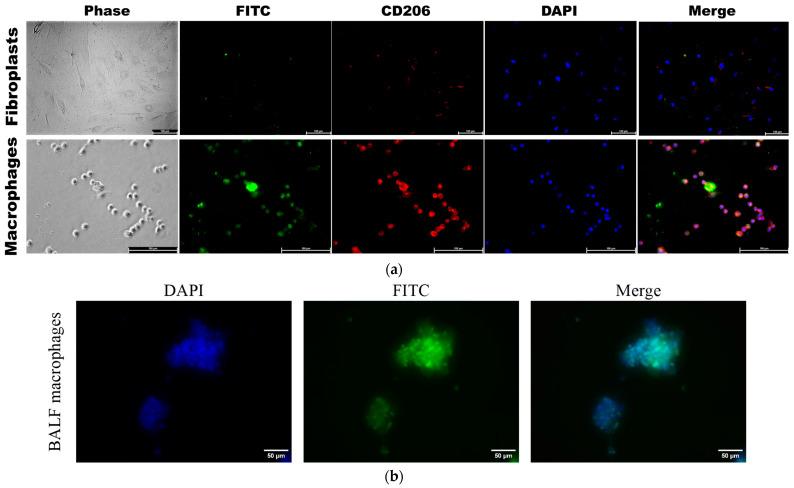
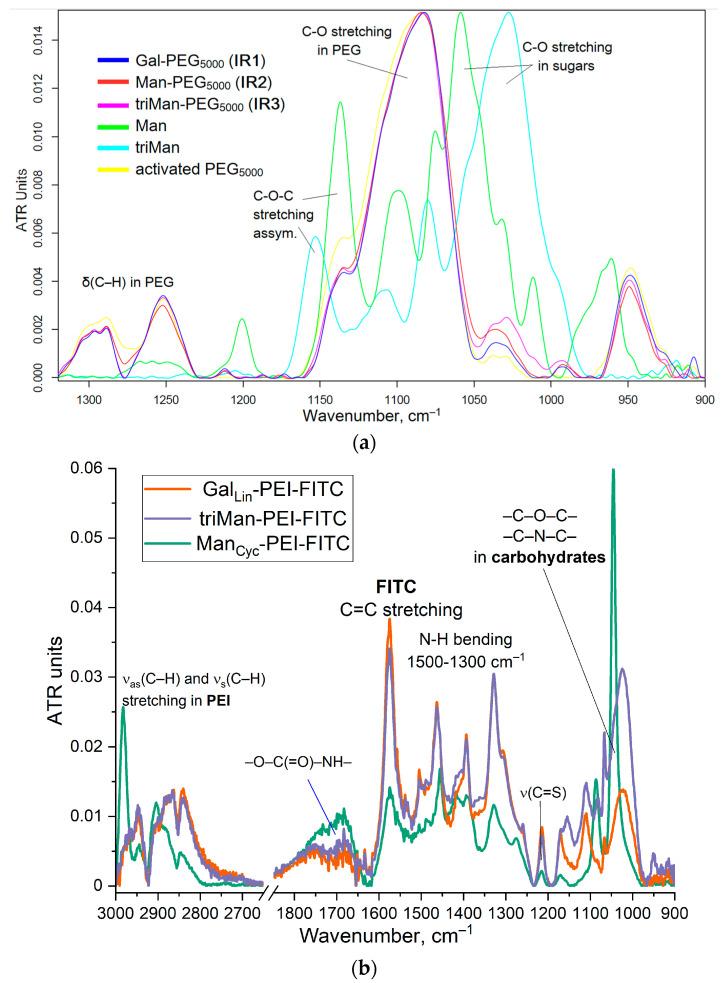
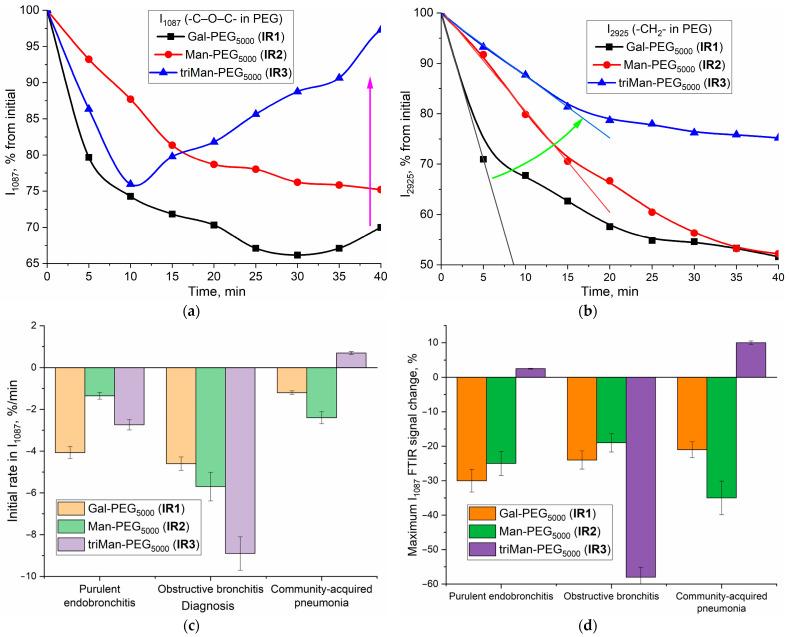
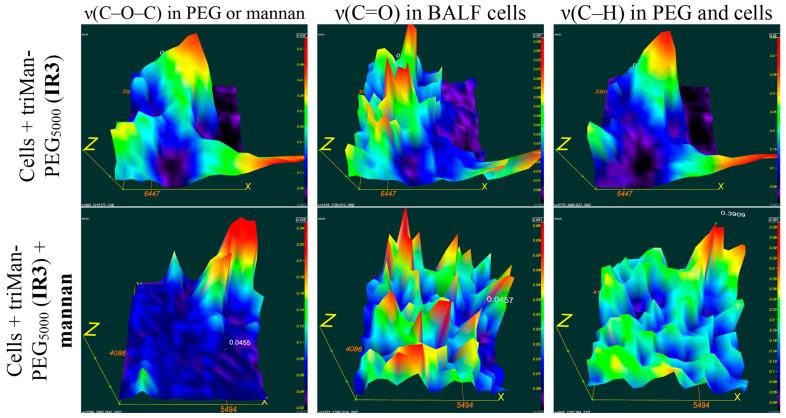
Bronchial asthma remains a serious medical problem, as approximately 10% of patients fail to achieve adequate symptom control with available treatment options. Macrophages play a pivotal role in the pathophysiology of asthma, as well as in some other respiratory disorders. Typically, they are classified into two major classes, M1 and M2; however, recent findings have indicated that in fact there is a whole range of macrophage polarization and functional diversity beyond this bimodal division. The isolation of individual cell sub-populations and the identification of their role and diagnostic/therapeutic significance is still a challenge. Here, we have attempted to assess the differences between patient-derived macrophage populations from bronchoalveolar lavage fluid (BALF) samples in different pulmonary disease conditions, based on their capability to interact with a range of specific and relatively non-specific carbohydrate-based ligands (containing galactose (linear or cyclic form), mannose, trimannose, etc.). Obviously, the main target of these ligands was CD206; however, other minor receptors, able to bind carbohydrates, have also been reported for macrophages. Trimannose binds most specifically to CD206 macrophage receptors, while monomannose has intermediate affinity, and galactose has low affinity and may involve binding to other receptors. This clearly indicates the ligands were chosen based on their predicted binding strength and specificity for CD206, providing the rationale for the study. In some cases, the activated macrophage affinity to galactose base ligands was higher than that to mannose, indicating that complexes of CD206 or other carbohydrate-binding receptors may contribute substantially to macrophage functional features. In addition, variations in receptor clustering and distribution may substantially affect affinity to the same ligand. Interestingly, with a panel of 6-10 different carbohydrate-based ligands with FTIR or fluorescent marker, we were able not only to distinguish between healthy and disease states but also between closely related diseases such as purulent endobronchitis, obstructive bronchitis, pneumonia, and bronchial asthma. For further investigation, specific sub-populations of macrophages, seen as hallmarks to specific diseases, can be isolated and studied separately, likely giving new insights with diagnostic and therapeutic significance for hard-to-treat patients. The group of patients with resistant disease can also be identified with this approach as a fingerprint method to find a more targeted therapeutic strategy, improving their clinical outcomes. As expected, this will provide a large additional array of data for analysis, compared to the work going on in the world. The dataset used by other researchers mainly for known "antibody" ligands is semi-quantitative and insufficient for the purposes of typing as yet unknown and uncomplicated sub-populations. The analysis of the presented data in combination with personalized information from patients' medical records will be carried out using both traditional methods and machine learning methods.
支气管哮喘仍然是一个严重的医学问题,因为大约10%的患者无法通过现有的治疗方案实现充分的症状控制。巨噬细胞在哮喘的病理生理学以及其他一些呼吸系统疾病中起着关键作用。通常,它们被分为两大类,即M1和M2;然而,最近的研究结果表明,实际上巨噬细胞极化和功能多样性的范围远远超出这种双峰划分。分离单个细胞亚群并确定它们的作用以及诊断/治疗意义仍然是一项挑战。在此,我们试图根据支气管肺泡灌洗(BALF)样本中患者来源的巨噬细胞群体与一系列特定和相对非特异性的基于碳水化合物的配体(含有半乳糖(线性或环状形式)、甘露糖、三甘露糖等)相互作用的能力,评估不同肺部疾病状态下的差异。显然,这些配体的主要靶点是CD206;然而,也有报道称巨噬细胞还存在其他能够结合碳水化合物的次要受体。三甘露糖最特异性地结合CD206巨噬细胞受体,而单甘露糖具有中等亲和力,半乳糖具有低亲和力,可能涉及与其他受体的结合。这清楚地表明这些配体是根据它们对CD206的预测结合强度和特异性选择的,为该研究提供了理论依据。在某些情况下,活化的巨噬细胞对半乳糖基配体的亲和力高于对甘露糖的亲和力,这表明CD206或其他碳水化合物结合受体的复合物可能对巨噬细胞的功能特性有很大贡献。此外,受体聚集和分布的变化可能会显著影响对同一配体的亲和力。有趣的是,使用一组6 - 10种带有傅里叶变换红外光谱(FTIR)或荧光标记的不同基于碳水化合物的配体,我们不仅能够区分健康状态和疾病状态,还能区分化脓性细支气管炎、阻塞性支气管炎、肺炎和支气管哮喘等密切相关的疾病。为了进一步研究,可以分离并单独研究被视为特定疾病标志的巨噬细胞特定亚群,这可能为难治性患者提供具有诊断和治疗意义的新见解。采用这种方法还可以识别耐药疾病患者群体,作为一种指纹识别方法来寻找更有针对性的治疗策略,改善他们的临床结局。正如预期的那样,与目前全球正在进行的研究相比,这将提供大量额外的数据分析。其他研究人员主要用于已知“抗体”配体的数据集是半定量的,对于尚未知晓且情况不复杂的亚群分型来说还不够充分。将结合患者病历中的个性化信息,使用传统方法和机器学习方法对所呈现的数据进行分析。




 Zotero 插件