
通过[F]FDG PET神经成像评估,大鼠全身注射4-氨基吡啶引发的癫痫发作会导致急性脑葡萄糖代谢减退。
Seizures Triggered by Systemic Administration of 4-Aminopyridine in Rats Lead to Acute Brain Glucose Hypometabolism, as Assessed by [F]FDG PET Neuroimaging.
作者信息
Gómez-Oliver Francisca, Fernández de la Rosa Rubén, Brackhan Mirjam, Bascuñana Pablo, Pozo Miguel Ángel, García-García Luis
机构信息
Unidad de Cartografía Cerebral, Instituto Pluridisciplinar, Universidad Complutense de Madrid, 28040 Madrid, Spain.
Departamento de Farmacología, Farmacognosia y Botánica, Facultad de Farmacia, Universidad Complutense de Madrid, 28040 Madrid, Spain.
出版信息
Int J Mol Sci. 2024 Nov 28;25(23):12774. doi: 10.3390/ijms252312774.
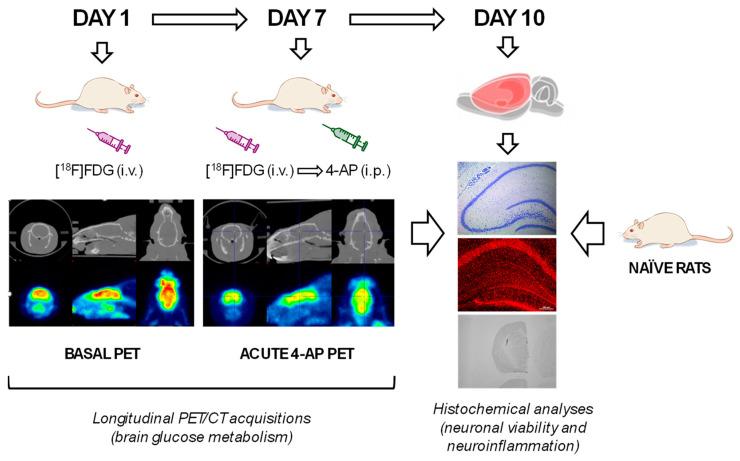
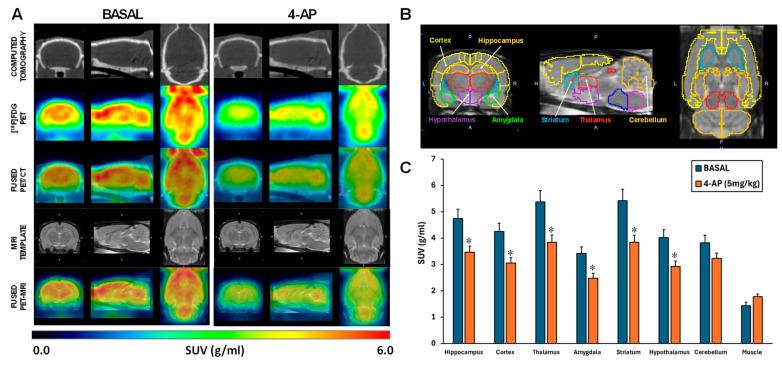
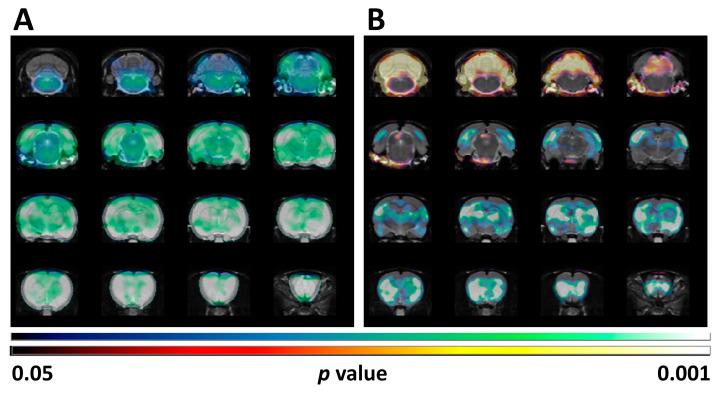
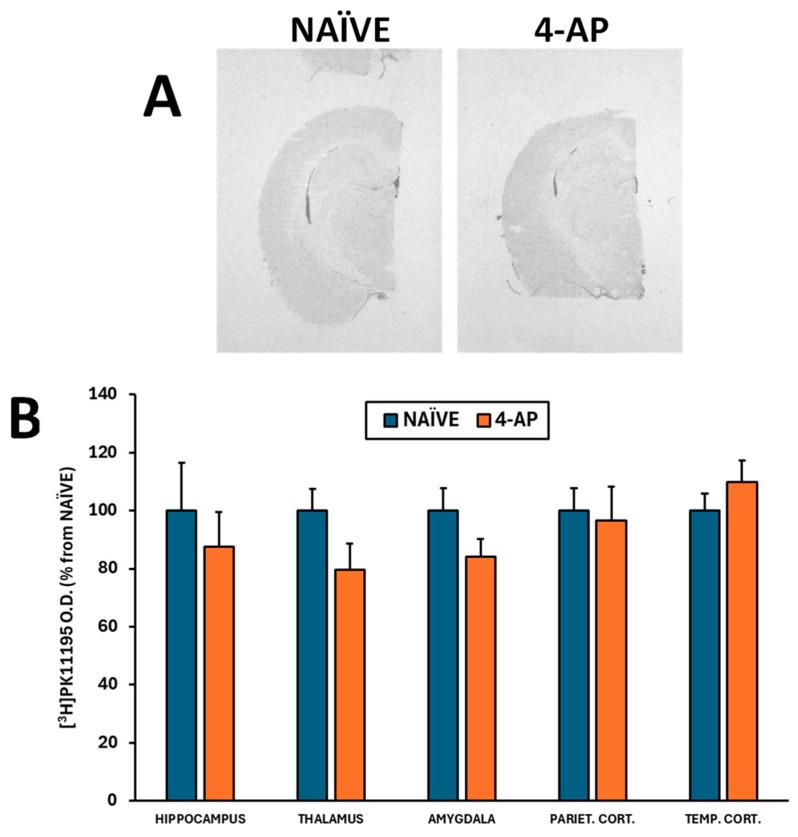
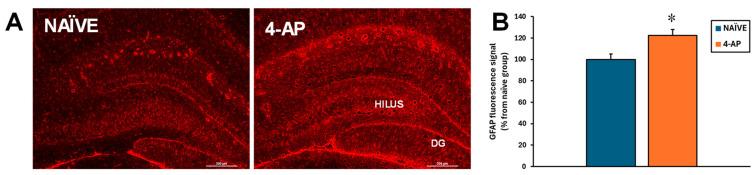
4-aminopyridine (4-AP) is a non-selective blocker of voltage-dependent K channels used to improve walking in multiple sclerosis patients, and it may be useful in the treatment of cerebellar diseases. In animal models, 4-AP is used as a convulsant agent. When administered intrahippocampally, 4-AP induces acute local glucose hypermetabolism and significant brain damage, while i.p. administration causes less neuronal damage. This study aimed to investigate the effects of a single i.p. administration of 4-AP on acute brain glucose metabolism as well as on neuronal viability and signs of neuroinflammation 3 days after the insult. Brain glucose metabolism was evaluated by [F]FDG PET neuroimaging. [F]FDG uptake was analyzed based on volumes of interest (VOIs) as well as by voxel-based (SPM) analyses. The results showed that independently of the type of data analysis used (VOIs or SPM), 4-AP induced acute generalized brain glucose hypometabolism, except in the cerebellum. Furthermore, the SPM analysis normalized by the whole brain uptake revealed a significant cerebellar hypermetabolism. The neurohistochemical assays showed that 4-AP induced hippocampal astrocyte reactivity 3 days after the insult, without inducing changes in neuronal integrity or microglia-mediated neuroinflammation. Thus, acute brain glucose metabolic and neuroinflammatory profiles in response to i.p. 4-AP clearly differed from that reported for intrahippocampal administration. Finally, the results suggest that the cerebellum might be more resilient to the 4-AP-induced hypometabolism.
4-氨基吡啶(4-AP)是一种电压依赖性钾通道的非选择性阻滞剂,用于改善多发性硬化症患者的行走能力,可能对小脑疾病的治疗也有帮助。在动物模型中,4-AP用作惊厥剂。海马内注射4-AP会诱导急性局部葡萄糖高代谢和显著的脑损伤,而腹腔注射造成的神经元损伤较小。本研究旨在调查单次腹腔注射4-AP对损伤后3天急性脑葡萄糖代谢、神经元活力以及神经炎症迹象的影响。通过[F]FDG PET神经成像评估脑葡萄糖代谢。基于感兴趣区(VOIs)以及基于体素(SPM)分析来分析[F]FDG摄取。结果显示,无论使用哪种数据分析类型(VOIs或SPM),4-AP都会诱导急性全身性脑葡萄糖低代谢,但小脑除外。此外,通过全脑摄取进行归一化的SPM分析显示小脑有显著的高代谢。神经组织化学分析表明,4-AP在损伤后3天诱导海马星形胶质细胞反应,但未引起神经元完整性或小胶质细胞介导的神经炎症变化。因此,腹腔注射4-AP后急性脑葡萄糖代谢和神经炎症特征明显不同于海马内注射所报告的情况。最后,结果表明小脑可能对4-AP诱导的低代谢更具弹性。

 Zotero 插件