
转录组分析揭示胡萝卜对链格孢叶斑病适应性的分子机制。
Transcriptome Analysis Reveals the Molecular Mechanisms of Carrot Adaptation to Alternaria Leaf Blight.
作者信息
Liang Chen, Zhao Donghang, Ou Chenggang, Zhao Zhiwei, Zhuang Feiyun, Liu Xing
机构信息
State Key Laboratory of Vegetable Biobreeding, Institute of Vegetables and Flowers, Chinese Academy of Agricultural Sciences, Beijing 100081, China.
出版信息
Int J Mol Sci. 2024 Dec 6;25(23):13106. doi: 10.3390/ijms252313106.
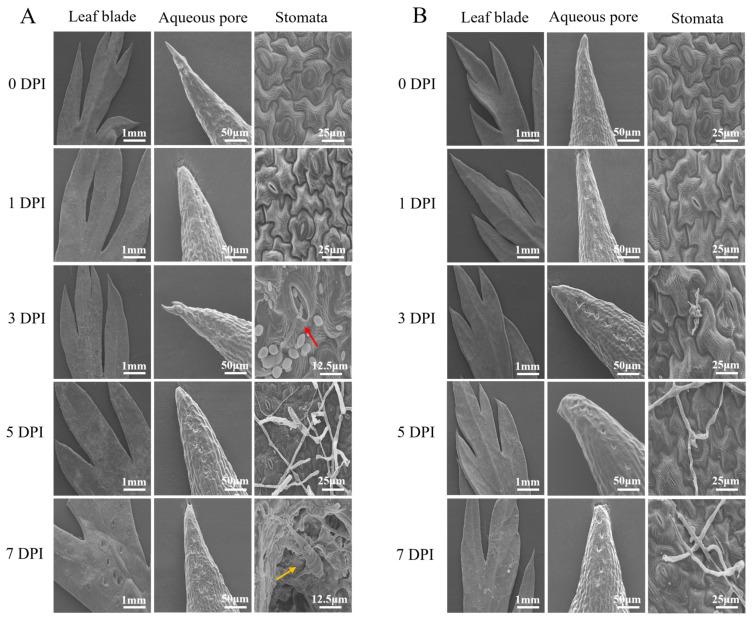
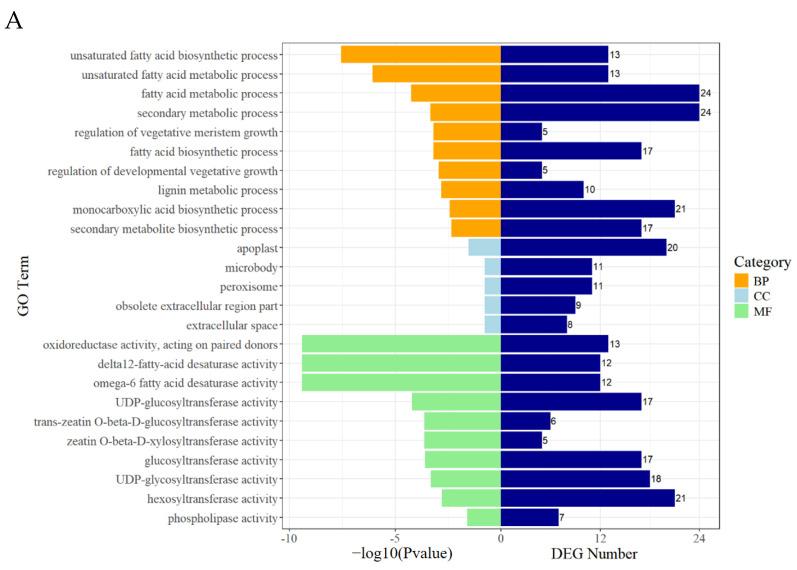
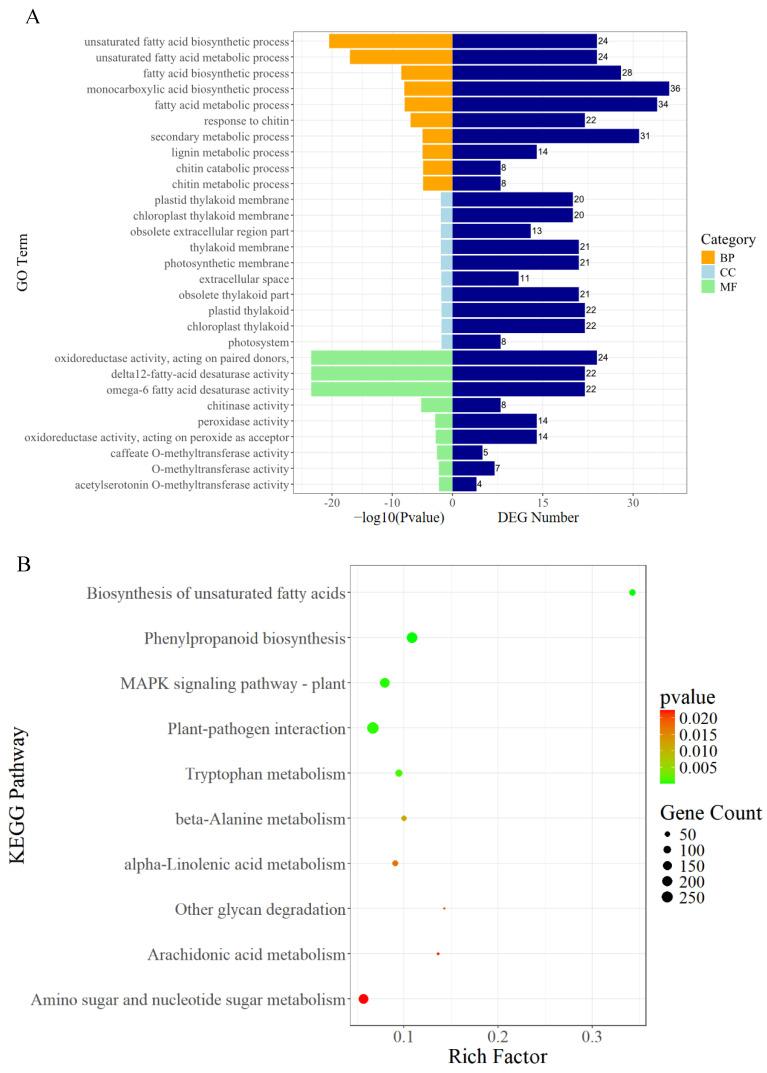
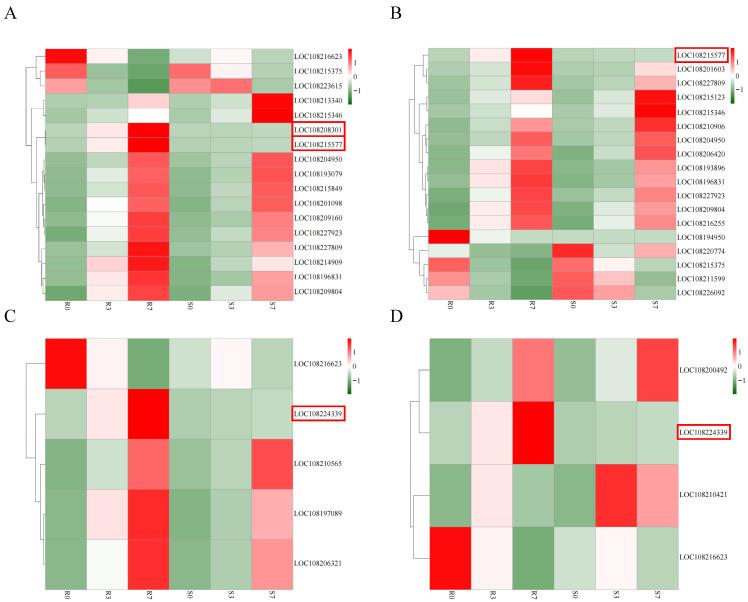
Carrot ( L.) is an important vegetable crop that is rich in carotenoids and is widely cultivated throughout the world. Alternaria leaf blight (ALB), caused by infection with (), is the most serious fungal disease in carrot production. Although several quantitative trait loci associated with ALB resistance have been identified, the genetic mechanisms underlying this resistance remain largely unelucidated. The aim of the present study was to clarify the infection mode of and examine the molecular mechanisms underlying carrot cultivar adaptation to ALB by RNA sequencing. Microscopic observation revealed that invades leaf tissues by entering through stomata, and resistant germplasms may significantly inhibit the infection and colonization of . In addition, transcriptomic analyses were performed to detect the key pathways and genes associated with the differential responses between ALB-resistant (HB55) and ALB-susceptible (14088) carrot cultivars. These results suggest that the secondary metabolic process, phenylpropanoid biosynthesis, and tyrosine metabolism might play important roles in the resistance of carrots to . Three candidate genes (, , and ) that were specifically upregulated in the resistant carrot cultivar 'HB55' after infection were identified as the key resistance response genes. These findings provide insights into the resistance mechanism of carrots to ALB, as well as key candidate genes and information on expression regulation for the molecular breeding of carrot disease resistance.
胡萝卜(Daucus carota L.)是一种重要的蔬菜作物,富含类胡萝卜素,在全球广泛种植。由链格孢菌(Alternaria alternata)感染引起的链格孢叶斑病(ALB)是胡萝卜生产中最严重的真菌病害。尽管已经鉴定出几个与抗ALB相关的数量性状位点,但这种抗性的遗传机制在很大程度上仍未阐明。本研究的目的是通过RNA测序阐明链格孢菌的感染模式,并研究胡萝卜品种适应ALB的分子机制。显微镜观察表明,链格孢菌通过气孔进入叶片组织进行侵染,抗性种质可能会显著抑制链格孢菌的侵染和定殖。此外,还进行了转录组分析,以检测抗ALB(HB55)和感ALB(14088)胡萝卜品种之间差异反应相关的关键途径和基因。这些结果表明,次生代谢过程、苯丙烷生物合成和酪氨酸代谢可能在胡萝卜对链格孢菌的抗性中发挥重要作用。在链格孢菌感染后,抗性胡萝卜品种‘HB55’中特异性上调的三个候选基因(DcPR1、DcPR2和DcPR5)被确定为关键的抗性反应基因。这些发现为胡萝卜对ALB的抗性机制提供了见解,也为胡萝卜抗病分子育种提供了关键候选基因和表达调控信息。

 Zotero 插件