
孟加拉国沿海岛屿海岸线的微塑料污染:分布、模式与丰度
Microplastic pollution along the coastal island shorelines of Bangladesh: Distribution, patterns, and abundance.
作者信息
Kanak Kamrunnahar, Ahmed Md Kawser, Islam Muhammad Saiful, Hasan Mahmudul, Chowdhury K M Azam, Hossain Kazi Belayet
机构信息
Department of Oceanography, University of Dhaka, Dhaka 1000, Bangladesh.
Fiber and Polymer Research Division, BCSIR Laboratories Dhaka, Bangladesh Council of Scientific and Industrial Research (BCSIR), Dhaka 1205, Bangladesh.
出版信息
Heliyon. 2024 Nov 27;10(23):e40723. doi: 10.1016/j.heliyon.2024.e40723. eCollection 2024 Dec 15.
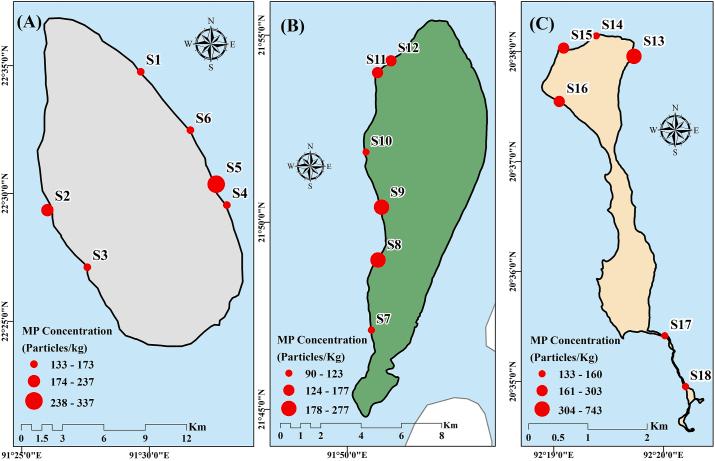
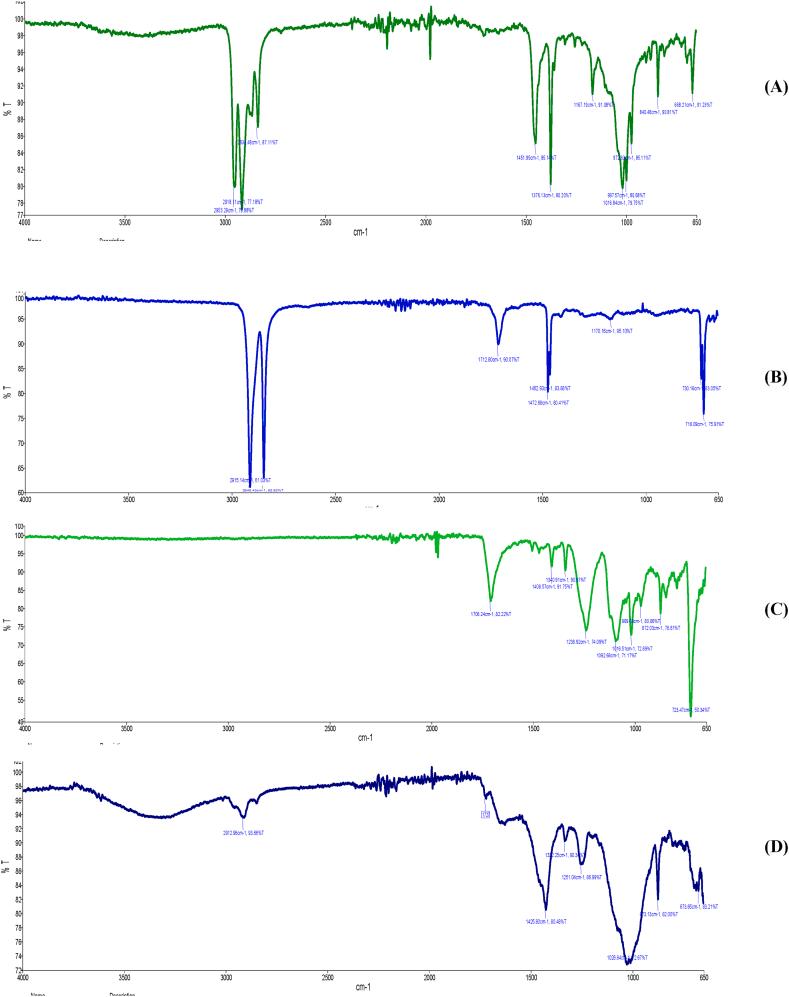
Microplastics (MPs), less than 5 mm in length, have become a major environmental issue due to their hazardous physical and chemical properties. The research investigated 54 sediment samples collected from three different zones of the beaches, namely the wrack line, beach face, and swash zone. This study aims to enumerate the number and polymeric variety of microplastics found in beach sediments from coastal islands of Bangladesh, including Sandwip, Kutubdia, and Saint Martin's Island in the northeastern Bay of Bengal. NaCl solution with the density of 1.2 g/cm was used as a density-separating solvent. Microplastics were extracted using conventional protocols, yielding an average of 193 ± 68.9, 175.5 ± 63.1, and 266.3 ± 232 particles per kg from the collected samples of Sandwip, Kutubdia, and Saint Martin's Island respectively, with five morphotypes: fiber, film, fragment, foam, and pellet, where fiber dominated each island. White microplastics were most spread in both Sandwip and Saint Martin's Island, whereas translucent and blue were most abundant in Kutubdia. Moreover, polypropylene (PP) was shown to be the greatest number of polymer groups among those analyzed microplastic particles using ATR-FTIR (Attenuated total reflectance-Fourier transform infrared) spectrometer. Using scanning electron microscopy (SEM), it was also possible to detect surface degradation, rupture, or fracture that was probably caused by the environment. The study emphasizes the critical need for continued research and monitoring to better understand the dynamics of microplastic pollution and its long-term impacts. By tackling the underlying causes and implementing effective management practices, we can achieve a cleaner and more sustainable future for coastal communities and marine ecosystems.
长度小于5毫米的微塑料(MPs)因其有害的物理和化学性质已成为一个主要的环境问题。该研究调查了从海滩三个不同区域采集的54个沉积物样本,这三个区域分别是漂积物线、滩面和激浪带。本研究旨在统计孟加拉国沿海岛屿海滩沉积物中发现的微塑料数量及其聚合物种类,这些岛屿包括孟加拉湾东北部的桑德维普岛、库图布迪亚岛和圣马丁岛。密度为1.2克/立方厘米的氯化钠溶液被用作密度分离溶剂。微塑料采用传统方法提取,从桑德维普岛、库图布迪亚岛和圣马丁岛采集的样本中,每千克分别平均产生193±68.9、175.5±63.1和266.3±232个颗粒,共有五种形态类型:纤维、薄膜、碎片、泡沫和颗粒,其中纤维在每个岛屿中占主导。白色微塑料在桑德维普岛和圣马丁岛分布最广,而半透明和蓝色微塑料在库图布迪亚岛最为丰富。此外,使用衰减全反射傅里叶变换红外光谱仪(ATR-FTIR)分析这些微塑料颗粒时,聚丙烯(PP)是聚合物种类中数量最多的。使用扫描电子显微镜(SEM)还能够检测到可能由环境造成的表面降解、破裂或断裂。该研究强调持续开展研究和监测的迫切需求,以便更好地了解微塑料污染的动态及其长期影响。通过解决根本原因并实施有效的管理措施,我们可以为沿海社区和海洋生态系统实现更清洁、更可持续的未来。




 Zotero 插件