
下肢辅助装置的肢体间和肢体内协同建模:建模方法与特征选择
Interlimb and Intralimb Synergy Modeling for Lower Limb Assistive Devices: Modeling Methods and Feature Selection.
作者信息
Liang Fengyan, Mo Lifen, Sun Yiou, Guo Cheng, Gao Fei, Liao Wei-Hsin, Cao Junyi, Li Binbin, Song Zhenhua, Wang Dong, Yin Ming
机构信息
State Key Laboratory of Digital Medical Engineering, School of Biomedical Engineering, Hainan University, Sanya, China.
Key Laboratory of Biomedical Engineering of Hainan Province, One Health Institute, Hainan University, Sanya, China.
出版信息
Cyborg Bionic Syst. 2024 Jul 3;5:0122. doi: 10.34133/cbsystems.0122. eCollection 2024.
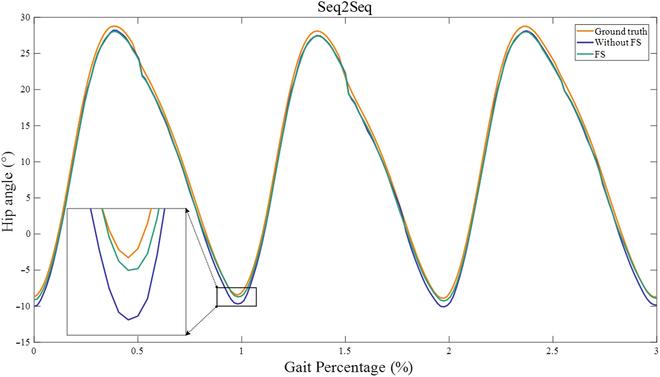
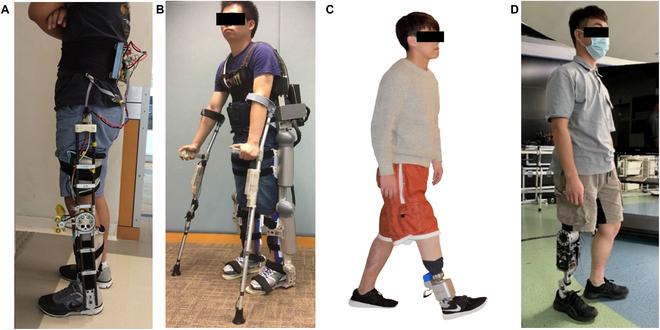
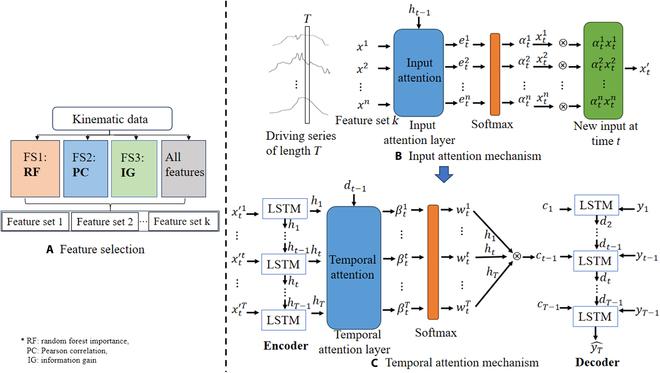
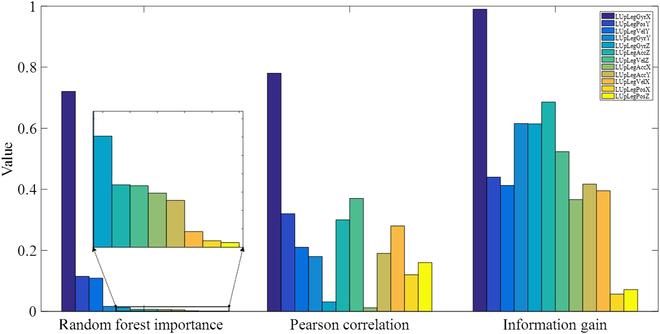
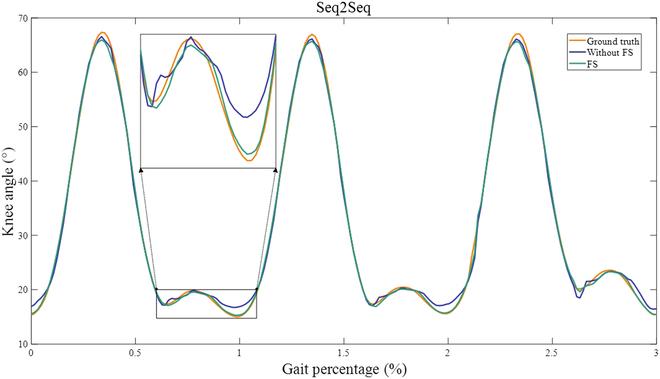
The concept of gait synergy provides novel human-machine interfaces and has been applied to the control of lower limb assistive devices, such as powered prostheses and exoskeletons. Specifically, on the basis of gait synergy, the assistive device can generate/predict the appropriate reference trajectories precisely for the affected or missing parts from the motions of sound parts of the patients. Optimal modeling for gait synergy methods that involves optimal combinations of features (inputs) is required to achieve synergic trajectories that improve human-machine interaction. However, previous studies lack thorough discussions on the optimal methods for synergy modeling. In addition, feature selection (FS) that is crucial for reducing data dimensionality and improving modeling quality has often been neglected in previous studies. Here, we comprehensively investigated modeling methods and FS using 4 up-to-date neural networks: sequence-to-sequence (Seq2Seq), long short-term memory (LSTM), recurrent neural network (RNN), and gated recurrent unit (GRU). We also conducted complete FS using 3 commonly used methods: random forest, information gain, and Pearson correlation. Our findings reveal that Seq2Seq (mean absolute error: 0.404° and 0.596°, respectively) outperforms LSTM, RNN, and GRU for both interlimb and intralimb synergy modeling. Furthermore, FS is proven to significantly improve Seq2Seq's modeling performance ( < 0.05). FS-Seq2Seq even outperforms methods used in existing studies. Therefore, we propose FS-Seq2Seq as a 2-stage strategy for gait synergy modeling in lower limb assistive devices with the aim of achieving synergic and user-adaptive trajectories that improve human-machine interactions.
步态协同的概念提供了新颖的人机接口,并已应用于下肢辅助设备的控制,如动力假肢和外骨骼。具体而言,基于步态协同,辅助设备可以根据患者健全部位的运动精确地为受影响或缺失的部位生成/预测合适的参考轨迹。为了实现改善人机交互的协同轨迹,需要对步态协同方法进行最优建模,这涉及特征(输入)的最优组合。然而,以往的研究缺乏对协同建模最优方法的深入讨论。此外,特征选择(FS)对于降低数据维度和提高建模质量至关重要,但在以往的研究中常常被忽视。在这里,我们使用4种最新的神经网络全面研究了建模方法和FS:序列到序列(Seq2Seq)、长短期记忆(LSTM)、循环神经网络(RNN)和门控循环单元(GRU)。我们还使用3种常用方法进行了完整的FS:随机森林、信息增益和皮尔逊相关。我们的研究结果表明,Seq2Seq(平均绝对误差分别为0.404°和0.596°)在肢体间和肢体内协同建模方面均优于LSTM、RNN和GRU。此外,FS被证明能显著提高Seq2Seq的建模性能(<0.05)。FS-Seq2Seq甚至优于现有研究中使用的方法。因此,我们提出FS-Seq2Seq作为下肢辅助设备步态协同建模的两阶段策略,旨在实现改善人机交互的协同和用户自适应轨迹。


 Zotero 插件