
用于胶质母细胞瘤靶向治疗的仿生纳米颗粒的鼻脑递送
Nose-to-Brain Delivery of Biomimetic Nanoparticles for Glioblastoma Targeted Therapy.
作者信息
Ferreira Natália Noronha, Leite Celisnolia Morais, Moreno Natália Sanchez, Miranda Renata Rank, Pincela Lins Paula Maria, Rodero Camila Fernanda, de Oliveira Junior Edilson, Lima Eliana Martins, Reis Rui M, Zucolotto Valtencir
机构信息
Nanomedicine and Nanotoxicology Group, Physics Institute of São Carlos, São Paulo University, Avenida Trabalhador São Carlense, 400, São Carlos, SP 13560-970, Brazil.
Hasselt University, Faculty of Medicine and Life Sciences, Biomedical Research Institute (BIOMED), Agoralaan, 3590 Diepenbeek, Belgium.
出版信息
ACS Appl Mater Interfaces. 2025 Jan 8;17(1):484-499. doi: 10.1021/acsami.4c16837. Epub 2024 Dec 18.
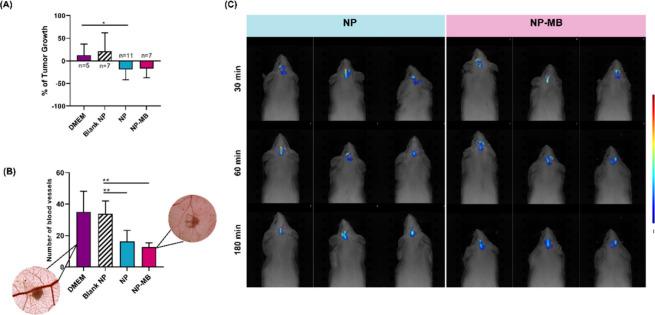
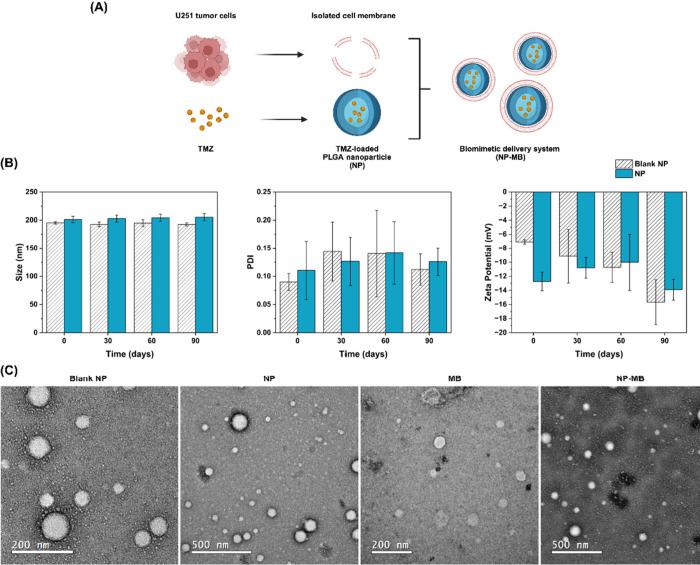
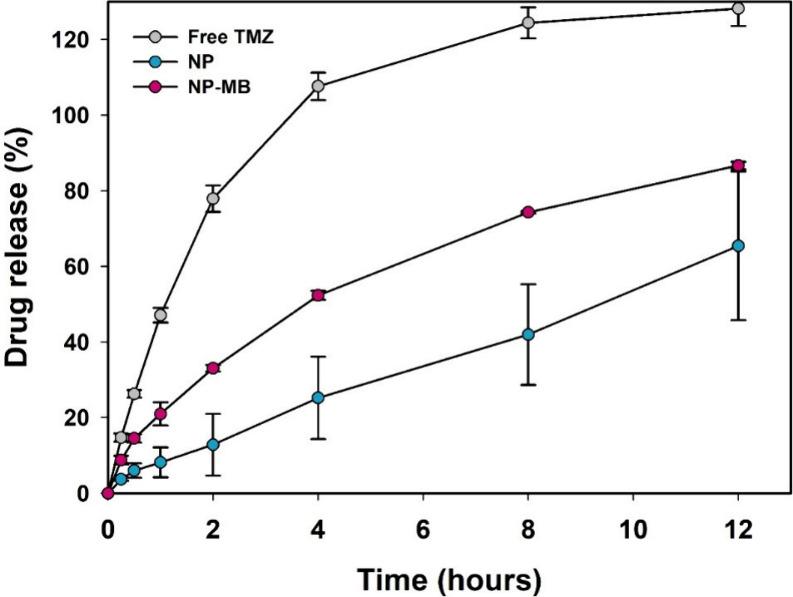
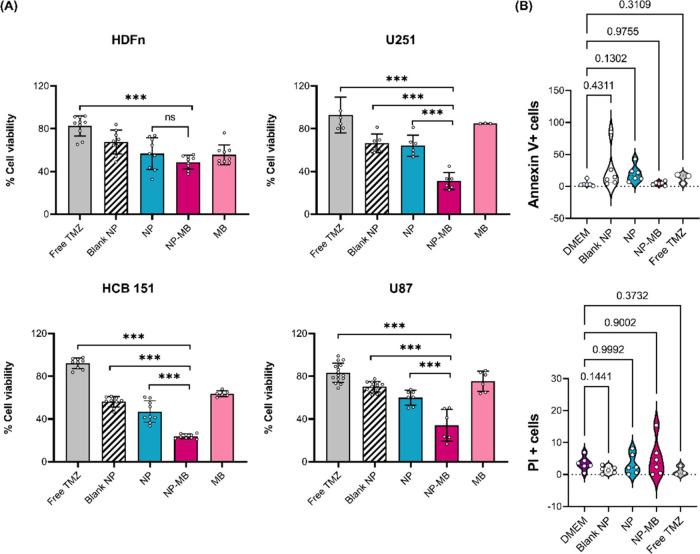
Glioblastoma (GBM) is an extremely aggressive form of brain cancer that remains challenging to treat, especially owing to the lack of effective targeting and drug delivery concerns. Due to its anatomical advantages, the nose-to-brain strategy is an interesting route for drug delivery. Nanoengineering has provided technological tools and innovative strategies to overcome biotechnological limitations, which is promising for improving the effectiveness of conventional therapies. Herein, we designed a biomimetic multifunctional nanostructure produced by polymeric poly(d,l-lactic--glycolic) acid (PLGA) core loaded with Temozolomide (TMZ) coated with cell membrane isolated from glioma cancer cells. The developed nanostructures (NP-MB) were fully characterized, and their biological performance was investigated extensively. The results indicate that NP-MB could control TMZ release and promote TMZ permeation in the nasal porcine mucosa. The higher cytotoxicity of NP-MB in different glioma cell lines, particularly against U251 cells, reinforces their potential for homotypic targeting. The chicken chorioallantoic membrane assay revealed a tumor size reduction and antiangiogenic activity. biodistribution studies showed that NP-MB effectively reaches the brain following nasal administration. These findings suggest that NP-MB holds promise as a biomimetic nanoplatform for effective targeting and homotypic recognition in GBM therapy with high potential for clinical translation.
胶质母细胞瘤(GBM)是一种极具侵袭性的脑癌形式,治疗仍然具有挑战性,尤其是由于缺乏有效的靶向性和药物递送问题。由于其解剖学优势,鼻脑给药策略是一种有趣的药物递送途径。纳米工程提供了技术工具和创新策略来克服生物技术限制,这对于提高传统疗法的有效性很有前景。在此,我们设计了一种仿生多功能纳米结构,由负载替莫唑胺(TMZ)的聚(d,l-乳酸-乙醇酸)(PLGA)聚合物核心制成,并涂覆有从胶质瘤癌细胞中分离的细胞膜。对所开发的纳米结构(NP-MB)进行了全面表征,并广泛研究了其生物学性能。结果表明,NP-MB可以控制TMZ的释放并促进TMZ在猪鼻黏膜中的渗透。NP-MB在不同胶质瘤细胞系中具有更高的细胞毒性,特别是对U251细胞,这增强了它们的同源靶向潜力。鸡胚绒毛尿囊膜试验显示肿瘤尺寸减小和抗血管生成活性。生物分布研究表明,鼻内给药后NP-MB能有效到达脑部。这些发现表明,NP-MB有望作为一种仿生纳米平台,在GBM治疗中实现有效的靶向和同源识别,具有很高的临床转化潜力。


 Zotero 插件