
人类缺血性病变中表达GPR17的少突胶质前体细胞的特征及其与反应性神经胶质反应的相关性
Characterisation of GPR17-expressing oligodendrocyte precursors in human ischaemic lesions and correlation with reactive glial responses.
作者信息
Raffaele Stefano, Clausen Bettina Hjelm, Mannella Francesca Carolina, Wirenfeldt Martin, Marangon Davide, Tidgen Sarah Boe, Corradini Silvia, Madsen Kirsten, Lecca Davide, Abbracchio Maria Pia, Lambertsen Kate Lykke, Fumagalli Marta
机构信息
Department of Pharmacological and Biomolecular Sciences 'Rodolfo Paoletti', Università degli Studi di Milano, Milan, Italy.
Department of Neurobiology Research, Institute of Molecular Medicine, University of Southern Denmark, Odense, Denmark.
出版信息
J Pathol. 2025 Feb;265(2):226-243. doi: 10.1002/path.6381. Epub 2024 Dec 20.
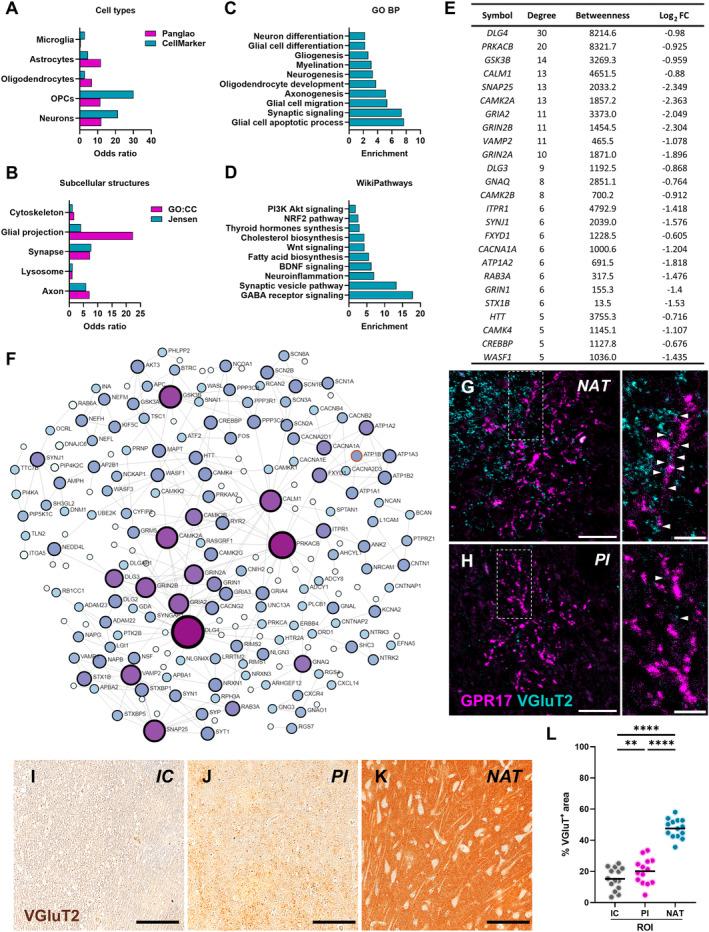
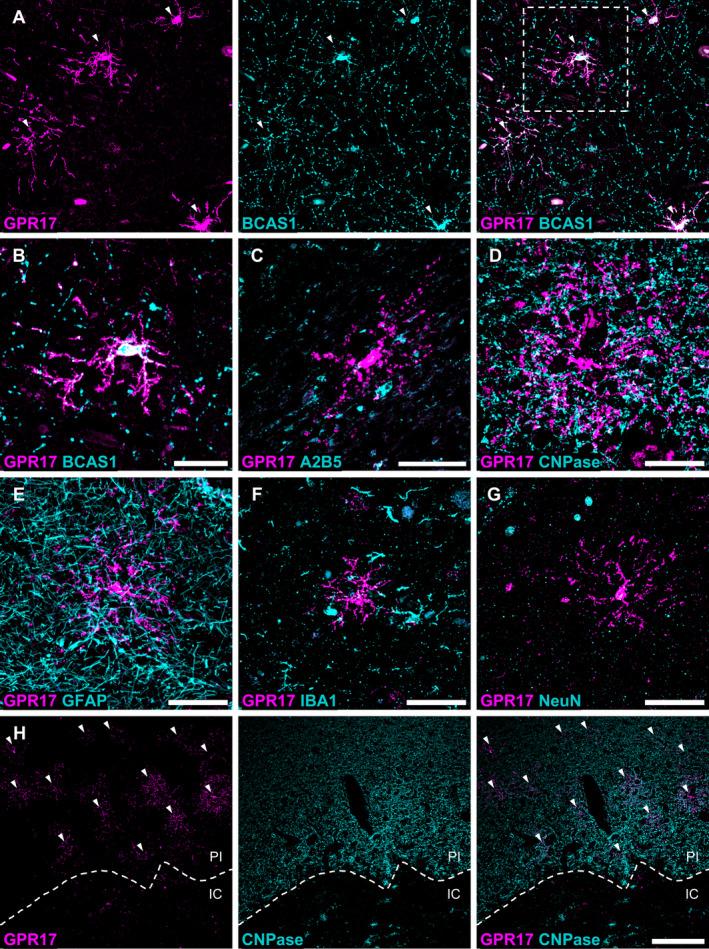
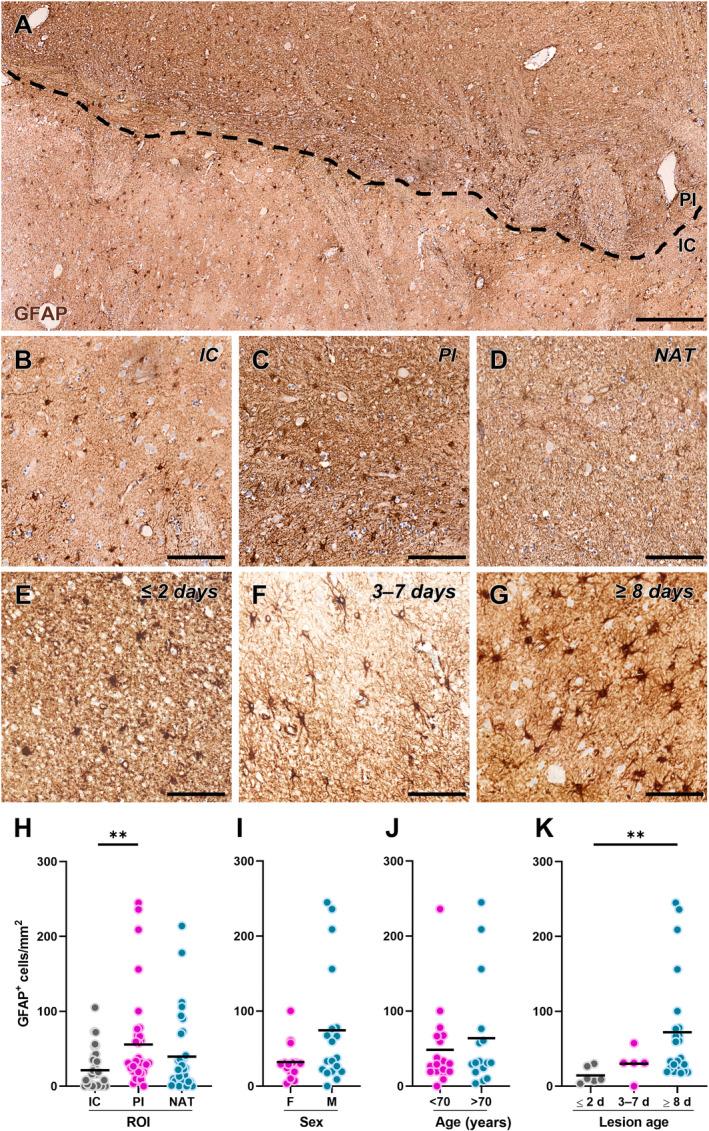
White matter damage and subsequent demyelination significantly contribute to long-term functional impairment after ischaemic stroke. Identifying novel pharmacological targets to restore myelin integrity by promoting the maturation of oligodendrocyte precursor cells (OPCs) into new myelinating oligodendrocytes may open new perspectives for ischaemic stroke treatment. In this respect, previous studies highlighted the role of the G protein-coupled membrane receptor 17 (GPR17) as a key regulator of OPC differentiation in experimental models of brain injury, including ischaemic stroke. To determine the translational value of GPR17 as a possible target in the context of human disease, we exploited immunohistochemistry to characterise the distribution of GPR17-expressing cells in brain tissue samples from ischaemic stroke cases and correlated it with the reactive state of neighbouring glial cells. The results showed that GPR17 specifically decorates a subpopulation of differentiation-committed OPCs, labelled by the peculiar marker breast carcinoma-amplified sequence 1 (BCAS1), that accumulates in the peri-infarct region in the later stages after the ischaemic event. Interestingly, the response of GPR17-expressing cells appears to be paralleled by the switch of reactive microglia/macrophages from a phagocytic to a dystrophic phenotype and by astrocytic scar formation. A negative correlation was found between GPR17-expressing OPCs and reactive microglia/macrophages and astrocytes surrounding chronic ischaemic lesions in female subjects, while the same relationship was less pronounced in males. These results were reinforced by bioinformatic analysis of a publicly available transcriptomic dataset, which implicated a possible role of inflammation and defective neuron-to-OPC communication in remyelination failure after ischaemic damage. Hence, these data strengthen the relevance of GPR17-based remyelinating therapies for the treatment of ischaemic stroke. © 2024 The Author(s). The Journal of Pathology published by John Wiley & Sons Ltd on behalf of The Pathological Society of Great Britain and Ireland.
缺血性中风后,白质损伤及随后的脱髓鞘显著导致长期功能障碍。通过促进少突胶质前体细胞(OPC)成熟为新的髓鞘形成少突胶质细胞来恢复髓鞘完整性,确定新的药理学靶点,可能为缺血性中风治疗开辟新的前景。在这方面,先前的研究强调了G蛋白偶联膜受体17(GPR17)在包括缺血性中风在内的脑损伤实验模型中作为OPC分化关键调节因子的作用。为了确定GPR17作为人类疾病背景下可能靶点的转化价值,我们利用免疫组织化学来表征缺血性中风病例脑组织样本中表达GPR17的细胞分布,并将其与相邻神经胶质细胞的反应状态相关联。结果表明,GPR17特异性标记了一群由特殊标志物乳腺癌扩增序列1(BCAS1)标记的、已承诺分化的OPC,这些细胞在缺血事件后期积聚在梗死周围区域。有趣的是,表达GPR17的细胞的反应似乎与反应性小胶质细胞/巨噬细胞从吞噬表型向营养不良表型的转变以及星形胶质细胞瘢痕形成同时发生。在女性受试者中,表达GPR17的OPC与慢性缺血性病变周围的反应性小胶质细胞/巨噬细胞和星形胶质细胞之间存在负相关,而在男性中这种关系不太明显。对一个公开可用的转录组数据集的生物信息学分析强化了这些结果,该分析表明炎症和神经元与OPC之间有缺陷的通讯在缺血性损伤后髓鞘再生失败中可能起作用。因此,这些数据加强了基于GPR17的髓鞘再生疗法在缺血性中风治疗中的相关性。© 2024作者。《病理学杂志》由约翰·威利父子有限公司代表大不列颠及爱尔兰病理学会出版。


 Zotero 插件