
ssMutPA:用于癌症精准医学的基于单样本突变的通路分析方法。
ssMutPA: single-sample mutation-based pathway analysis approach for cancer precision medicine.
作者信息
He Yalan, Lai Jiyin, Wang Qian, Pan Bingyue, Li Siyuan, Zhao Xilong, Wang Ziyi, Zhang Yongbao, Tang Yujie, Han Junwei
机构信息
College of Bioinformatics Science and Technology, Harbin Medical University, Harbin 150081, China.
出版信息
Gigascience. 2024 Jan 2;13. doi: 10.1093/gigascience/giae105.
BACKGROUND
Single-sample pathway enrichment analysis is an effective approach for identifying cancer subtypes and pathway biomarkers, facilitating the development of precision medicine. However, the existing approaches focused on investigating the changes in gene expression levels but neglected somatic mutations, which play a crucial role in cancer development.
FINDINGS
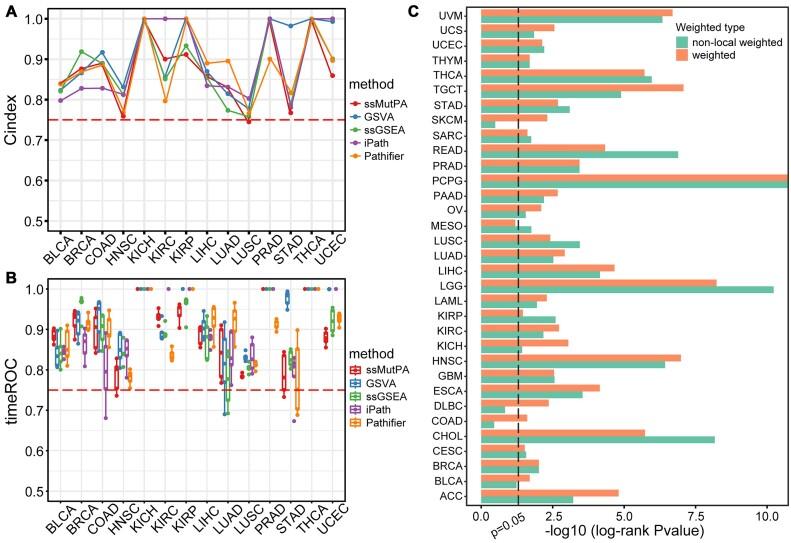
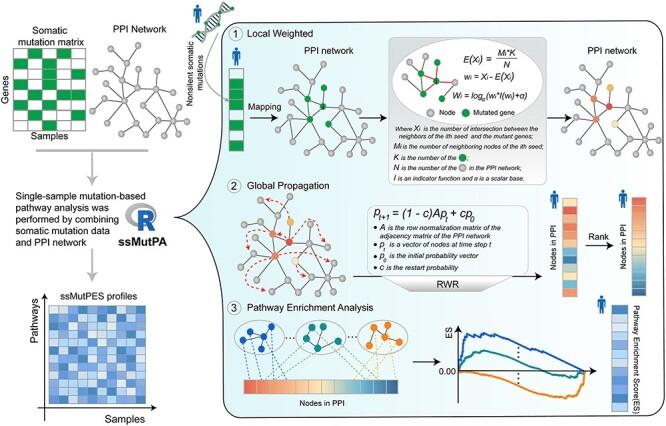
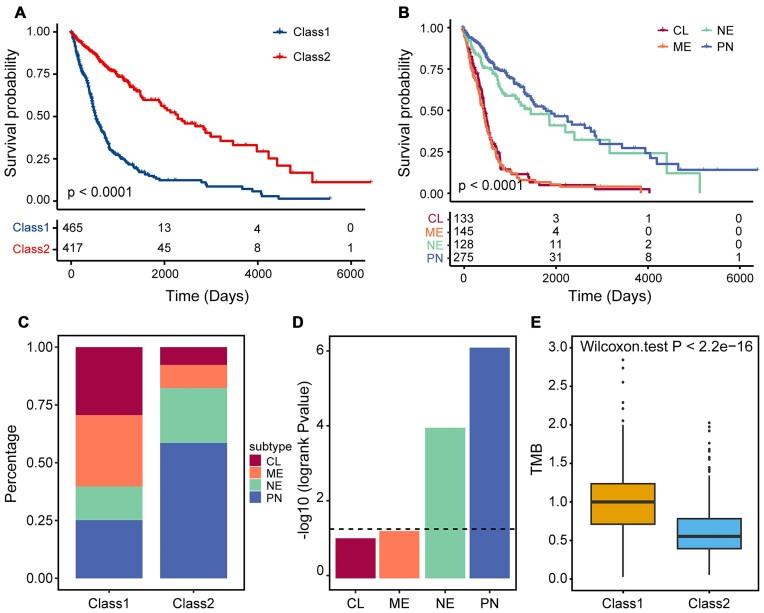
In this study, we proposed a novel single-sample mutation-based pathway analysis approach (ssMutPA) to infer individualized pathway activities by integrating somatic mutation data and the protein-protein interaction network. For each sample, ssMutPA first uses local and global weighted strategies to evaluate the effects of genes from mutations according to the network topology and then calculates a single-sample mutation-based pathway enrichment score (ssMutPES) to reflect the accumulated effect of mutations of each pathway. To illustrate the performance of ssMutPA, we applied it to 33 cancer cohorts from The Cancer Genome Atlas database and revealed patient stratification with significantly different prognosis in each cancer type based on the ssMutPES profiles. We also found that the identified characteristic pathways with high overlap across different cancers could be used as potential prognosis biomarkers. Moreover, we applied ssMutPA to 2 melanoma cohorts with immunotherapy and identified a subgroup of patients who may benefit from therapy.
CONCLUSIONS
We provided evidence that ssMutPA could infer mutation-based individualized pathway activity profiles and complement the current individualized pathway analysis approaches focused on gene expression data, which may offer the potential for the development of precision medicine. ssMutPA is available at https://CRAN.R-project.org/package=ssMutPA.
背景
单样本通路富集分析是识别癌症亚型和通路生物标志物的有效方法,有助于精准医学的发展。然而,现有方法侧重于研究基因表达水平的变化,却忽略了在癌症发展中起关键作用的体细胞突变。
研究结果
在本研究中,我们提出了一种基于单样本突变的新型通路分析方法(ssMutPA),通过整合体细胞突变数据和蛋白质-蛋白质相互作用网络来推断个体通路活性。对于每个样本,ssMutPA首先根据网络拓扑结构使用局部和全局加权策略来评估突变基因的影响,然后计算基于单样本突变的通路富集分数(ssMutPES)以反映每个通路突变的累积效应。为了说明ssMutPA的性能,我们将其应用于来自癌症基因组图谱数据库的33个癌症队列,并基于ssMutPES图谱揭示了每种癌症类型中具有显著不同预后的患者分层。我们还发现,在不同癌症中具有高度重叠的已识别特征通路可作为潜在的预后生物标志物。此外,我们将ssMutPA应用于2个接受免疫治疗的黑色素瘤队列,并确定了可能从治疗中受益的患者亚组。
结论
我们提供的证据表明,ssMutPA可以推断基于突变的个体通路活性谱,并补充当前专注于基因表达数据的个体通路分析方法,这可能为精准医学的发展提供潜力。ssMutPA可在https://CRAN.R-project.org/package=ssMutPA获取。



 Zotero 插件