
生成巨噬细胞与乳腺癌类肿瘤共培养物的方案。
Protocol for generating a co-culture of macrophages with breast cancer tumoroids.
作者信息
Raffo-Romero Antonella, Ziane-Chaouche Lydia, Hajjaji Nawale, Salzet Michel, Duhamel Marie
机构信息
University Lille, Inserm, CHU Lille, U1192 - Protéomique Réponse Inflammatoire Spectrométrie de Masse - PRISM, F-59000 Lille, France; Equipe Labellisée Ligue Contre le Cancer, Lille, France.
University Lille, Inserm, CHU Lille, U1192 - Protéomique Réponse Inflammatoire Spectrométrie de Masse - PRISM, F-59000 Lille, France; Equipe Labellisée Ligue Contre le Cancer, Lille, France.
出版信息
STAR Protoc. 2025 Mar 21;6(1):103536. doi: 10.1016/j.xpro.2024.103536. Epub 2024 Dec 20.
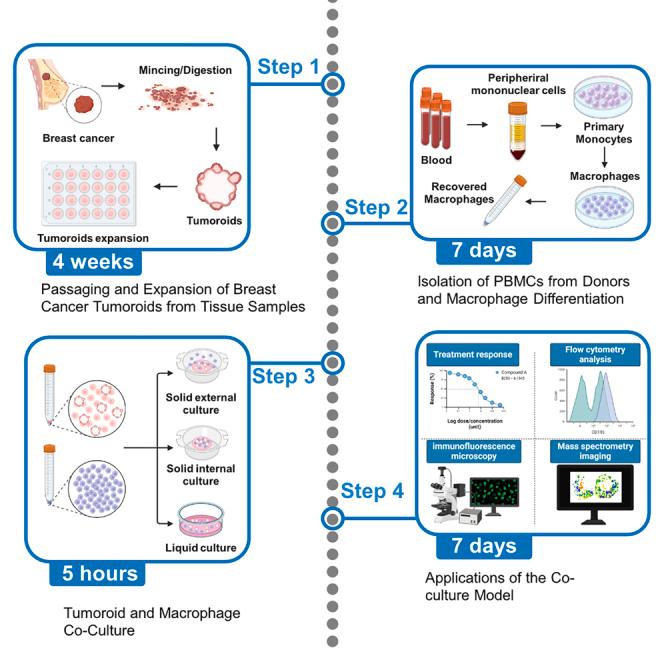
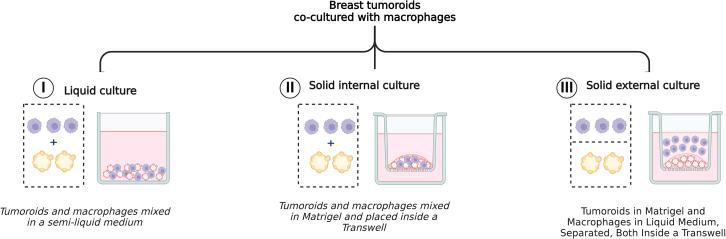
Cancer progression and treatment outcomes are heavily influenced by the tumor microenvironment (TME), especially through immune cell interactions. Here, we present a protocol for generating co-cultures of tumoroids with macrophages, either semi-liquid or Matrigel-embedded. We describe steps for macrophage preparation, co-culture establishment, and medium adjustments to support cell viability and function. While optimized for breast cancer models, this protocol can be adapted to other tumor types with appropriate medium adjustments. For complete details on the use and execution of this protocol, please refer to Raffo-Romero et al..
癌症进展和治疗结果受到肿瘤微环境(TME)的严重影响,尤其是通过免疫细胞相互作用。在此,我们展示了一种用于生成肿瘤类器官与巨噬细胞共培养物的方案,共培养物可以是半液体形式或包埋于基质胶中。我们描述了巨噬细胞制备、共培养建立以及培养基调整的步骤,以支持细胞活力和功能。虽然该方案是针对乳腺癌模型进行优化的,但通过适当调整培养基,也可适用于其他肿瘤类型。有关该方案使用和执行的完整详细信息,请参考拉福 - 罗梅罗等人的研究。

 Zotero 插件