
血脑屏障可渗透肽-紫杉醇偶联物ANG1005用于复发性高级别胶质瘤患者的II期试验
Phase II trial of blood-brain barrier permeable peptide-paclitaxel conjugate ANG1005 in patients with recurrent high-grade glioma.
作者信息
Dmello Crismita, Brenner Andrew, Piccioni David, Wen Patrick Y, Drappatz Jan, Mrugala Maciej, Lewis Lionel D, Schiff David, Fadul Camilo E, Chamberlain Marc, Kesari Santosh, Ahluwalia Manmeet, Ghosh Debora, Sonabend Adam M, Kumthekar Priya
机构信息
Northwestern Medicine Malnati Brain Tumor Institute of the Lurie Comprehensive Cancer Center, Feinberg School of Medicine, Chicago, Illinois, USA.
Department of Neurological Surgery, Northwestern University, Feinberg School of Medicine, Chicago, Illinois, USA.
出版信息
Neurooncol Adv. 2024 Dec 14;6(1):vdae186. doi: 10.1093/noajnl/vdae186. eCollection 2024 Jan-Dec.
BACKGROUND
This study is a phase II clinical trial to evaluate the efficacy, safety, and tolerability of the blood-brain barrier (BBB) permeable peptide-paclitaxel conjugate ANG1005 in patients with recurrent high-grade glioma (HGG) (NCT01967810).
METHODS
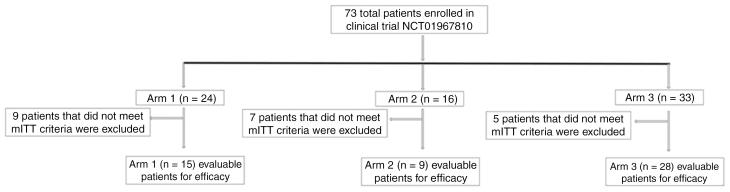
Seventy-three patients were enrolled in 3 separate arms-recurrent glioblastoma (GBM) (Arm 1), bevacizumab refractory GBM (Arm 2), and grade 3 anaplastic gliomas (AGs) (Arm 3). The study was started in October 2013, and the data were locked on September 29, 2017. Safety was evaluated for all three arms ( = 73), and the primary endpoint for Arms 1 and 3 was objective response rate (ORR), and Arm 2 primary endpoint was progression-free survival rate at 3 months (PFS3).
RESULTS
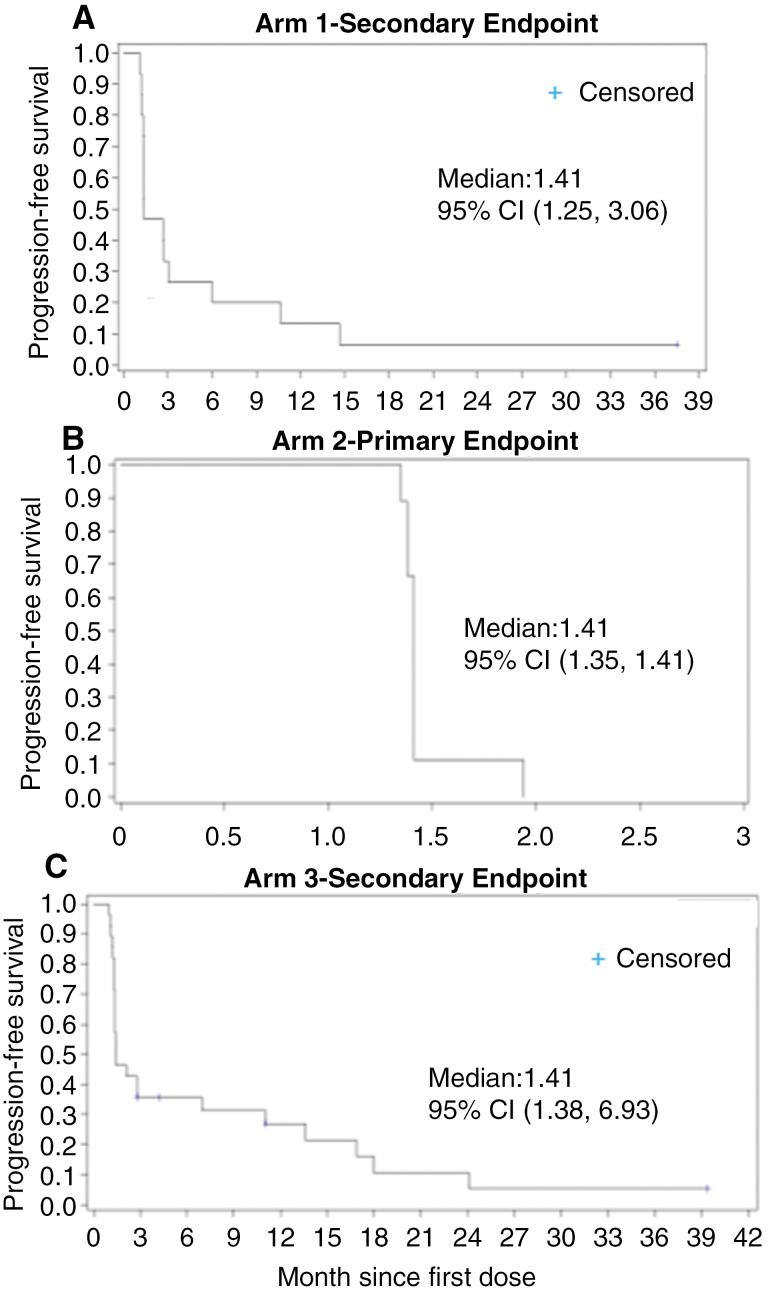
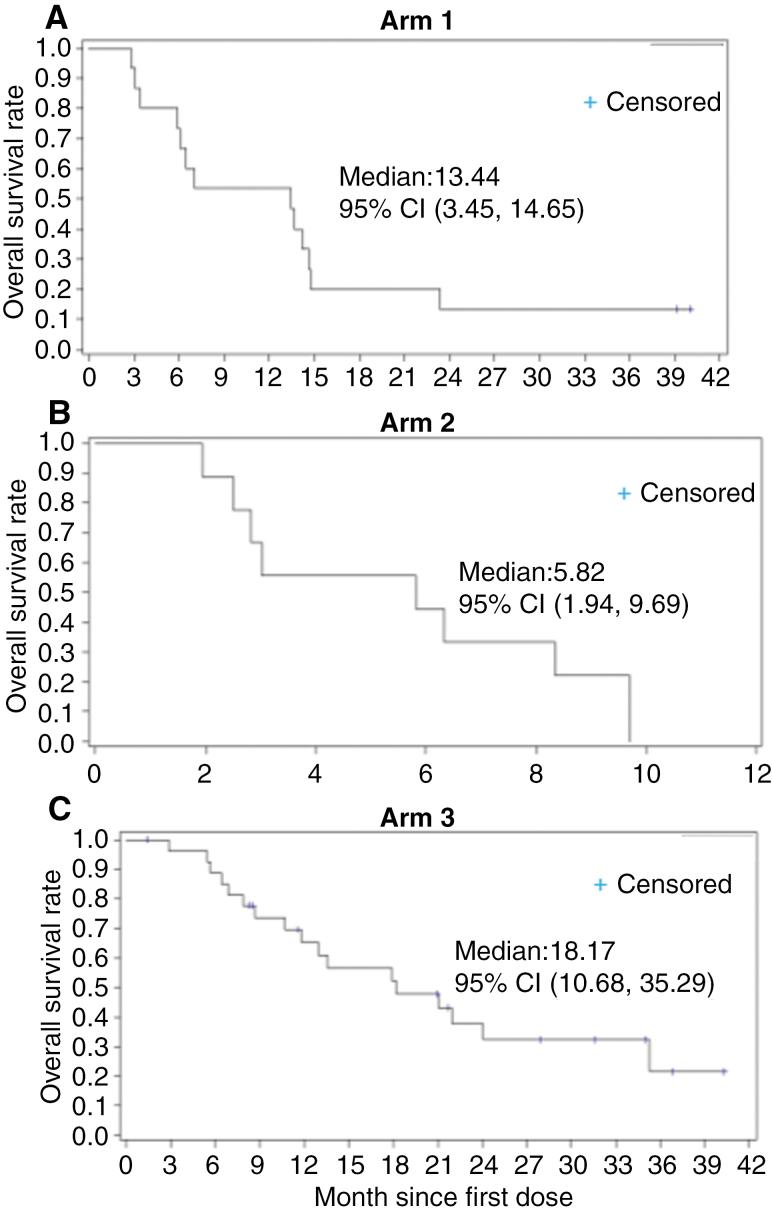
Overall, the safety of ANG1005 was found to be consistent with a taxane toxicity profile. Otherwise, the primary efficacy endpoints of ORR and PFS were not met. The most common adverse events (AEs) were hematologic (32.9%), alopecia (31.5%), and fatigue (30.1%). The median PFS was 1.4 months (95% CI: 1.4, 2.1) and similar across all the treatment arms. The median overall survival was 13.4 months (95% CI: 3.4, 14.6) in Arm 1, 5.8 months (95% CI: 1.9, 9.7) in Arm 2, and 18.2 months (95% CI: 10.7, 35.3) in Arm 3.
CONCLUSION
A dose of 600 mg/m was determined to be safe in this study. However, the primary efficacy endpoint was not met in the NCT01967810-ANG1005 trial, and no further studies are planned in the glioma setting with this compound.
背景
本研究是一项II期临床试验,旨在评估血脑屏障(BBB)可渗透的肽-紫杉醇偶联物ANG1005在复发性高级别胶质瘤(HGG)患者中的疗效、安全性和耐受性(NCT01967810)。
方法
73例患者被纳入3个独立的队列——复发性胶质母细胞瘤(GBM)(队列1)、贝伐单抗难治性GBM(队列2)和3级间变性胶质瘤(AGs)(队列3)。该研究于2013年10月开始,数据于2017年9月29日锁定。对所有三个队列(n = 73)进行安全性评估,队列1和3的主要终点是客观缓解率(ORR),队列2的主要终点是3个月无进展生存率(PFS3)。
结果
总体而言,发现ANG1005的安全性与紫杉烷毒性特征一致。此外,未达到ORR和PFS的主要疗效终点。最常见的不良事件(AE)是血液学事件(32.9%)、脱发(31.5%)和疲劳(30.1%)。中位PFS为1.4个月(95%CI:1.4,2.1),在所有治疗队列中相似。队列1的中位总生存期为13.4个月(95%CI:3.4,14.6),队列2为5.8个月(95%CI:1.9,9.7),队列3为18.2个月(95%CI:10.7,35.3)。
结论
本研究确定600mg/m²的剂量是安全的。然而,在NCT01967810-ANG1005试验中未达到主要疗效终点,并且没有计划在胶质瘤环境中对该化合物进行进一步研究。

 Zotero 插件