
癌症中 的致癌激活:精准肿瘤学中新兴的靶向治疗。 你提供的原文中有个关键部分缺失了具体内容,请补充完整以便能更准确地翻译。
Oncogenic activation of in cancers: Emerging targeted therapies in precision oncology.
作者信息
Wang Yuxiang, Rozen Valery, Zhao Yiqing, Wang Zhenghe
机构信息
Department of Genetics and Genome Sciences, Case Western Reserve University, Cleveland, OH 44106, USA.
Case Comprehensive Cancer Center, Case Western Reserve University, Cleveland, OH 44106, USA.
出版信息
Genes Dis. 2024 Sep 10;12(2):101430. doi: 10.1016/j.gendis.2024.101430. eCollection 2025 Mar.
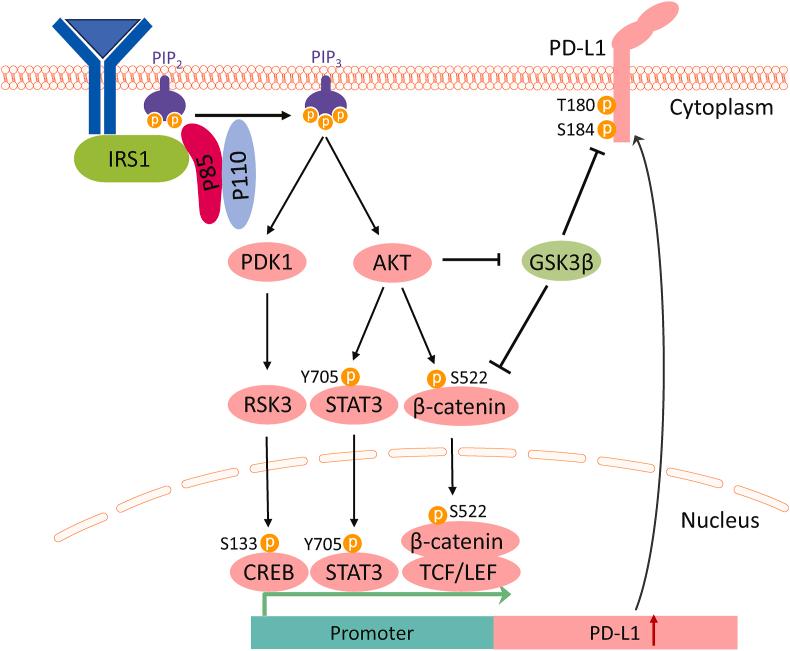
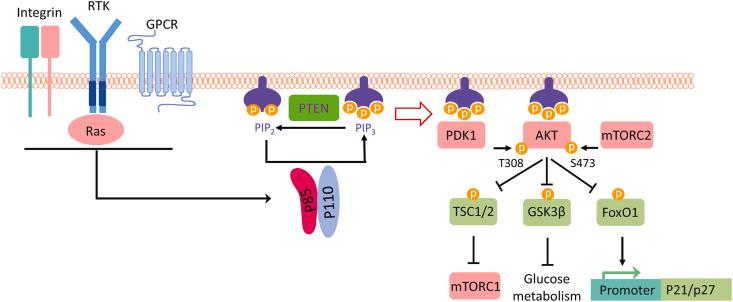
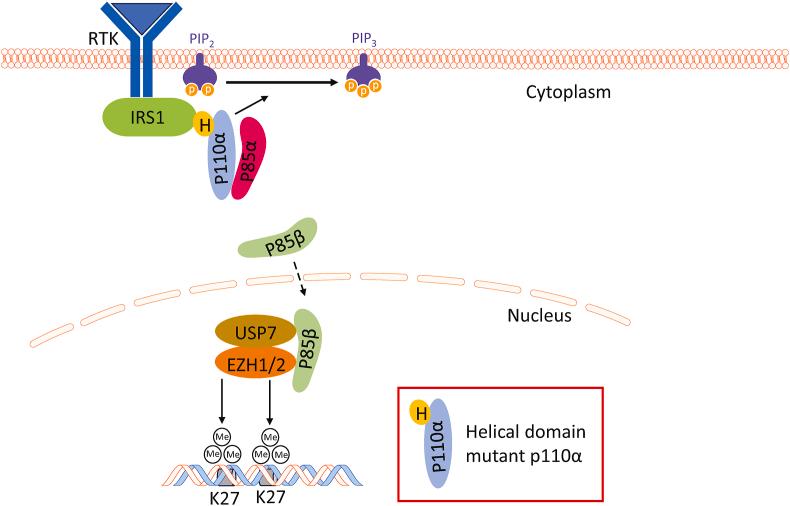
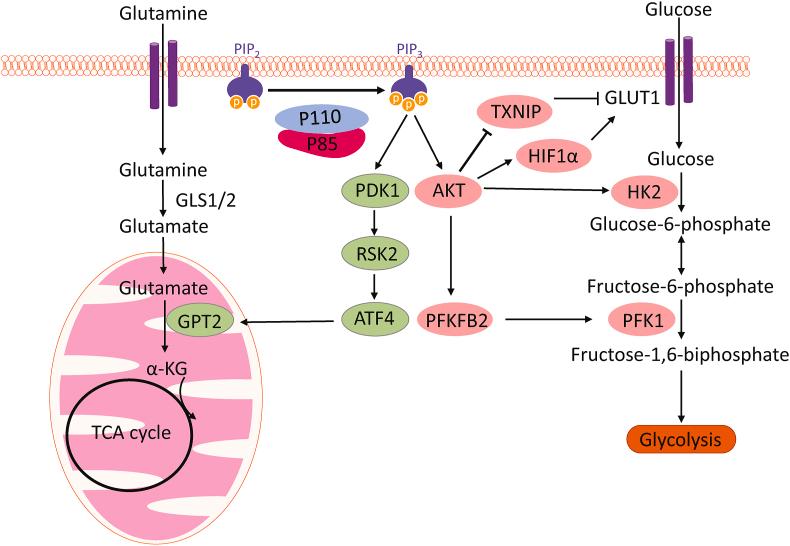
Phosphoinositide 3-kinases (PI3Ks) are heterodimers consisting of a p110 catalytic subunit and a p85 regulatory subunit. The gene, which encodes the p110α, is the most frequently mutated oncogene in cancer. Oncogenic mutations activate the PI3K pathway, promote tumor initiation and development, and mediate resistance to anti-tumor treatments, making the mutant p110α an excellent target for cancer therapy. mutations occur in two hotspot regions: one in the helical domain and the other in the kinase domain. The helical and kinase domain mutations exert their oncogenic function through distinct mechanisms. For example, helical domain mutations of p110α gained direct interaction with insulin receptor substrate 1 (IRS-1) to activate the downstream signaling pathways. Moreover, p85β proteins disassociate from helical domain mutant p110α, translocate into the nucleus, and stabilize enhancer of zeste homolog 1/2 (EZH1/2). Due to the fundamental role of PI3Kα in tumor initiation and development, PI3Kα-specific inhibitors, represented by FDA-approved alpelisib, have developed rapidly in recent decades. However, side effects, including on-target side effects such as hyperglycemia, restrict the maximum dose and thus clinical efficacy of alpelisib. Therefore, developing p110α mutant-specific inhibitors to circumvent on-target side effects becomes a new direction for targeting mutant cancers. In this review, we briefly introduce the function of the PI3K pathway and discuss how mutations rewire cell signaling, metabolism, and tumor microenvironment, as well as therapeutic strategies under development to treat patients with tumors harboring a mutation.
磷脂酰肌醇3激酶(PI3Ks)是由一个p110催化亚基和一个p85调节亚基组成的异二聚体。编码p110α的基因是癌症中最常发生突变的致癌基因。致癌突变激活PI3K通路,促进肿瘤起始和发展,并介导对抗肿瘤治疗的抗性,使得突变型p110α成为癌症治疗的一个理想靶点。突变发生在两个热点区域:一个在螺旋结构域,另一个在激酶结构域。螺旋结构域和激酶结构域的突变通过不同机制发挥其致癌功能。例如,p110α的螺旋结构域突变与胰岛素受体底物1(IRS-1)获得直接相互作用以激活下游信号通路。此外,p85β蛋白从螺旋结构域突变型p110α解离,转位到细胞核中,并稳定zeste同源物1/2增强子(EZH1/2)。由于PI3Kα在肿瘤起始和发展中的基本作用,以FDA批准的阿培利司为代表的PI3Kα特异性抑制剂在近几十年中迅速发展。然而,包括高血糖等靶向副作用限制了阿培利司的最大剂量,从而限制了其临床疗效。因此,开发p110α突变体特异性抑制剂以规避靶向副作用成为靶向携带该突变的癌症患者的新方向。在本综述中,我们简要介绍PI3K通路的功能,并讨论该突变如何重塑细胞信号传导、代谢和肿瘤微环境,以及正在开发的治疗携带该突变肿瘤患者的治疗策略。

 Zotero 插件