
用于选择阿片类药物治疗癌症疼痛的双单核苷酸多态性生物标志物组合
Dual single‑nucleotide polymorphism biomarker combination for opioid selection to treat cancer pain.
作者信息
Fujita Yoshihiko, Matsuoka Hiromichi, Chiba Yasutaka, Tsurutani Junji, Yoshida Takeshi, Sakai Kiyohiro, Nakura Miki, Sakamoto Ryo, Makimura Chihiro, Ohtake Yoichi, Tanaka Kaoru, Hayashi Hidetoshi, Takahama Takayuki, Tanizaki Junko, Koyama Atsuko, Nishio Kazuto, Nakagawa Kazuhiko
机构信息
Department of Genome Biology, Kindai University Faculty of Medicine, Osaka 589-8511, Japan.
Department of Psychosomatic Medicine, Kindai University Faculty of Medicine, Osaka 589-8511, Japan.
出版信息
Mol Clin Oncol. 2024 Nov 29;22(2):14. doi: 10.3892/mco.2024.2809. eCollection 2025 Feb.
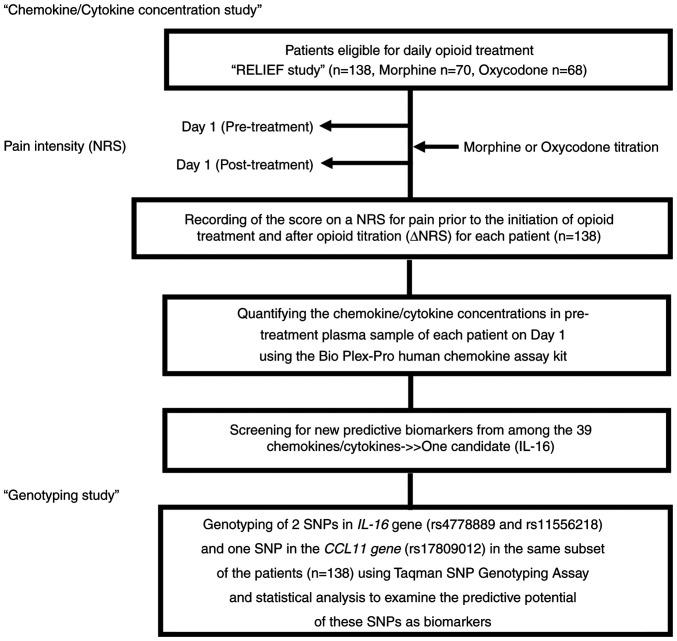
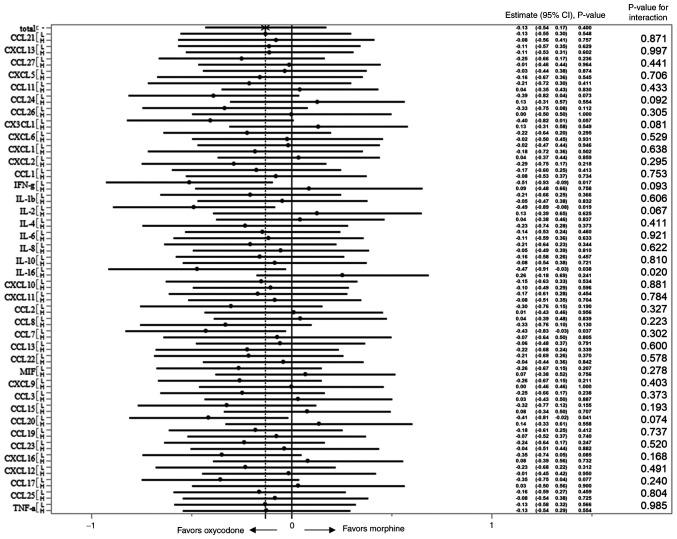
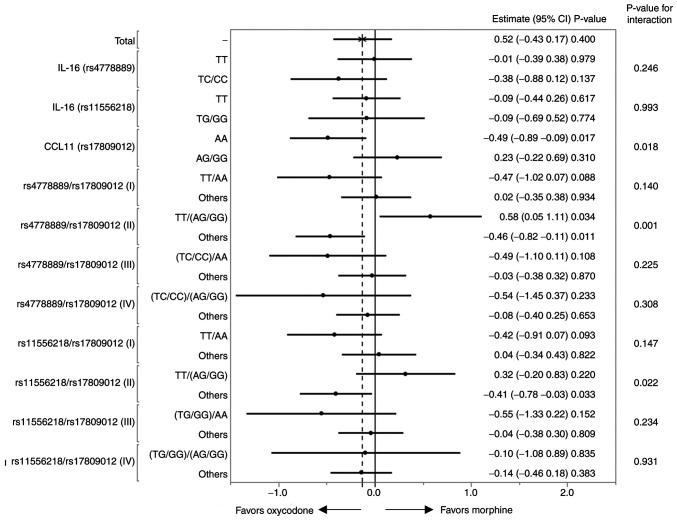
We have been exploring biomarkers that could help physicians select the appropriate opioid for individualized treatment of cancer pain. Recently, we identified a single nucleotide polymorphism (SNP) of (rs17809012) as one such biomarker that was significantly associated with the analgesic effect of morphine. The current study measured the plasma concentrations of chemokines/cytokines in pre-treatment plasma samples of a total of 138 patients who were randomized to receive morphine (n=70) or oxycodone (n=68). Based on the results, one cytokine, IL-16, was identified whose plasma concentrations showed a clear bias between patients with cancer pain who responded well and responded poorly to oxycodone. A genotypic analysis also identified a SNP of the gene (rs4778889) as being significantly associated with the analgesic effect of oxycodone. Whether both of the SNPs identified as being significant ( rs17809012 and rs4778889) could be used in combination to accurately predict which opioid might be the most suitable to provide pain relief in patients with cancer was assessed. Morphine tended to provide superior analgesic effect over oxycodone in patients with the rs4778889 TT genotype and the rs17809012 AG/GG genotype (n=45), while a trend towards a greater analgesic effect of oxycodone was observed in patients with other genotype combinations of these SNPs (n=93) (P=0.0012 for the interaction), suggesting that the rs4778889 and rs17809012 SNPs could serve as a potential dual-biomarker combination for personalized analgesic therapy in patients with cancer pain.
我们一直在探索可帮助医生选择合适阿片类药物以个体化治疗癌症疼痛的生物标志物。最近,我们鉴定出一种单核苷酸多态性(SNP)(rs17809012)作为这样一种生物标志物,它与吗啡的镇痛效果显著相关。当前研究测量了总共138例随机接受吗啡(n = 70)或羟考酮(n = 68)治疗的患者治疗前血浆样本中趋化因子/细胞因子的血浆浓度。基于这些结果,鉴定出一种细胞因子IL - 16,其血浆浓度在对羟考酮反应良好和反应不佳的癌症疼痛患者之间显示出明显差异。基因型分析还鉴定出该基因的一个SNP(rs4778889)与羟考酮的镇痛效果显著相关。评估了鉴定为显著的两个SNP(rs17809012和rs4778889)是否可联合使用以准确预测哪种阿片类药物可能最适合为癌症患者提供疼痛缓解。在具有rs4778889 TT基因型和rs17809012 AG/GG基因型的患者(n = 45)中,吗啡倾向于比羟考酮提供更好的镇痛效果,而在这些SNP的其他基因型组合的患者(n = 93)中观察到羟考酮有更大镇痛效果的趋势(交互作用P = 0.0012),这表明rs4778889和rs17809012 SNPs可作为癌症疼痛患者个性化镇痛治疗的潜在双生物标志物组合。
 Zotero 插件