
靶向半胱天冬酶-8:一种对抗肝细胞癌的新策略。
Targeting caspase-8: a new strategy for combating hepatocellular carcinoma.
作者信息
Chen Haoran, Lin Yumeng, Chen Jie, Luo Xuemei, Kan Yubo, He Yuqi, Zhu Renhe, Jin Jiahui, Li Dongxuan, Wang Yi, Han Zhongyu
机构信息
Department of General Surgery, Chengdu Xinhua Hospital Affiliated to North Sichuan Medical College, Chengdu, China.
Health Management Center, Nanjing Tongren Hospital, School of Medicine, Southeast University, Nanjing, China.
出版信息
Front Immunol. 2024 Dec 12;15:1501659. doi: 10.3389/fimmu.2024.1501659. eCollection 2024.
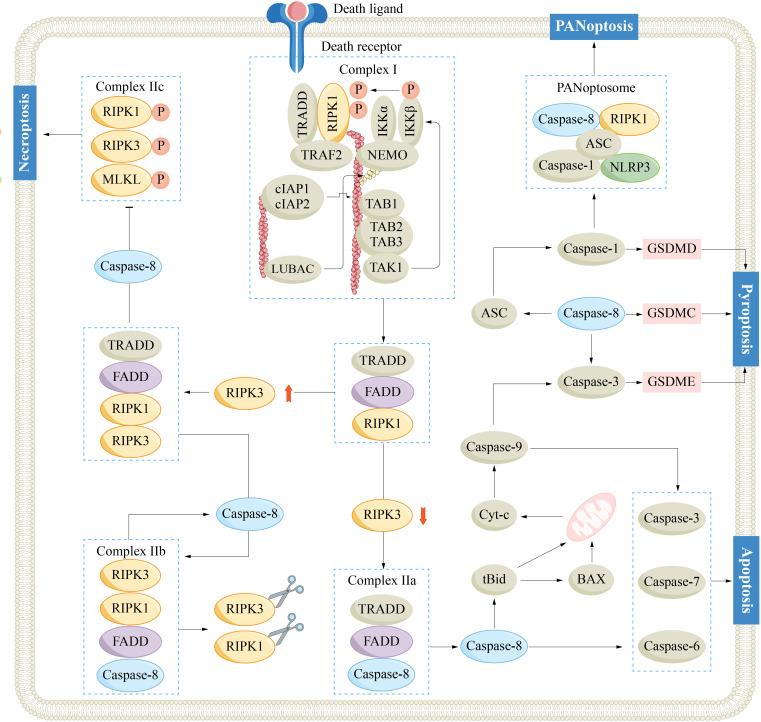
Hepatocellular carcinoma (HCC) represents the most prevalent form of primary liver cancer and has a high mortality rate. Caspase-8 plays a pivotal role in an array of cellular signaling pathways and is essential for the governance of programmed cell death mechanisms, inflammatory responses, and the dynamics of the tumor microenvironment. Dysregulation of caspase-8 is intricately linked to the complex biological underpinnings of HCC. In this manuscript, we provide a comprehensive review of the regulatory roles of caspase-8 in apoptosis, necroptosis, pyroptosis, and PANoptosis, as well as its impact on inflammatory reactions and the intricate interplay with critical immune cells within the tumor microenvironment, such as tumor-associated macrophages, T cells, natural killer cells, and dendritic cells. Furthermore, we emphasize how caspase-8 plays pivotal roles in the development, progression, and drug resistance observed in HCC, and explore the potential of targeting caspase-8 as a promising strategy for HCC treatment.
肝细胞癌(HCC)是原发性肝癌最常见的形式,死亡率很高。半胱天冬酶-8在一系列细胞信号通路中起关键作用,对于调控程序性细胞死亡机制、炎症反应以及肿瘤微环境的动态变化至关重要。半胱天冬酶-8的失调与HCC复杂的生物学基础密切相关。在本手稿中,我们全面综述了半胱天冬酶-8在凋亡、坏死性凋亡、细胞焦亡和PANoptosis中的调控作用,及其对炎症反应的影响,以及与肿瘤微环境中关键免疫细胞(如肿瘤相关巨噬细胞、T细胞、自然杀伤细胞和树突状细胞)的复杂相互作用。此外,我们强调半胱天冬酶-8在HCC的发生、发展和耐药性中如何发挥关键作用,并探讨将靶向半胱天冬酶-8作为HCC治疗的一种有前景策略的潜力。

 Zotero 插件