
细菌外膜囊泡(OMV)包裹的二氧化钛纳米颗粒:口腔癌治疗中增强放疗和免疫调节的双重作用策略
Bacterial Outer Membrane Vesicle (OMV)-Encapsulated TiO Nanoparticles: A Dual-Action Strategy for Enhanced Radiotherapy and Immunomodulation in Oral Cancer Treatment.
作者信息
Kan Shun-An, Zhang Li-Wen, Wang Yu-Chi, Chiang Cheng-Yu, Chen Mei-Hsiu, Huang Shih-Hao, Chen Ming-Hong, Liu Tse-Ying
机构信息
Department of Medical Education, Taipei Veterans General Hospital, Taipei 112, Taiwan.
Department of Biomedical Engineering, National Yang Ming Chiao Tung University, Taipei 112, Taiwan.
出版信息
Nanomaterials (Basel). 2024 Dec 20;14(24):2045. doi: 10.3390/nano14242045.
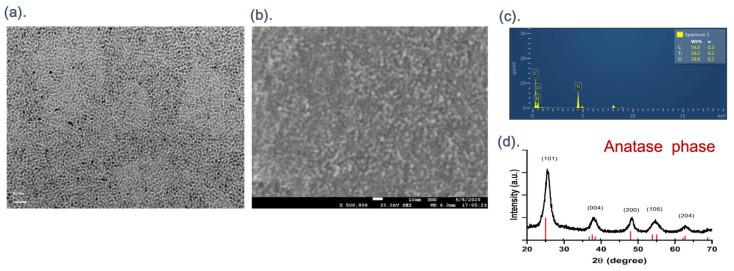
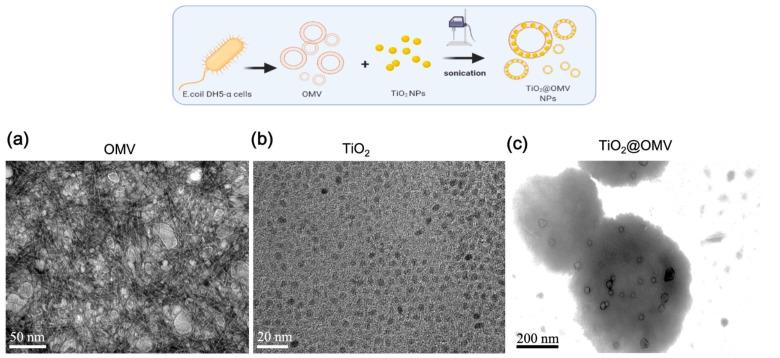
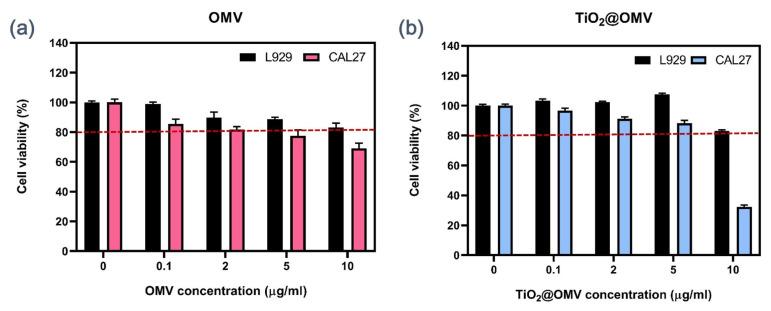
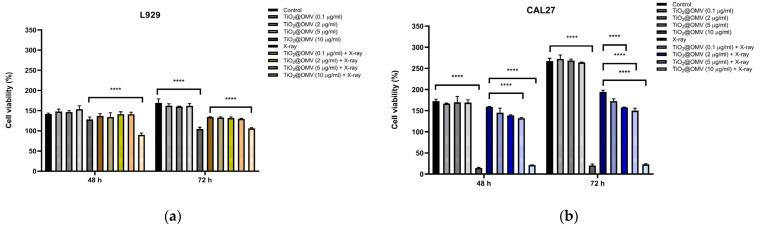
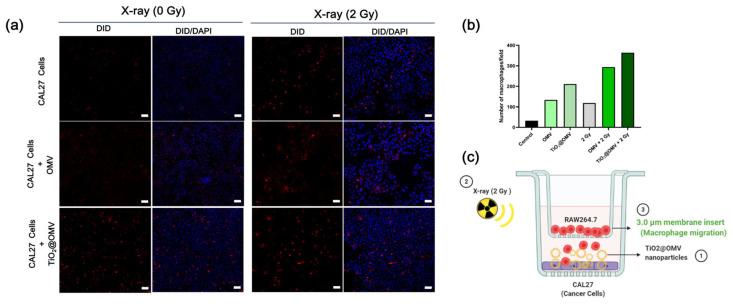
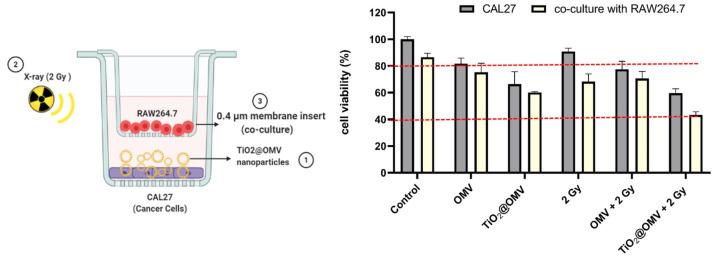
Oral squamous-cell carcinoma (OSCC) poses significant treatment challenges due to its high recurrence rates and the limitations of current therapies. Titanium dioxide (TiO) nanoparticles are promising radiosensitizers, while bacterial outer membrane vesicles (OMVs) are known for their immunomodulatory properties. This study investigates the potential of OMV-encapsulated TiO nanoparticles (TiO@OMV) to combine these effects for improved OSCC treatment. TiO nanoparticles were synthesized using a hydrothermal method and encapsulated within OMVs derived from Escherichia coli. The TiO@OMV carriers were evaluated for their ability to enhance radiosensitivity and stimulate immune responses in OSCC cell lines. Reactive oxygen species (ROS) production, macrophage recruitment, and selective cytotoxicity toward cancer cells were assessed. TiO@OMV demonstrated significant radiosensitization and immune activation compared to unencapsulated TiO nanoparticles. The system selectively induced cytotoxicity in OSCC cells, sparing normal cells, and enhanced ROS generation and macrophage-mediated antitumor responses. This study highlights TiO@OMV as a dual-action therapeutic platform that synergizes radiotherapy and immunomodulation, offering a targeted and effective strategy for OSCC treatment. The approach could improve therapeutic outcomes and reduce the adverse effects associated with conventional therapies.
口腔鳞状细胞癌(OSCC)因其高复发率和当前治疗方法的局限性而带来重大治疗挑战。二氧化钛(TiO)纳米颗粒是很有前景的放射增敏剂,而细菌外膜囊泡(OMV)则以其免疫调节特性而闻名。本研究探讨了OMV包裹的TiO纳米颗粒(TiO@OMV)结合这些效应以改善OSCC治疗的潜力。采用水热法合成TiO纳米颗粒,并将其包裹在源自大肠杆菌的OMV中。评估了TiO@OMV载体增强OSCC细胞系放射敏感性和刺激免疫反应的能力。评估了活性氧(ROS)产生、巨噬细胞募集以及对癌细胞的选择性细胞毒性。与未包裹的TiO纳米颗粒相比,TiO@OMV表现出显著的放射增敏作用和免疫激活。该系统选择性地诱导OSCC细胞的细胞毒性,使正常细胞免受影响,并增强ROS生成和巨噬细胞介导的抗肿瘤反应。本研究强调TiO@OMV作为一种双作用治疗平台,可协同放疗和免疫调节,为OSCC治疗提供一种有针对性的有效策略。该方法可改善治疗效果并减少与传统疗法相关的不良反应。



 Zotero 插件