
强脉冲光治疗后蒸发型干眼的定量和定性评估:一项前瞻性研究
Quantitative and qualitative assessment of evaporative dry eye post intense pulsed light therapy, a prospective study.
作者信息
Patwardhan Sourabh D, Sangle Ankita, Patwardhan Nidhi S, Mane Seema
机构信息
Department of Ophthalmology, Nandadeep Eye Hospital, Sangli, Maharashtra, India.
出版信息
Indian J Ophthalmol. 2025 Apr 1;73(4):590-593. doi: 10.4103/IJO.IJO_1136_24. Epub 2024 Dec 27.
PURPOSE
This study aimed to determine the effect of intense pulsed light (IPL) treatment on meibomian gland disease.
SETTINGS AND DESIGN
This is a prospective interventional study.
METHODS
Seventy eyes of patients with dry eye disease undergoing three sessions of IPL therapy, 15 days apart, were included. Each patient completed the dry eye questionnaire (SPEED) for symptomatic assessment. Dry eye evaluation tests were performed, including Schirmer's 1 test, meiboscopy, noninvasive tear break-up time (NIBUT) and interferometry. These tests were repeated before each IPL session.
STATISTICAL ANALYSIS USED
Data analysis was performed using IBM SPSS Statistics software (Version 20, Inc., Chicago, Illinois, USA). To Kolmogorov-Smirnov test was used to assess the normality of the variables. The Chi-square test was applied for statistical analysis. Level of significance was set at p ≤ 0.05.
RESULTS
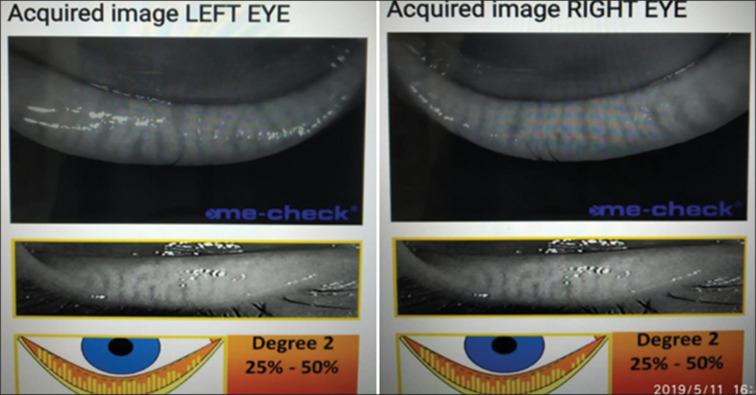
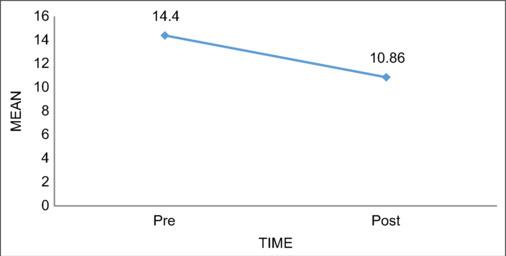
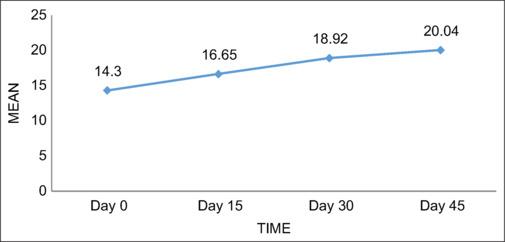
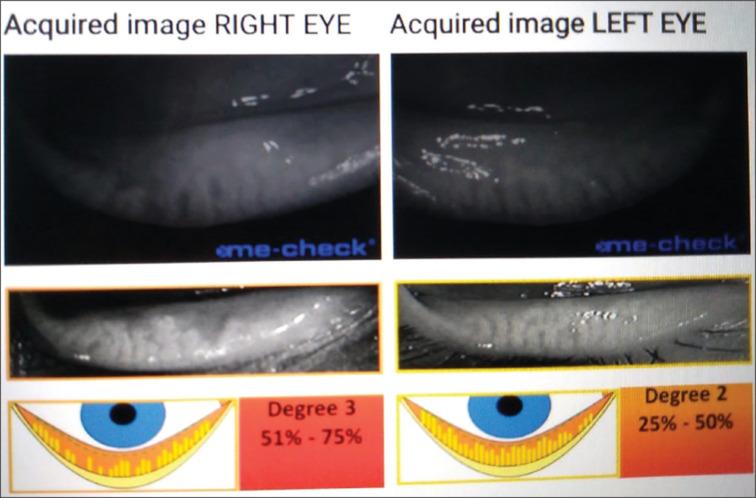
The mean symptom score from the dry eye questionnaire (SPEED) showed a significant reduction of 24.5% ( p < 0.001) in symptoms. Schirmer's 1 test showed an improvement of 16.43% on day 15 and 40.13% on day 45. Meiboscopy grade improved by 13.54% on day 45. NIBUT improved from 53.29% on day 15 to 135.53% on day 45. Interferometry showed an improvement of 58.91% on day 45.
CONCLUSIONS
The various investigative tests demonstrated both qualitative and quantitative improvements in dry eye disease, and patients reported symptomatic relief. The effects of IPL therapy, in terms of symptomatic relief, continued to improve with each session. The quality of the tear film also improved progressively. IPL therapy is a potential therapeutic option for MGD.
目的
本研究旨在确定强脉冲光(IPL)治疗睑板腺疾病的效果。
设置与设计
这是一项前瞻性干预研究。
方法
纳入70只患有干眼症且接受3次IPL治疗(每次间隔15天)的眼睛。每位患者完成干眼问卷(SPEED)以进行症状评估。进行干眼评估测试,包括泪液分泌试验、睑板腺镜检查、非侵入性泪膜破裂时间(NIBUT)和干涉测量法。这些测试在每次IPL治疗前重复进行。
所用统计分析方法
使用IBM SPSS Statistics软件(版本20,美国伊利诺伊州芝加哥市公司)进行数据分析。使用柯尔莫哥洛夫-斯米尔诺夫检验评估变量的正态性。应用卡方检验进行统计分析。显著性水平设定为p≤0.05。
结果
干眼问卷(SPEED)的平均症状评分显示症状显著降低了24.5%(p<0.001)。泪液分泌试验在第15天改善了16.43%,在第45天改善了40.13%。睑板腺镜检查分级在第45天改善了13.54%。NIBUT从第15天的53.29%提高到第45天的135.53%。干涉测量法在第45天显示改善了58.91%。
结论
各种调查测试表明干眼症在定性和定量方面均有改善,且患者报告症状缓解。IPL治疗在缓解症状方面的效果随着每次治疗持续改善。泪膜质量也逐渐提高。IPL治疗是睑板腺功能障碍的一种潜在治疗选择。
 Zotero 插件