
育肥猪胸膜炎和肺炎病变发生所导致的健康经济影响。
Health-Economic Impact Attributable to Occurrence of Pleurisy and Pneumonia Lesions in Finishing Pigs.
作者信息
Malcher Clarisse S, Petri Fernando A M, Arruda Laiza P, de Aguiar Gabriel A, Storino Gabriel Y, Sonalio Karina, Toledo Leonardo T, Hirose Flávio, Oliveira Luís Guilherme de
机构信息
School of Agricultural and Veterinary Sciences, São Paulo State University (UNESP), Jaboticabal 14884-900, SP, Brazil.
Faculty of Veterinary Medicine, Ghent University, 9820 Merelbeke, Belgium.
出版信息
Vet Sci. 2024 Dec 20;11(12):668. doi: 10.3390/vetsci11120668.
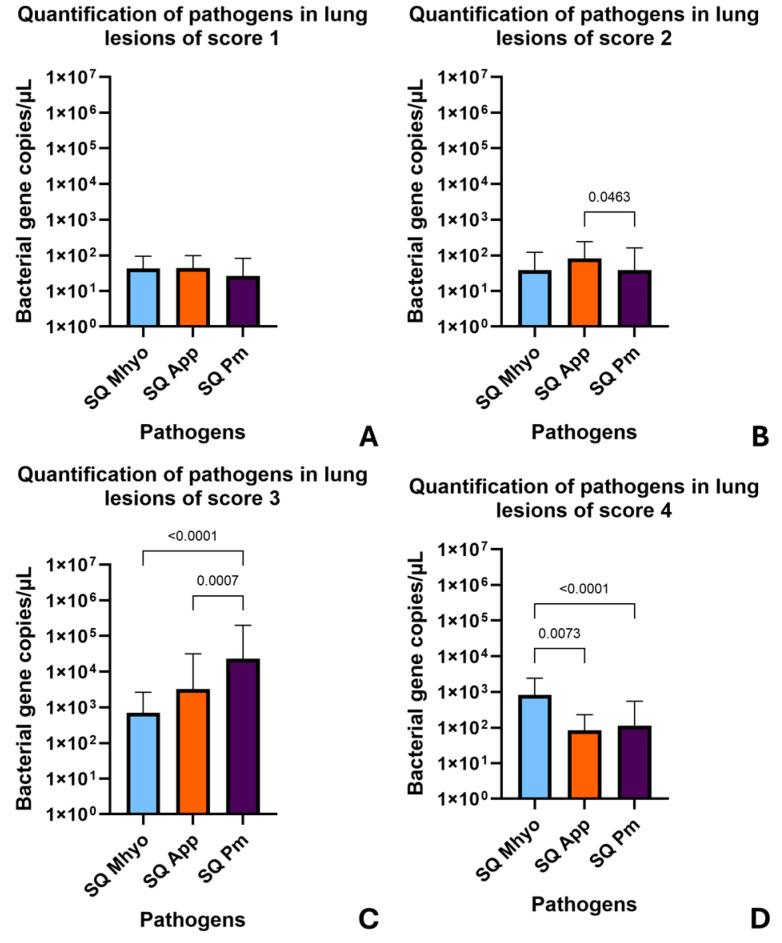
Respiratory diseases, such as pleurisy and pneumonia, cause significant health and economic losses in pig production. This study evaluated 867 finishing pigs from a farm with a history of respiratory issues, using macroscopic lesion scoring (SPES and CVPC), histopathological analysis, qPCR diagnostics, and economic modeling. Severe pleurisy (scores 3 and 4) was observed in 42.1% of carcasses and was strongly correlated with higher bacterial loads of , , and . Severe lesions reduced the average daily gain (ADG) and carcass weight, leading to increased production costs and lower profitability. Economic analysis revealed that pigs with higher pleurisy scores incurred an additional cost per kg (USD 1.29 vs. USD 1.32 for milder cases), reduced total revenue by 1.36%, and decreased return on investment (ROI) from 5.33% to 3.90%. These findings emphasize the critical impact of respiratory diseases on profitability and the necessity of robust health management strategies, including vaccination and enhanced biosecurity, to minimize economic losses in swine farming.
呼吸系统疾病,如胸膜炎和肺炎,给生猪生产带来了巨大的健康和经济损失。本研究对来自一个有呼吸系统疾病史的猪场的867头育肥猪进行了评估,采用了宏观病变评分(SPES和CVPC)、组织病理学分析、qPCR诊断和经济建模。在42.1%的猪胴体中观察到严重胸膜炎(评分3和4),并且与 、 和 的较高细菌载量密切相关。严重病变降低了平均日增重(ADG)和胴体重量,导致生产成本增加和盈利能力下降。经济分析表明,胸膜炎评分较高的猪每公斤产生额外成本(分别为1.29美元和1.32美元,轻度病例),总收入减少1.36%,投资回报率(ROI)从5.33%降至3.90%。这些发现强调了呼吸系统疾病对盈利能力的关键影响,以及采取强有力的健康管理策略(包括疫苗接种和加强生物安全措施)以尽量减少养猪业经济损失的必要性。

 Zotero 插件