
氧化石墨烯-金属纳米颗粒复合材料上生物膜形成受损
Impaired Biofilm Development on Graphene Oxide-Metal Nanoparticle Composites.
作者信息
Lange Agata, Kutwin Marta, Zawadzka Katarzyna, Ostrowska Agnieszka, Strojny-Cieślak Barbara, Nasiłowska Barbara, Bombalska Aneta, Jaworski Sławomir
机构信息
Department of Nanobiotechnology, Institute of Biology, Warsaw University of Life Sciences, Warsaw, Poland.
Center for Biomedical Engineering, Institute of Optoelectronics, Military University of Technology, Warsaw, Poland.
出版信息
Nanotechnol Sci Appl. 2024 Dec 24;17:303-320. doi: 10.2147/NSA.S485841. eCollection 2024.
PURPOSE
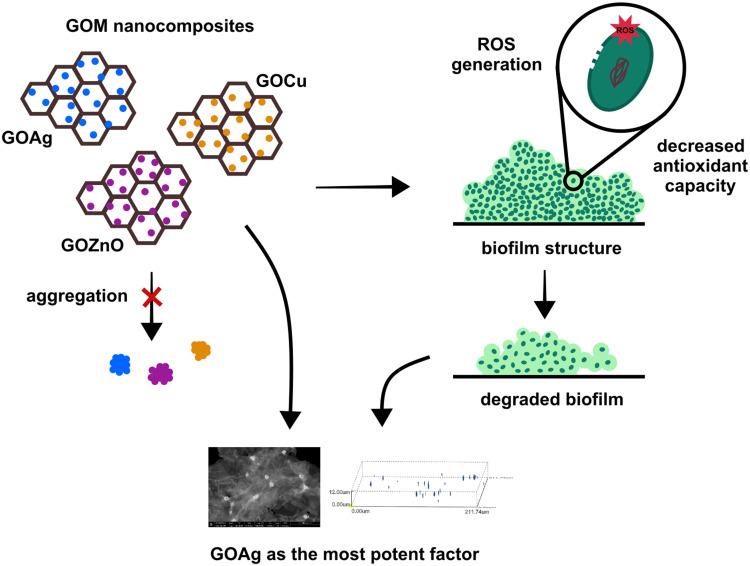
Biofilms are one of the main threats related to bacteria. Owing to their complex structure, in which bacteria are embedded in the extracellular matrix, they are extremely challenging to eradicate, especially since they can inhabit both biotic and abiotic surfaces. This study aimed to create an effective antibiofilm nanofilm based on graphene oxide-metal nanoparticles (GOM-NPs).
METHODS
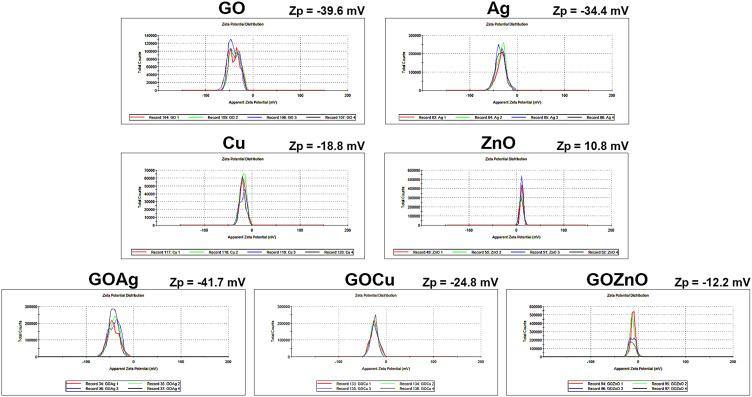
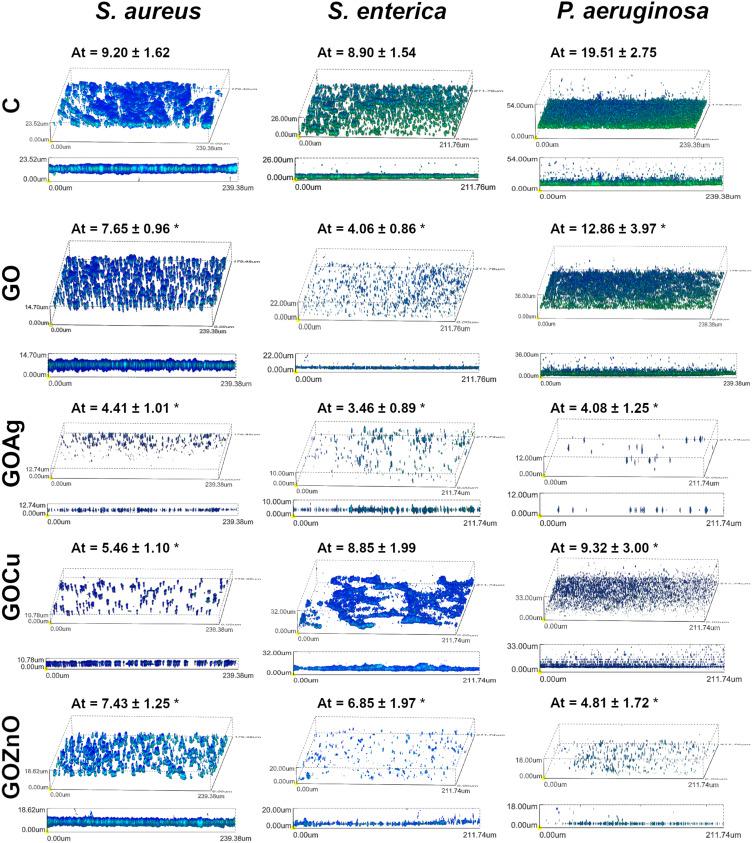
To create nanofilms, physicochemical analysis was performed, including zeta potential (Zp) (and the nanocomposites stability in time) and size distribution measurements, scanning transmission electron microscopy (STEM), energy dispersive X-ray analysis (EDX), and atomic force microscopy (AFM) of the nanofilm surfaces. During biological analysis, reactive oxygen species (ROS) and antioxidant capacity were measured in planktonic cells treated with the nanocomposites. Thereafter, biofilm formation was checked via crystal violet staining, biofilm thickness was assessed by confocal microscopy using double fluorescent staining, and biofilm structure was analyzed by scanning electron microscopy.
RESULTS
The results showed that two of the three nanocomposites were effective in reducing biofilm formation (GOAg and GOZnO), although the nanofilms were characterized by the roughest surface, indicating that high surface roughness is unfavorable for biofilm formation by the tested bacterial species ( (ATCC 25923), (ATCC 13076), (ATCC 27853)).
CONCLUSION
The performed analysis indicated that graphene oxide may be a platform for metal nanoparticles that enhances their properties (eg colloidal stability, which is maintained over time). Nanocomposites based on graphene oxide with silver nanoparticles and other types of nanocomposites with zinc oxide were effective against biofilms, contributing to changes throughout the biofilm structure, causing a significant reduction in the thickness of the structure, and affecting cell distribution. A nanocomposite consisting of graphene oxide with copper nanoparticles inhibited the biofilm, but to a lesser extent.
目的
生物膜是与细菌相关的主要威胁之一。由于其复杂的结构,细菌被包裹在细胞外基质中,因此极难根除,特别是因为它们既能存在于生物表面,也能存在于非生物表面。本研究旨在制备一种基于氧化石墨烯-金属纳米颗粒(GOM-NPs)的高效抗生物膜纳米膜。
方法
为制备纳米膜,进行了物理化学分析,包括zeta电位(Zp)(以及纳米复合材料随时间的稳定性)和尺寸分布测量、扫描透射电子显微镜(STEM)、能量色散X射线分析(EDX)以及纳米膜表面的原子力显微镜(AFM)分析。在生物学分析过程中,测量了用纳米复合材料处理的浮游细胞中的活性氧(ROS)和抗氧化能力。此后,通过结晶紫染色检查生物膜形成情况,使用双重荧光染色通过共聚焦显微镜评估生物膜厚度,并通过扫描电子显微镜分析生物膜结构。
结果
结果表明,三种纳米复合材料中的两种(GOAg和GOZnO)在减少生物膜形成方面有效,尽管纳米膜的表面最为粗糙,这表明高表面粗糙度不利于受试细菌物种(金黄色葡萄球菌(ATCC 25923)、大肠杆菌(ATCC 13076)、铜绿假单胞菌(ATCC 27853))形成生物膜。
结论
所进行的分析表明,氧化石墨烯可能是增强金属纳米颗粒性能(如随时间保持的胶体稳定性)的平台。基于氧化石墨烯与银纳米颗粒的纳米复合材料以及其他类型的与氧化锌的纳米复合材料对生物膜有效,有助于改变整个生物膜结构,使结构厚度显著减小,并影响细胞分布。由氧化石墨烯与铜纳米颗粒组成的纳米复合材料对生物膜有抑制作用,但程度较小。



 Zotero 插件