
埋线针灸治疗绝经后女性膀胱过度活动症:一项前瞻性、单臂、前后对照研究。
Thread Embedding Acupuncture in Postmenopausal Women with Overactive Bladder: A Prospective, Single-Arm, Before-After Study.
作者信息
Choi Su-Ji, Lee Hyeonhoon, Kim Dong-Il
机构信息
Department of Obstetrics and Gynecology, College of Korean Medicine, Dong-Eui University, Busan, Republic of Korea.
Department of Data Science Research, Innovative Medical Technology Research Institute, Seoul National University Hospital, Seoul, Republic of Korea.
出版信息
Int J Womens Health. 2024 Dec 23;16:2287-2296. doi: 10.2147/IJWH.S494135. eCollection 2024.
INTRODUCTION
Overactive bladder is a major public health concern that negatively impacts a patient's quality of life, and it is highly prevalent in menopausal women. Acupuncture has been suggested as a viable therapeutic approach. This study aimed to explore the effectiveness of thread-embedding acupuncture in postmenopausal women with overactive bladder.
METHODS
This was a single-centre, single-arm, open-label study conducted on 20 postmenopausal women with overactive bladder. Participants received thread-embedding acupuncture treatment once a week for 8 weeks. Patients were evaluated using a bladder diary, overactive bladder symptom score (OABSS), and King's Health Questionnaire (KHQ) at three time points: baseline, end of treatment (week 8), and 4 weeks after treatment completion (week 12).
RESULTS
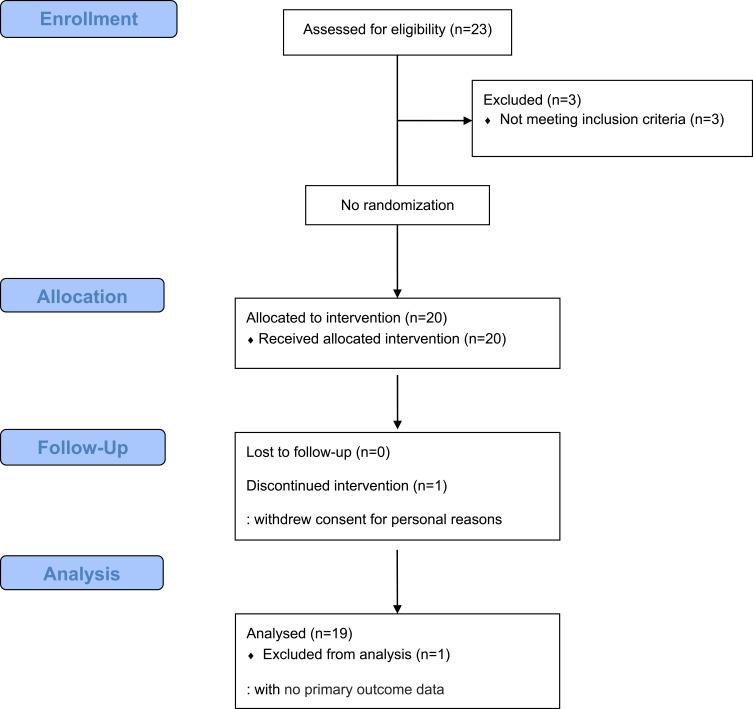
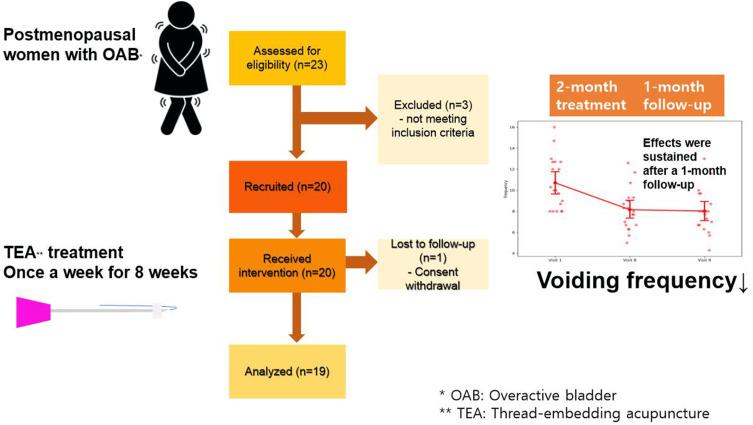
Nineteen participants completed the study. Average daily micturition frequency decreased significantly after thread-embedding acupuncture treatment (week 8: -2.55 ± 0.37, =0.001, week 12: -2.69 ± 0.37, =0.001). Daytime and nighttime micturition frequency and OABSS significantly decreased at week 8 and 12. However, no significant differences were observed in urgency, incontinence, or KHQ. No serious adverse events were reported.
CONCLUSION
Considering that thread-embedding acupuncture was shown to improve daily quality of life by reducing daytime and nighttime episodes, this pilot study suggests that thread-embedding acupuncture is a feasible alternative for treating overactive bladder.
引言
膀胱过度活动症是一个重大的公共卫生问题,对患者的生活质量产生负面影响,在绝经后女性中非常普遍。针灸已被认为是一种可行的治疗方法。本研究旨在探讨埋线针灸对绝经后膀胱过度活动症女性的疗效。
方法
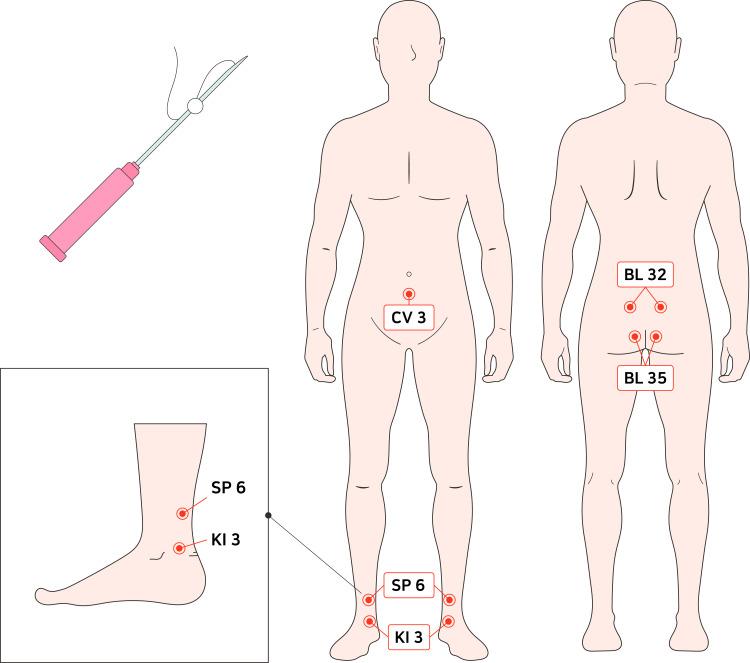
这是一项单中心、单臂、开放标签的研究,对20名绝经后膀胱过度活动症女性进行。参与者每周接受一次埋线针灸治疗,共8周。在三个时间点对患者进行评估:基线、治疗结束时(第8周)和治疗完成后4周(第12周),使用膀胱日记、膀胱过度活动症症状评分(OABSS)和国王健康问卷(KHQ)。
结果
19名参与者完成了研究。埋线针灸治疗后,平均每日排尿频率显著降低(第8周:-2.55±0.37,P=0.001;第12周:-2.69±0.37,P=0.001)。白天和夜间排尿频率以及OABSS在第8周和第12周显著降低。然而,在尿急、尿失禁或KHQ方面未观察到显著差异。未报告严重不良事件。
结论
考虑到埋线针灸通过减少白天和夜间发作来改善日常生活质量,这项初步研究表明埋线针灸是治疗膀胱过度活动症的一种可行替代方法。
 Zotero 插件