
[具体物质名称1]和[具体物质名称2]的药理学分析:揭示化学活性代谢物的抗菌和抗癌潜力
Pharmacological Profiling of and : Unraveling the Antibacterial and Anti-Cancer Potential of Chemically Active Metabolites.
作者信息
Alghamdi Sahar S, Alturki Allulu Y, Ali Rizwan, Suliman Rasha S, Mohammed Afrah E, Dairem Atheer Al, Alehaideb Zeyad I, Alshafi Raghad A, Alghashem Sara A, Rahman Ishrat
机构信息
College of Pharmacy (COP), King Saud bin Abdulaziz University for Health Sciences (KSAU-HS), Riyadh, Kingdom of Saudi Arabia.
Medical Research Core Facility and Platforms, King Abdullah International Medical Research Center (KAIMRC), Ministry of National Guard Health Affairs, Riyadh, Saudi Arabia.
出版信息
J Cancer. 2025 Jan 1;16(1):12-33. doi: 10.7150/jca.96848. eCollection 2025.
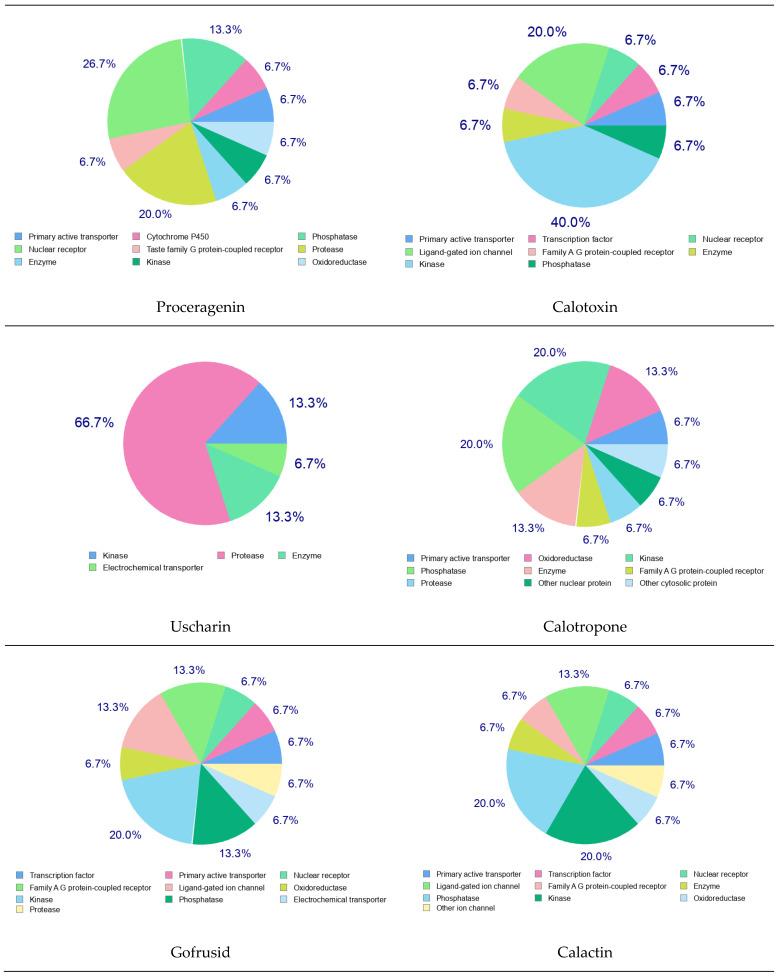
The increasing prevalence of cancer and bacterial resistance necessitates more effective anti-cancer and anti-bacterial treatments. This study explores the potential of medicinal plants, specifically () and (), in addressing this need, aiming to uncover new therapeutic interventions. Various extraction methods for the leaves of and were employed to investigate the anti-bacterial and anti-cancer properties of these herbs. For anti-bacterial testing, extracts were prepared using water, chloroform, and ethyl acetate, and their activity against methicillin-resistant () (MRSA) and () was assessed. The anti-cancer potential was evaluated through MTT cytotoxicity assays on various cancer cell lines and further testing using high-content imaging (HCI)-Apoptosis Assay and the ApoTox-GloTM Triplex Assay. Liquid chromatography-mass spectrometry (LC-MS) was used to identify the secondary metabolites of , and computational predictions were performed to assess the activity of these metabolites. The leaf extracts of both and demonstrated antibacterial activity against and . The ethyl acetate extract exhibited potent anti-cancer effects on several cancer cell lines. The research also revealed a dose-dependent induction of apoptosis and a decline in cell viability. Computational predictions suggested the identified metabolites were active as nuclear receptor ligands and enzyme inhibitors, with good oral bioavailability. Most metabolites were found to be immunologic and cytotoxic, except for proceragenin and calotropone, which were determined to be non-cardiotoxic. The study's findings demonstrate the remarkable cytotoxic and antibacterial effects of extracts prepared using ethyl acetate. These results pave the way for further studies to explore the full potential of these extracts and highlight the presence of chemically active metabolites in , which hold promise as lead molecules for the development of novel therapies targeting bacterial infections and cancer while minimizing potential side effects.
癌症患病率的不断上升以及细菌耐药性问题,使得更有效的抗癌和抗菌治疗成为必要。本研究探索药用植物,特别是()和(),在满足这一需求方面的潜力,旨在发现新的治疗干预措施。采用了多种方法提取和的叶子,以研究这些草药的抗菌和抗癌特性。对于抗菌测试,使用水、氯仿和乙酸乙酯制备提取物,并评估其对耐甲氧西林()(MRSA)和()的活性。通过对各种癌细胞系进行MTT细胞毒性测定,并使用高内涵成像(HCI)-凋亡测定法和ApoTox-GloTM三联测定法进行进一步测试,评估其抗癌潜力。利用液相色谱-质谱联用(LC-MS)鉴定的次生代谢产物,并进行计算预测以评估这些代谢产物的活性。和的叶子提取物对和均表现出抗菌活性。乙酸乙酯提取物对几种癌细胞系显示出强大的抗癌作用。研究还揭示了凋亡的剂量依赖性诱导和细胞活力的下降。计算预测表明,所鉴定的代谢产物作为核受体配体和酶抑制剂具有活性,且口服生物利用度良好。除了被确定为无心脏毒性的前胡拉根素和牛角瓜酮外,大多数代谢产物被发现具有免疫和细胞毒性。该研究结果表明,用乙酸乙酯制备的提取物具有显著的细胞毒性和抗菌作用。这些结果为进一步研究探索这些提取物的全部潜力铺平了道路,并突出了中化学活性代谢产物的存在,这些代谢产物有望作为先导分子,用于开发针对细菌感染和癌症的新型疗法,同时将潜在副作用降至最低。


 Zotero 插件