
随机森林算法揭示了血凝素(HA)蛋白中的新位点,这些位点改变了H9N2禽流感病毒的受体结合偏好。
Random forest algorithm reveals novel sites in HA protein that shift receptor binding preference of the H9N2 avian influenza virus.
作者信息
Yin Yuncong, Li Wen, Chen Rujian, Wang Xiao, Chen Yiting, Cui Xinyuan, Lu Xingbang, Irwin David M, Shen Xuejuan, Shen Yongyi
机构信息
College of Veterinary Medicine, Yangzhou University, Yangzhou 225009, China; Jiangsu Co-Innovation Center for the Prevention and Control of Important Animal Infectious Disease and Zoonoses, Yangzhou University, Yangzhou 225009, China; International Joint Laboratory for Cooperation in Agriculture and Agricultural Product Safety, Ministry of Education, Yangzhou University, Yangzhou 225009, China.
Guangdong Laboratory for Lingnan Modern Agriculture, State Key Laboratory for Animal Disease Control and Prevention, Center for Emerging and Zoonotic Diseases, College of Veterinary Medicine, South China Agricultural University, Guangzhou 510642, China.
出版信息
Virol Sin. 2025 Feb;40(1):109-117. doi: 10.1016/j.virs.2024.12.010. Epub 2024 Dec 31.
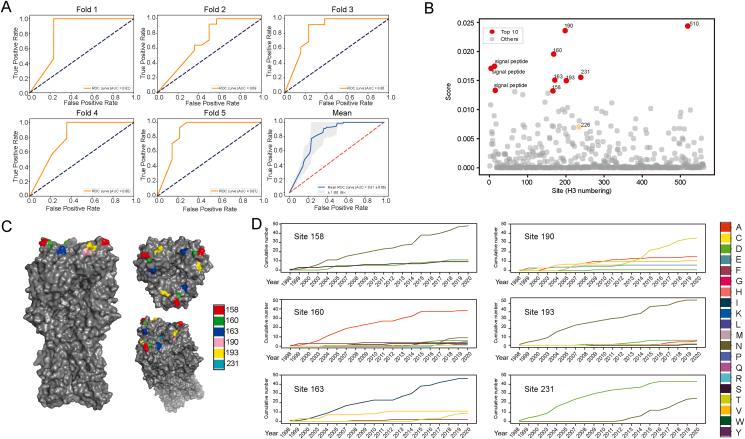
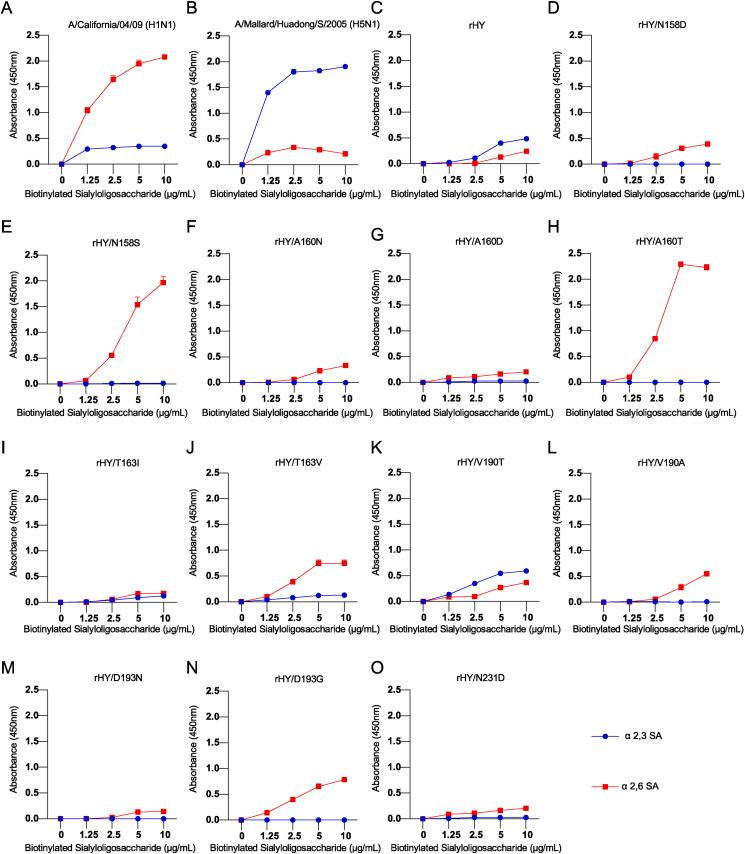
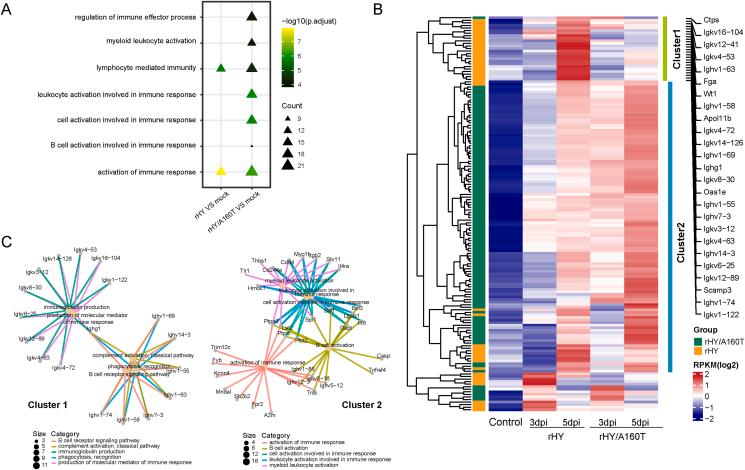
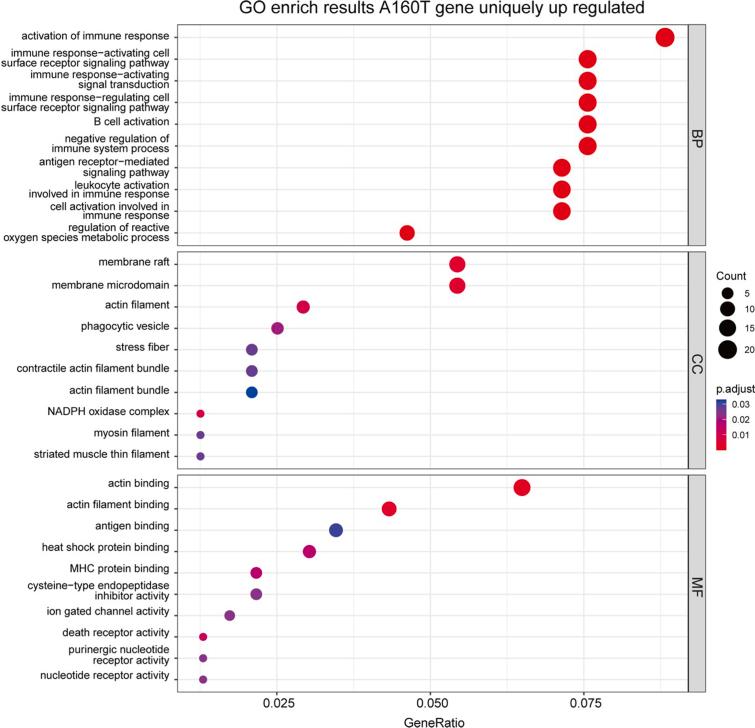
A switch from avian-type α-2,3 to human-type α-2,6 receptors is an essential element for the initiation of a pandemic from an avian influenza virus. Some H9N2 viruses exhibit a preference for binding to human-type α-2,6 receptors. This identifies their potential threat to public health. However, our understanding of the molecular basis for the switch of receptor preference is still limited. In this study, we employed the random forest algorithm to identify the potentially key amino acid sites within hemagglutinin (HA), which are associated with the receptor binding ability of H9N2 avian influenza virus (AIV). Subsequently, these sites were further verified by receptor binding assays. A total of 12 substitutions in the HA protein (N158D, N158S, A160 N, A160D, A160T, T163I, T163V, V190T, V190A, D193 N, D193G, and N231D) were predicted to prefer binding to α-2,6 receptors. Except for the V190T substitution, the other substitutions were demonstrated to display an affinity for preferential binding to α-2,6 receptors by receptor binding assays. Especially, the A160T substitution caused a significant upregulation of immune-response genes and an increased mortality rate in mice. Our findings provide novel insights into understanding the genetic basis of receptor preference of the H9N2 AIV.
从禽源型α-2,3受体转换为人类型α-2,6受体是禽流感病毒引发大流行的关键因素。一些H9N2病毒更倾向于与人源型α-2,6受体结合。这表明它们对公众健康存在潜在威胁。然而,我们对受体偏好转换的分子基础的理解仍然有限。在本研究中,我们采用随机森林算法来确定血凝素(HA)中与H9N2禽流感病毒(AIV)受体结合能力相关的潜在关键氨基酸位点。随后,通过受体结合试验进一步验证了这些位点。HA蛋白中共有12个氨基酸替换(N158D、N158S、A160N、A160D、A160T、T163I、T163V、V190T、V190A、D193N、D193G和N231D)被预测更倾向于与α-2,6受体结合。除V190T替换外,其他替换通过受体结合试验证明对α-2,6受体具有优先结合亲和力。特别是,A160T替换导致小鼠免疫反应基因显著上调和死亡率增加。我们的研究结果为理解H9N2 AIV受体偏好的遗传基础提供了新的见解。



 Zotero 插件