
抗病毒和抗菌肽:作用机制
Antiviral and antibacterial peptides: Mechanisms of action.
作者信息
Neghabi Hajigha Mahdyeh, Hajikhani Bahareh, Vaezjalali Maryam, Samadi Kafil Hossein, Kazemzadeh Anari Raana, Goudarzi Mehdi
机构信息
Student Research Committee, School of Medicine, Shahid Beheshti University of Medical Sciences, Tehran, Iran.
Department of Microbiology, School of Medicine, Shahid Beheshti University of Medical Sciences, Tehran, Iran.
出版信息
Heliyon. 2024 Nov 5;10(22):e40121. doi: 10.1016/j.heliyon.2024.e40121. eCollection 2024 Nov 30.
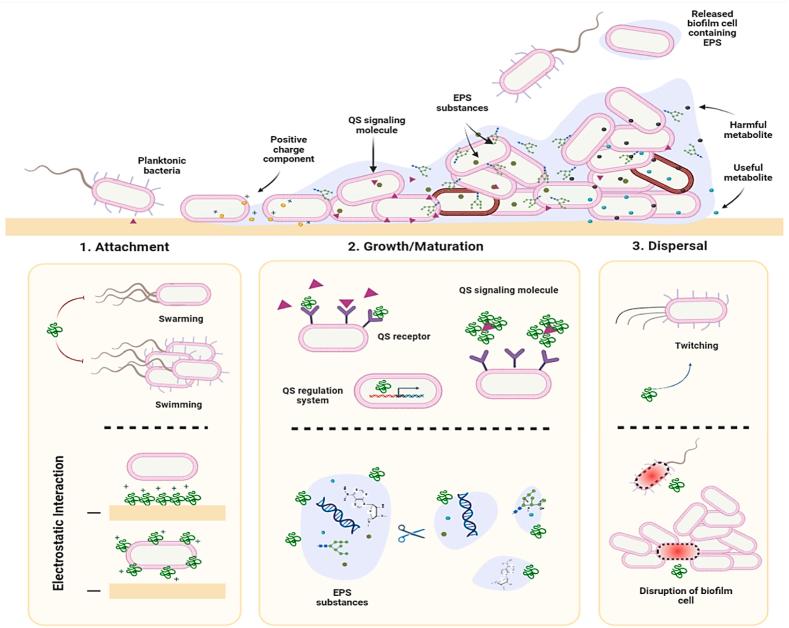
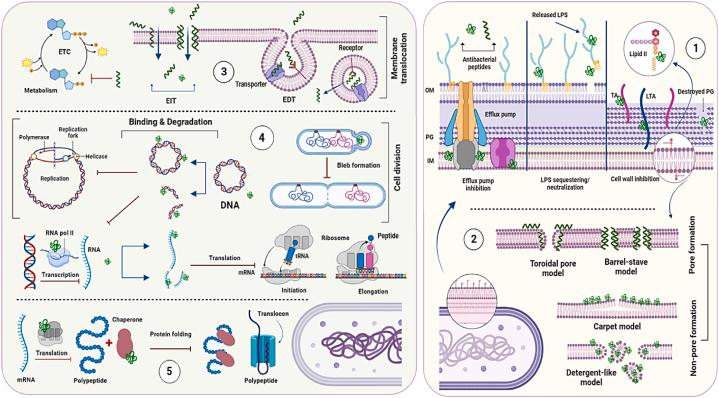
Antimicrobial peptides (AMPs) present promising alternatives for addressing bacterial and viral multidrug resistance due to their distinctive properties. Understanding the mechanisms of these compounds is essential for achieving this objective. Therefore, this comprehensive review aims to highlight primary natural sources of AMPs and elucidate various aspects of the modes of action of antiviral and antibacterial peptides (ABPs). It emphasizes that antiviral peptides (AVPs) can disrupt the replication cycle of both enveloped and non-enveloped viruses at several stages, including pre-fusion, fusion, and post-entry into the host cell. Additionally, the review discusses the inhibitory effects of ABPs on bacterial growth, outlining their extracellular actions as well as their intracellular activities following membrane translocation. Factors such as structure, size, electric charge, environmental factors, degrading enzymes, and microbial resistance against AMPs can affect the function of AMPs.
抗菌肽(AMPs)因其独特性质,为解决细菌和病毒的多重耐药性问题提供了有前景的替代方案。了解这些化合物的作用机制对于实现这一目标至关重要。因此,本全面综述旨在突出抗菌肽的主要天然来源,并阐明抗病毒和抗菌肽(ABPs)作用模式的各个方面。它强调抗病毒肽(AVPs)可在包膜病毒和非包膜病毒复制周期的多个阶段,包括融合前、融合和进入宿主细胞后,对其进行破坏。此外,该综述讨论了抗菌肽对细菌生长的抑制作用,概述了它们的细胞外作用以及膜转位后的细胞内活性。诸如结构、大小、电荷、环境因素、降解酶以及微生物对抗菌肽的耐药性等因素会影响抗菌肽的功能。


 Zotero 插件