
基于临床数据的坏疽性胆囊炎可解释预测机器学习模型:一项回顾性单中心研究
An explainable predictive machine learning model of gangrenous cholecystitis based on clinical data: a retrospective single center study.
作者信息
Ma Ying, Luo Man, Guan Guoxin, Liu Xingming, Cui Xingye, Luo Fuwen
机构信息
Department of General Surgery, The Second Hospital of Dalian Medical University, Zhongshan Road, Shahekou District, Dalian City, Liaoning Province, 116023, China.
Center on Frontiers of Computing Studies, School of Compter Science, Inst. for Artificial Intelligence, Peking University, Beijing, 100871, China.
出版信息
World J Emerg Surg. 2025 Jan 6;20(1):1. doi: 10.1186/s13017-024-00571-6.
BACKGROUND
Gangrenous cholecystitis (GC) is a serious clinical condition associated with high morbidity and mortality rates. Machine learning (ML) has significant potential in addressing the diverse characteristics of real data. We aim to develop an explainable and cost-effective predictive model for GC utilizing ML and Shapley Additive explanation (SHAP) algorithm.
RESULTS
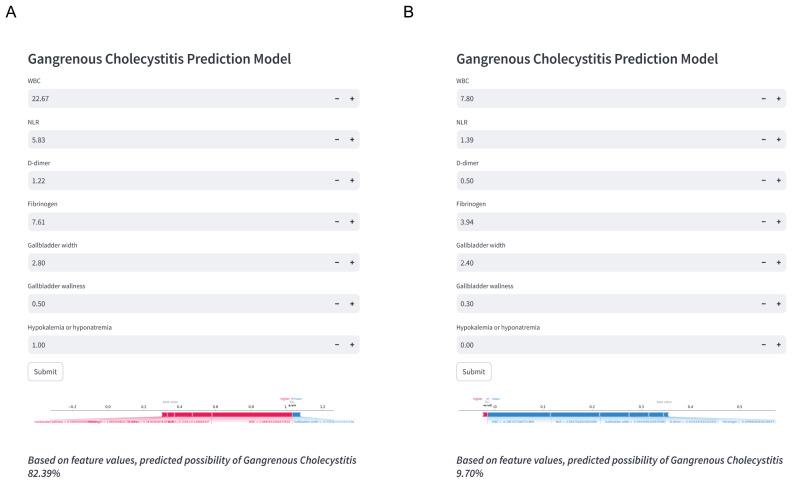
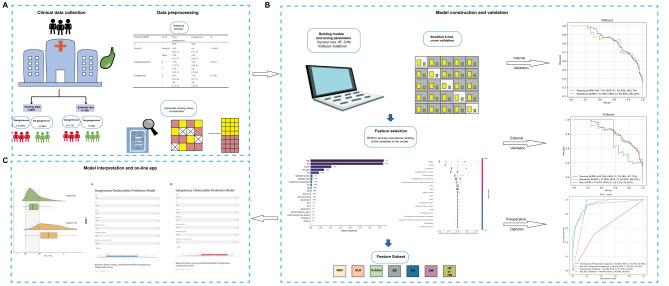
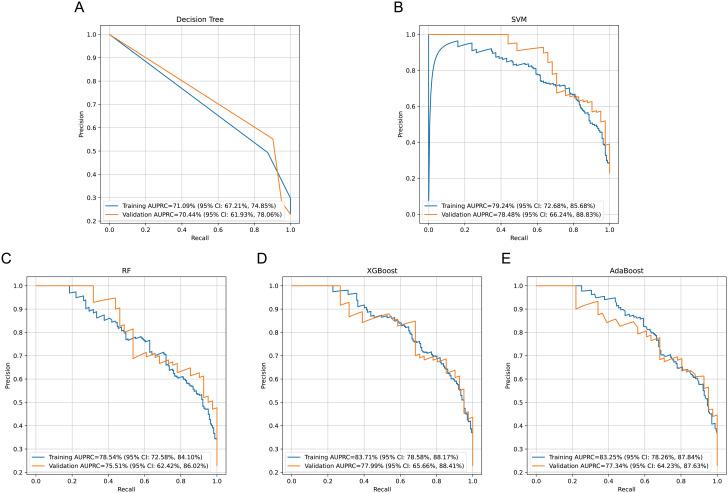
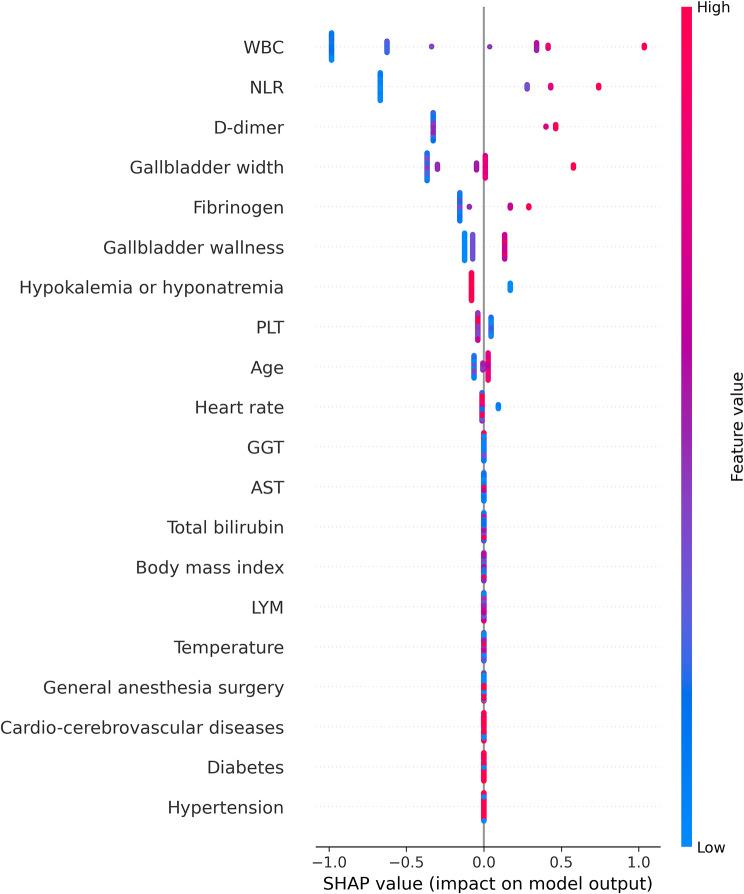
This study included a total of 1006 patients with 26 clinical features. Through 5-fold CV, the best performing integrated learning model, XGBoost, was identified. The model was interpreted using SHAP to derive the feature subsets WBC, NLR, D-dimer, Gallbladder width, Fibrinogen, Gallbladder wallness, Hypokalemia or hyponatremia, these subsets comprised the final diagnostic prediction model.
CONCLUSIONS
The study developed a explainable predictive tool for GC at an early stage. This could assist doctors to make quick surgical intervention decisions and perform surgery on patients with GC as soon as possible.
背景
坏疽性胆囊炎(GC)是一种严重的临床病症,发病率和死亡率都很高。机器学习(ML)在处理真实数据的多样特征方面具有巨大潜力。我们旨在利用ML和夏普利加法解释(SHAP)算法开发一种可解释且具有成本效益的GC预测模型。
结果
本研究共纳入1006例具有26种临床特征的患者。通过五折交叉验证,确定了性能最佳的集成学习模型XGBoost。使用SHAP对模型进行解释,以得出特征子集白细胞(WBC)、中性粒细胞与淋巴细胞比值(NLR)、D-二聚体、胆囊宽度、纤维蛋白原、胆囊壁厚度、低钾血症或低钠血症,这些子集构成了最终的诊断预测模型。
结论
该研究开发了一种早期GC可解释预测工具。这有助于医生做出快速的手术干预决策,并尽快对GC患者进行手术。


 Zotero 插件