
外泌体及其成分在癌症患者中的诊断和预后意义
Diagnostic and Prognostic Significance of Exosomes and Their Components in Patients With Cancers.
作者信息
Moni Zinnat Ara, Hasan Zahid, Alam Md Shaheen, Roy Nitai, Islam Farhadul
机构信息
Department of Biochemistry and Molecular Biology, University of Rajshahi, Rajshahi, Bangladesh.
Department of Biochemistry and Molecular Biology, Patuakhali Science and Technology University, Patuakhali, Bangladesh.
出版信息
Cancer Med. 2025 Jan;14(1):e70569. doi: 10.1002/cam4.70569.
BACKGROUND
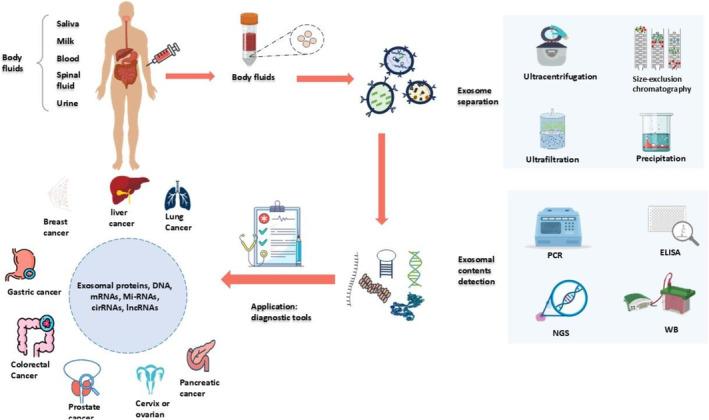
Cancer is the second leading cause of human mortality worldwide. Extracellular vesicles (EVs) from liquid biopsy samples are used in early cancer detection, characterization, and surveillance. Exosomes are a subset of EVs produced by all cells and present in all body fluids. They play an important role in the development of cancer because they are active transporters capable of carrying the contents of any type of cell. The objective of this review was to provide a brief overview of the clinical implication of exosomes or exosomal components in cancer diagnosis and prognosis.
METHODS
An extensive review of the current literature of exosomes and their components in cancer diagnosis and prognosis were carried out in the current study.
RESULTS
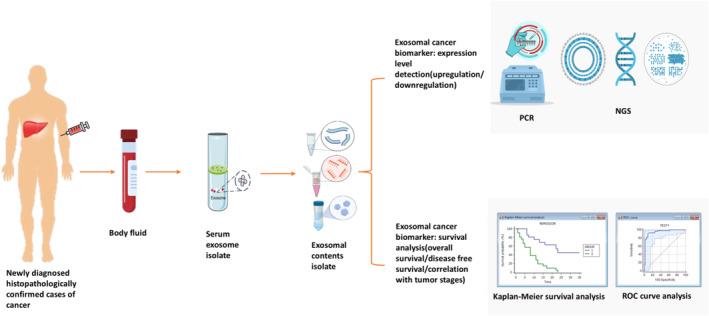
Tumor cells release exosomes that contribute to the formation of the pre-metastatic microenvironment, angiogenesis, invasion, and treatment resistance. On the contrary, tumor cells release more exosomes than normal cells, and these tumor-specific exosomes can carry the genomic and proteomic signature contents of the tumor cells, which can act as tools for the diagnosis and prognosis of patients with cancers.
CONCLUSION
This information may help clinicians to improve the management of cancer patients in clinical settings in the future.
背景
癌症是全球人类死亡的第二大主要原因。液体活检样本中的细胞外囊泡(EVs)用于癌症的早期检测、特征分析和监测。外泌体是所有细胞产生并存在于所有体液中的一类细胞外囊泡。它们在癌症发展中起着重要作用,因为它们是能够携带任何类型细胞内容物的活跃转运体。本综述的目的是简要概述外泌体或外泌体成分在癌症诊断和预后中的临床意义。
方法
本研究对目前关于外泌体及其成分在癌症诊断和预后方面的文献进行了广泛综述。
结果
肿瘤细胞释放的外泌体有助于形成转移前微环境、血管生成、侵袭和治疗抵抗。相反,肿瘤细胞比正常细胞释放更多的外泌体,这些肿瘤特异性外泌体可携带肿瘤细胞的基因组和蛋白质组特征性内容物,可作为癌症患者诊断和预后的工具。
结论
这些信息可能有助于临床医生在未来的临床环境中改善癌症患者的管理。
 Zotero 插件