
可持续超疏水木质素基聚氨酯泡沫:一种用于吸附油类污染物的创新解决方案。
Sustainable superhydrophobic lignin-based polyurethane foam: an innovative solution for oil pollutant adsorption.
作者信息
Li Xinglin, Zhang Jing, Liu Hong, Li Zhiyu, Zheng Guanfeng, Zhou Ling, Fu Peng
机构信息
College of Agricultural Engineering and Food Science, Shandong University of Technology Zibo 255000 China
Binzhou Inspection and Testing Center Binzhou 256600 China.
出版信息
RSC Adv. 2025 Jan 3;15(1):377-387. doi: 10.1039/d4ra07384c. eCollection 2025 Jan 2.
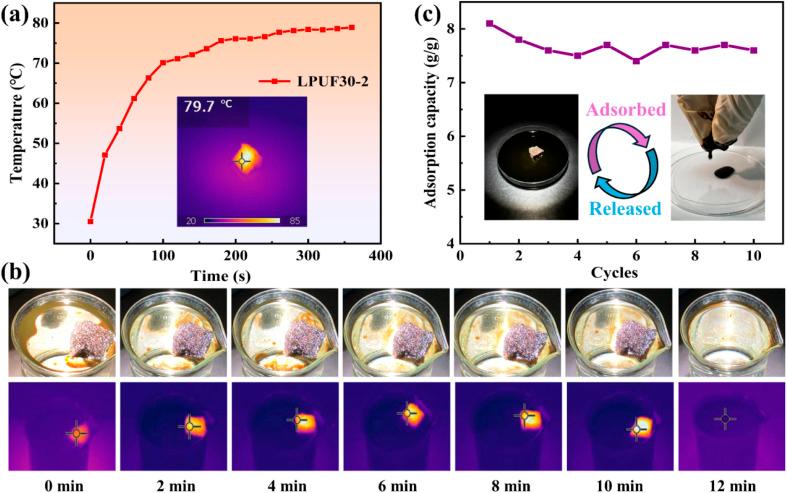
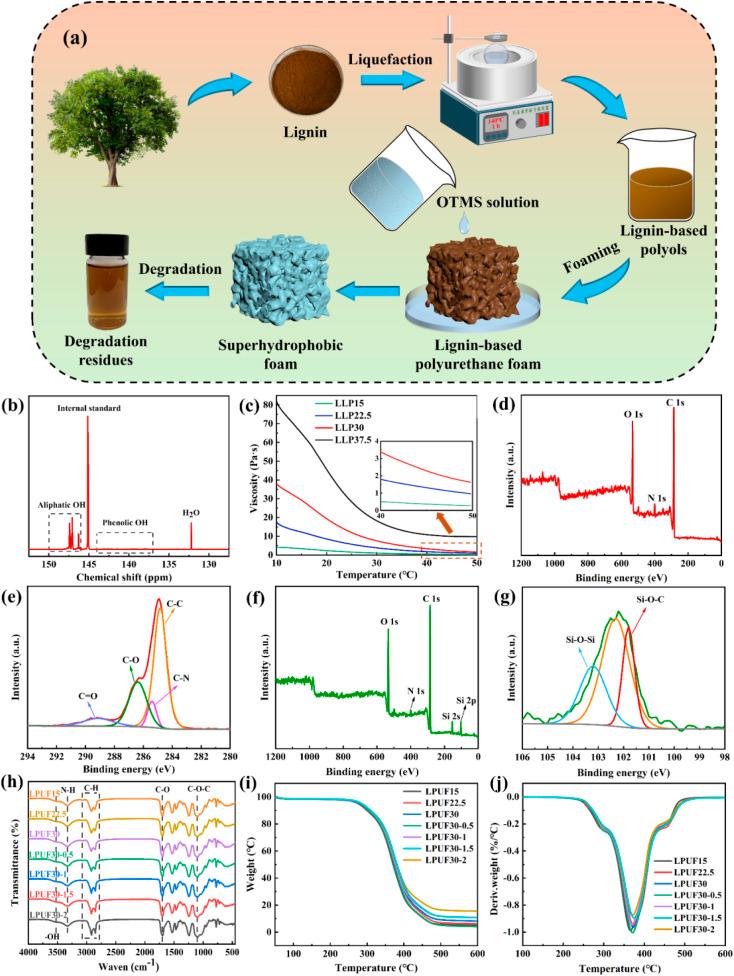
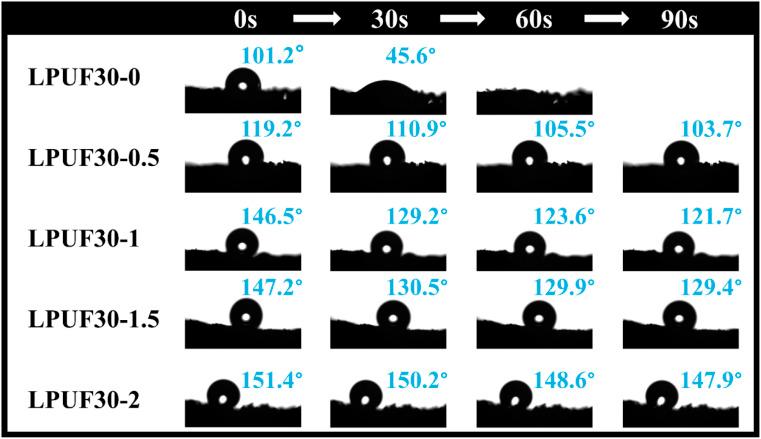
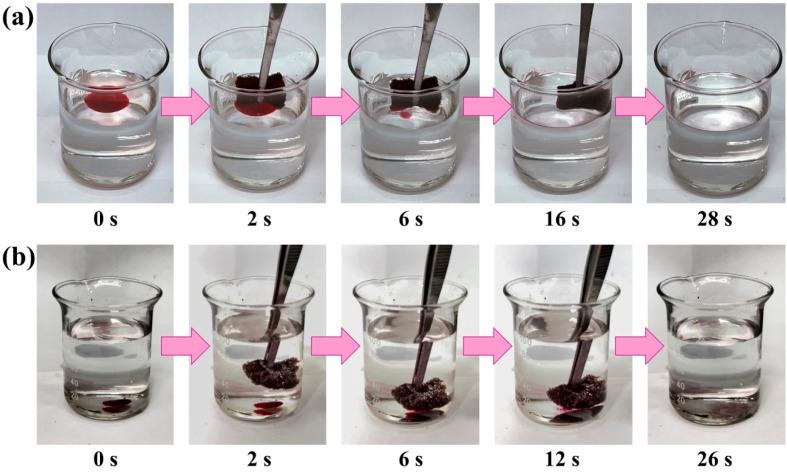
Green, efficient treatment of crude oil spills and oil pollutants is a global challenge, with adsorption technology favored for its efficiency and low environmental impact. The development of an environmentally friendly adsorbent with high hydrophobicity, excellent adsorption performance, and degradability is crucial to overcoming the limitations of petroleum-based adsorbents. Here, a lignin-based polyurethane foam (LPUF) with superhydrophobic and photothermal oil-absorbing properties was fabricated by incorporating octadecyltrimethoxysilane into the foam system. The modified foam showed a 151.4° water contact angle, as long-chain alkyl groups reduced surface energy, giving it superhydrophobicity. The foam adsorbent exhibited remarkable adsorption performance for a variety of organic solvents, achieving a maximum adsorption capacity of 20 g g and an oil-water separation efficiency exceeding 97%. Due to its outstanding elastic recovery properties, the foam exhibited only a 1.5% reduction in adsorption capacity after 10 adsorption-desorption cycles, indicating its strong potential for repeated adsorption and recovery. Under 1 kW m sunlight intensity, the surface temperature of the foam adsorbent rose to 79.7 °C within 350 seconds. The excellent photothermal conversion properties of the foam significantly reduced the viscosity of the surface crude oil, thereby increasing the adsorption rate. In addition, the modified foam adsorbent also demonstrated self-cleaning properties and could be completely degraded after 5 hours of treatment in an alkaline solution. The developed LPUF adsorbent exhibited superior hydrophobicity and oil-water separation capabilities, highlighting its potential for efficient oil pollutant removal, while also offering new avenues for the high-value utilization of renewable resources.
绿色、高效地处理原油泄漏和油污是一项全球性挑战,吸附技术因其效率高和对环境影响小而备受青睐。开发一种具有高疏水性、优异吸附性能和可降解性的环保吸附剂对于克服石油基吸附剂的局限性至关重要。在此,通过将十八烷基三甲氧基硅烷引入泡沫体系,制备了具有超疏水和光热吸油性能的木质素基聚氨酯泡沫(LPUF)。改性泡沫的水接触角为151.4°,因为长链烷基降低了表面能,使其具有超疏水性。该泡沫吸附剂对多种有机溶剂表现出显著的吸附性能,最大吸附容量达到20 g/g,油水分离效率超过97%。由于其出色的弹性恢复性能,该泡沫在10次吸附-解吸循环后吸附容量仅降低1.5%,表明其具有很强的重复吸附和回收潜力。在1 kW/m阳光强度下,泡沫吸附剂的表面温度在350秒内升至79.7°C。该泡沫优异的光热转换性能显著降低了表面原油的粘度,从而提高了吸附速率。此外,改性泡沫吸附剂还表现出自清洁性能,在碱性溶液中处理5小时后可完全降解。所开发的LPUF吸附剂具有优异的疏水性和油水分离能力,突出了其在高效去除油污染物方面的潜力,同时也为可再生资源的高值利用提供了新途径。


 Zotero 插件