
剖析创新系统的绩效因素并研究德国通过数字健康应用(DiGAs)的市场准入途径促进患者作用的尝试:探索性混合方法研究。
Unpacking Performance Factors of Innovation Systems and Studying Germany's Attempt to Foster the Role of the Patient Through a Market Access Pathway for Digital Health Applications (DiGAs): Exploratory Mixed Methods Study.
作者信息
Gehder Sara, Goeldner Moritz
机构信息
Working Group for Data-Driven Innovation, Hamburg University of Technology, Hamburg, Germany.
出版信息
J Med Internet Res. 2025 Jan 6;27:e66356. doi: 10.2196/66356.
BACKGROUND
Health care innovation faces significant challenges, including system inertia and diverse stakeholders, making regulated market access pathways essential for facilitating the adoption of new technologies. The German Digital Healthcare Act, introduced in 2019, offers a model by enabling digital health applications (DiGAs) to be reimbursed by statutory health insurance, improving market access and patient empowerment. However, the factors influencing the success of these pathways in driving innovation remain unclear.
OBJECTIVE
This study aims to identify the key performance factors of the innovation system shaped by the patient-relevant structural and procedural improvement (pSVV) pathway within the DiGA model. By examining how this pathway supports the entry of innovative digital health technologies, we seek to uncover the systemic dynamics that influence its effectiveness in fostering patient-centered digital health solutions.
METHODS
This study, conducted from May 2023 to November 2024, used a mixed methods approach. A descriptive analysis assessed how DiGA manufacturers use positive health care effects, giving a market overview of the pSVV technology. A qualitative analysis using grounded theory and Gioia methodology provided insights into stakeholder perspectives, focusing on manufacturers and regulatory bodies. A functional-structural analysis examined how components of the innovation system, such as actors, institutions, interactions, and infrastructure, interact and impact the effectiveness of the pathway.
RESULTS
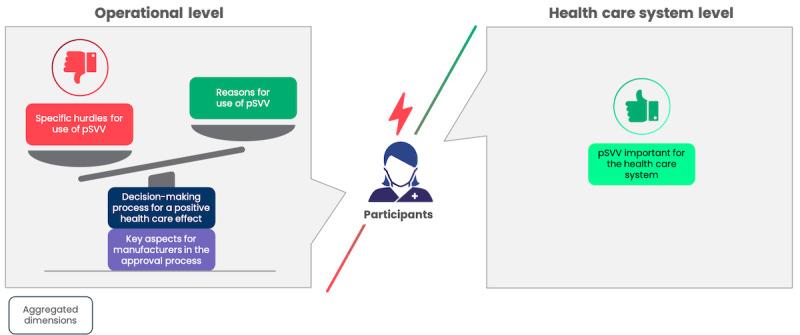
The descriptive analysis showed that only 11 (20%) of the 56 DiGAs available in Germany used the pSVV pathway, with only 1 (2%) provisionally listed DiGA using pSVV as a primary end point; 6 of 9 (67%) pSVV key areas were used. The qualitative analysis revealed that manufacturers prioritize demonstrating medical benefits over pSVV due to evidence requirements and uncertainties around pSVV acceptance. Operational barriers hindered the adoption of pSVV, despite a positive reception among stakeholders. The systemic analysis identified key issues, including a lack of entrepreneurial focus on pSVV, limited regulatory experience, inadequate measurement methods, and entrenched practices prioritizing medical benefits, that hinder market formation and legitimacy.
CONCLUSIONS
This study identifies key factors for effectively implementing innovation systems through regulated market access pathways, including content and format security, clearer framework specification, active innovation process management, and market formation stimulation. Addressing these factors can reduce uncertainties and promote wider adoption of digital health technologies. The findings highlight the need for future research on patient empowerment and the development of methodologies beyond traditional therapeutic outcomes.
背景
医疗保健创新面临重大挑战,包括系统惯性和利益相关者多元化,这使得规范的市场准入途径对于促进新技术的采用至关重要。2019年出台的德国数字医疗法案提供了一个模式,使数字健康应用程序(DiGAs)能够由法定医疗保险报销,改善了市场准入并增强了患者权能。然而,影响这些途径推动创新成功的因素仍不明确。
目的
本研究旨在确定由DiGA模型中与患者相关的结构和程序改进(pSVV)途径所塑造的创新系统的关键绩效因素。通过研究该途径如何支持创新数字健康技术的进入,我们试图揭示影响其在促进以患者为中心的数字健康解决方案方面有效性的系统动态。
方法
本研究于2023年5月至2024年11月进行,采用了混合方法。描述性分析评估了DiGA制造商如何利用积极的医疗保健效果,给出了pSVV技术的市场概况。使用扎根理论和乔亚方法的定性分析提供了利益相关者观点的见解,重点关注制造商和监管机构。功能结构分析研究了创新系统的组成部分,如行为者、机构、互动和基础设施,如何相互作用并影响该途径的有效性。
结果
描述性分析表明,德国现有的56种DiGAs中只有11种(20%)使用了pSVV途径,只有1种(2%)临时列出的DiGA将pSVV作为主要终点;9个pSVV关键领域中的6个被使用。定性分析表明,由于证据要求和pSVV接受度的不确定性,制造商将证明医疗益处置于pSVV之上的优先级更高。尽管利益相关者反应积极,但操作障碍阻碍了pSVV的采用。系统分析确定了关键问题,包括缺乏对pSVV的创业关注、监管经验有限、测量方法不足以及优先考虑医疗益处的根深蒂固的做法,这些都阻碍了市场形成和合法性。
结论
本研究确定了通过规范的市场准入途径有效实施创新系统的关键因素,包括内容和格式安全性、更清晰的框架规范、积极的创新过程管理以及刺激市场形成。解决这些因素可以减少不确定性并促进数字健康技术的更广泛采用。研究结果强调了未来对患者赋权以及超越传统治疗结果的方法学发展进行研究的必要性。


 Zotero 插件