
针对超重和肥胖成年人的情绪性进食干预措施:行为改变技术的系统评价与荟萃分析
Emotional Eating Interventions for Adults Living With Overweight and Obesity: A Systematic Review and Meta-Analysis of Behaviour Change Techniques.
作者信息
Power D, Jones A, Keyworth C, Dhir P, Griffiths A, Shepherd K, Smith J, Traviss-Turner G, Matu J, Ells L
机构信息
School of Health, Obesity Institute, Leeds Beckett University, Leeds, UK.
School of Psychology, Liverpool John Moores University, Liverpool, UK.
出版信息
J Hum Nutr Diet. 2025 Feb;38(1):e13410. doi: 10.1111/jhn.13410.
BACKGROUND
Emotional eating (EE) is a barrier to the long-term success of weight loss interventions. Psychological interventions targeting EE have been shown to reduce EE scores and weight (kg), though the mechanisms remain unclear. This review and meta-analysis aimed to identify the specific behaviour change techniques (BCTs) associated with improved outcomes.
METHODS
This is a review update and extension, with new studies extracted from searches of CINAHL, PsycINFO, MEDLINE and EMBASE 1 January 2022 to 31 April 2023. EE interventions for adults with BMI > 25 kg/m were considered for inclusion. Paper screening, extraction, BCT-coding and risk of bias were completed using the Template for Intervention Description and Replication (TIDieR) checklist, Behaviour Change Taxonomy v1 (BCTTv1) and Risk of Bias2 (RoB2)/Risk of Bias In Non-randomised Studies (ROBINS-I) tool. Narrative syntheses and random effects multi-level meta-analyses were conducted.
RESULTS
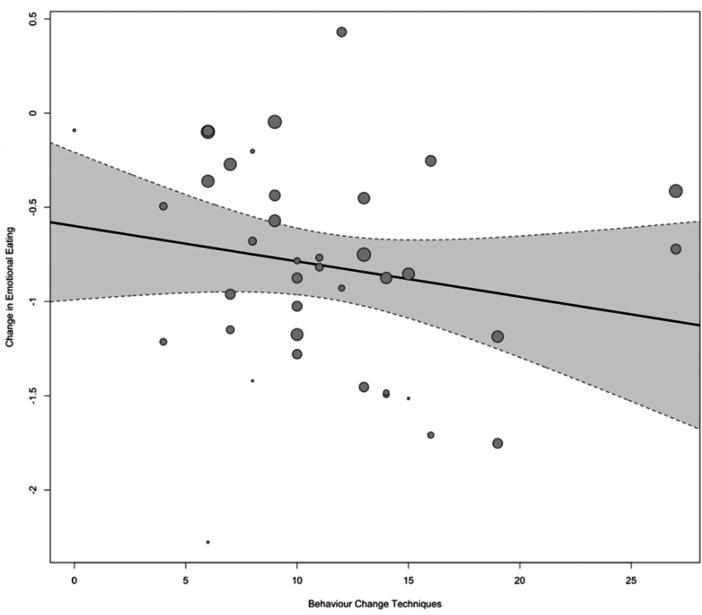
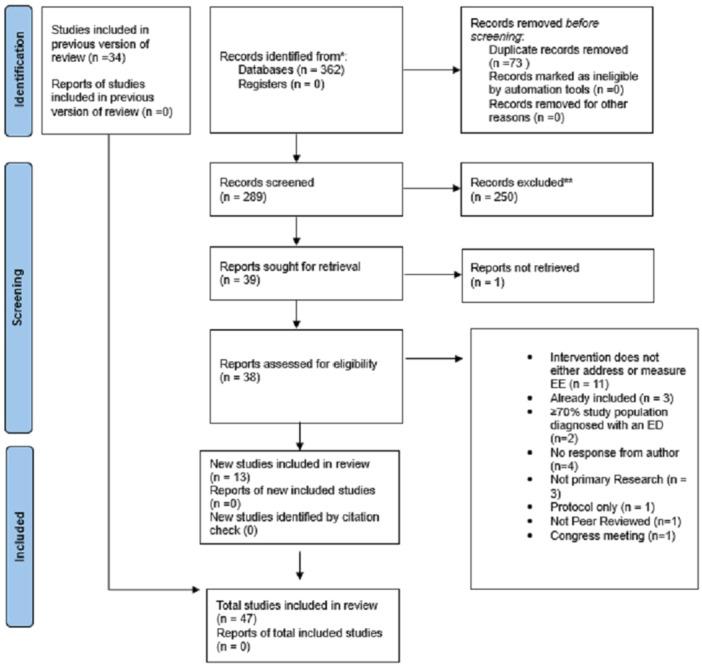
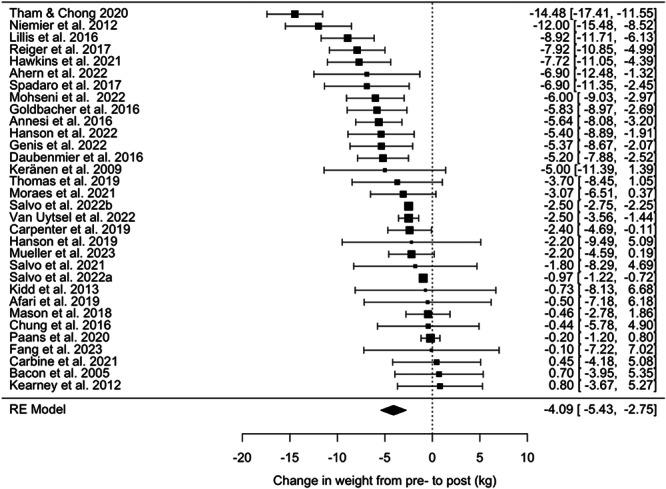
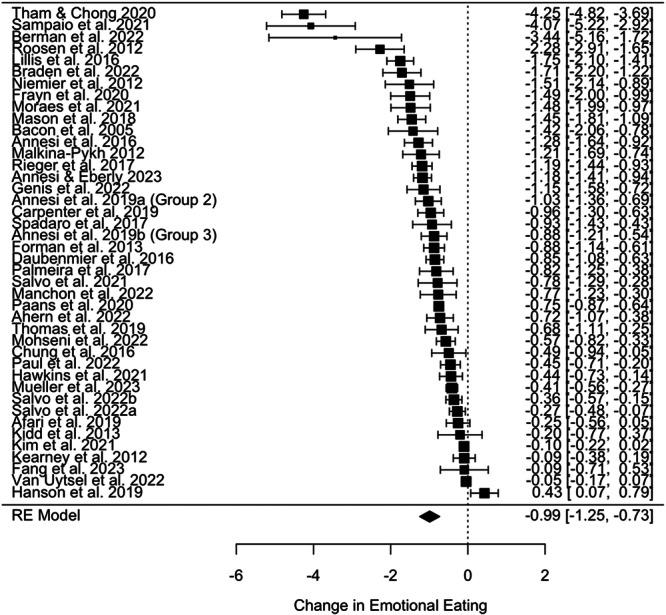
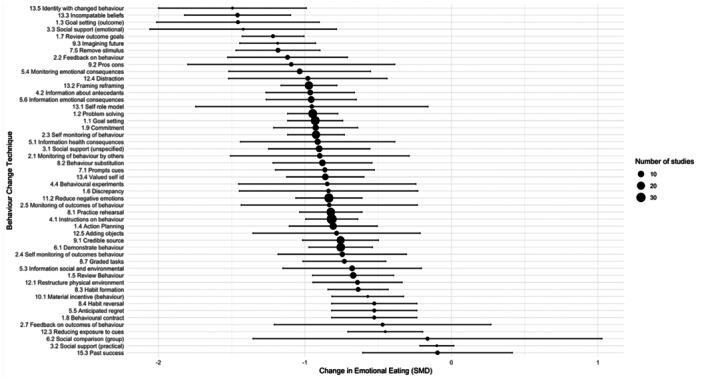
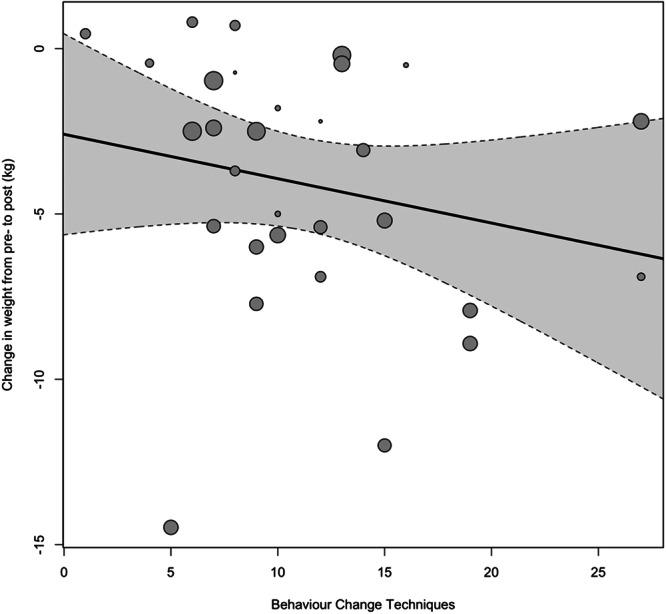
In total, 6729 participants were included across 47 studies (13 identified in the update). Forty-two studies contributed to the pooled estimate for the impact of interventions on EE (SMD = -0.99 [95% CI: -0.73 to -1.25], p < 0.001). Thirty-two studies contributed to the pooled estimate for the impact of interventions on weight (-4.09 kg [95% CI: -2.76 to -5.43 kg], p < 0.001). Five BCTs related to identity, values and self-regulation were associated with notable improvements to both weight and EE ('incompatible beliefs', 'goal setting outcome'. 'review outcome goals', 'feedback on behaviour' and 'pros/cons').
CONCLUSION
Implementation and evaluation of the highlighted BCTs are required. Weight management services should consider screening patients for EE to tailor interventions to individual needs.
背景
情绪化进食(EE)是减肥干预措施长期成功的一个障碍。针对情绪化进食的心理干预已被证明可降低情绪化进食得分和体重(千克),但其机制仍不清楚。本综述和荟萃分析旨在确定与改善结果相关的具体行为改变技术(BCTs)。
方法
这是一项综述更新与扩展,通过检索CINAHL、PsycINFO、MEDLINE和EMBASE数据库,提取了2022年1月1日至2023年4月30日的新研究。纳入了针对体重指数(BMI)>25 kg/m²的成年人的情绪化进食干预措施。使用干预描述与复制模板(TIDieR)清单、行为改变分类法第1版(BCTTv1)和偏倚风险2(RoB2)/非随机研究中的偏倚风险(ROBINS-I)工具完成文献筛选、提取、BCT编码和偏倚风险评估。进行了叙述性综合分析和随机效应多层次荟萃分析。
结果
47项研究共纳入6729名参与者(更新中确定了13项)。42项研究为干预对情绪化进食影响的合并估计做出了贡献(标准化均数差[SMD]=-0.99[95%置信区间:-0.73至-1.25],p<0.001)。32项研究为干预对体重影响的合并估计做出了贡献(-4.09千克[95%置信区间:-2.76至-5.43千克],p<0.001)。与身份、价值观和自我调节相关的五项行为改变技术与体重和情绪化进食的显著改善相关(“不相容信念”、“设定结果目标”、“回顾结果目标”、“行为反馈”和“利弊分析”)。
结论
需要实施和评估所强调的行为改变技术。体重管理服务应考虑对患者进行情绪化进食筛查,以便根据个体需求调整干预措施。

 Zotero 插件