
人工智能对医疗保健的影响:对诊断、治疗和运营效率方面进展的全面综述。
The Impact of Artificial Intelligence on Healthcare: A Comprehensive Review of Advancements in Diagnostics, Treatment, and Operational Efficiency.
作者信息
Faiyazuddin Md, Rahman Syed Jalal Q, Anand Gaurav, Siddiqui Reyaz Kausar, Mehta Rachana, Khatib Mahalaqua Nazli, Gaidhane Shilpa, Zahiruddin Quazi Syed, Hussain Arif, Sah Ranjit
机构信息
School of Pharmacy Al-Karim University Katihar India.
Centre for Global Health Research Saveetha Institute of Medical and Technical Sciences Tamil Nadu India.
出版信息
Health Sci Rep. 2025 Jan 5;8(1):e70312. doi: 10.1002/hsr2.70312. eCollection 2025 Jan.
BACKGROUND AND AIMS
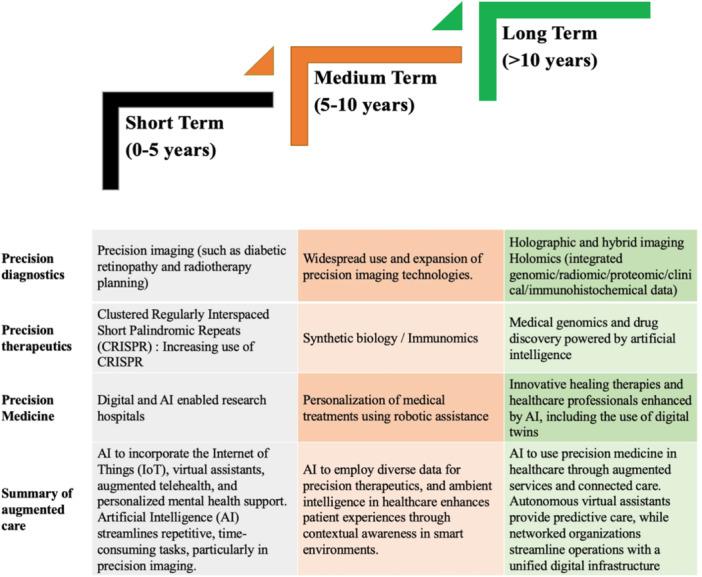
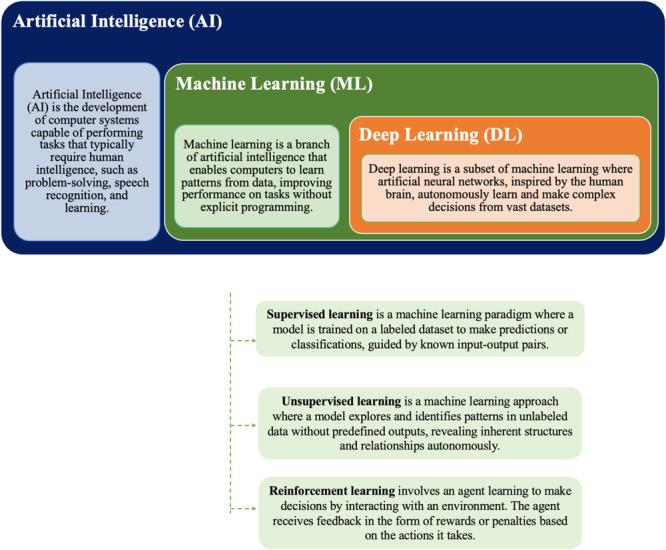
Artificial Intelligence (AI) beginning to integrate in healthcare, is ushering in a transformative era, impacting diagnostics, altering personalized treatment, and significantly improving operational efficiency. The study aims to describe AI in healthcare, including important technologies like robotics, machine learning (ML), deep learning (DL), and natural language processing (NLP), and to investigate how these technologies are used in patient interaction, predictive analytics, and remote monitoring. The goal of this review is to present a thorough analysis of AI's effects on healthcare while providing stakeholders with a road map for navigating this changing environment.
METHODS
This review analyzes the impact of AI on healthcare using data from the Web of Science (2014-2024), focusing on keywords like AI, ML, and healthcare applications. It examines the uses and effects of AI on healthcare by synthesizing recent literature and real-world case studies, such as Google Health and IBM Watson Health, highlighting AI technologies, their useful applications, and the difficulties in putting them into practice, including problems with data security and resource limitations. The review also discusses new developments in AI, and how they can affect society.
RESULTS
The findings demonstrate how AI is enhancing the skills of medical professionals, enhancing diagnosis, and opening the door to more individualized treatment plans, as reflected in the steady rise of AI-related healthcare publications from 158 articles (3.54%) in 2014 to 731 articles (16.33%) by 2024. Core applications like remote monitoring and predictive analytics improve operational effectiveness and patient involvement. However, there are major obstacles to the mainstream implementation of AI in healthcare, including issues with data security and budget constraints.
CONCLUSION
Healthcare may be transformed by AI, but its successful use requires ethical and responsible use. To meet the changing demands of the healthcare sector and guarantee the responsible application of AI technologies, the evaluation highlights the necessity of ongoing research, instruction, and multidisciplinary cooperation. In the future, integrating AI responsibly will be essential to optimizing its advantages and reducing related dangers.
背景与目的
人工智能(AI)开始融入医疗保健领域,正引领一个变革性的时代,影响诊断、改变个性化治疗并显著提高运营效率。本研究旨在描述医疗保健领域中的人工智能,包括机器人技术、机器学习(ML)、深度学习(DL)和自然语言处理(NLP)等重要技术,并探讨这些技术在患者互动、预测分析和远程监测中的应用方式。本综述的目标是全面分析人工智能对医疗保健的影响,同时为利益相关者提供应对这一不断变化环境的路线图。
方法
本综述利用科学网(2014 - 2024年)的数据,分析人工智能对医疗保健的影响,重点关注人工智能、机器学习和医疗保健应用等关键词。它通过综合近期文献和实际案例研究(如谷歌健康和IBM沃森健康),审视人工智能在医疗保健方面的用途和影响,突出人工智能技术、其有用的应用以及实施过程中遇到的困难,包括数据安全问题和资源限制。本综述还讨论了人工智能的新发展及其对社会的影响。
结果
研究结果表明,人工智能如何提升医疗专业人员的技能、改善诊断并开启更个性化治疗方案的大门,这体现在与人工智能相关的医疗保健出版物稳步增加,从2014年的158篇文章(占3.54%)增至2024年的731篇文章(占16.33%)。远程监测和预测分析等核心应用提高了运营效率和患者参与度。然而,人工智能在医疗保健领域的主流应用存在重大障碍,包括数据安全问题和预算限制。
结论
人工智能可能会改变医疗保健,但要成功应用需要符合道德和负责任地使用。为满足医疗保健行业不断变化的需求并确保人工智能技术的负责任应用,本评估强调持续研究、教育和多学科合作的必要性。未来,负责任地整合人工智能对于优化其优势并降低相关风险至关重要。


 Zotero 插件