
生物流体来源的外泌体长链非编码RNA:它们在肥胖及相关合并症中的潜力
Biofluid-Derived Exosomal LncRNAs: Their Potential in Obesity and Related Comorbidities.
作者信息
Ngowi Ebenezeri Erasto, Lu Tuyan, Liu Qing, Xie Xianghong, Wang Ning, Luo Liping, Deng Lijuan, Zhou Yinghua, Zhang Zhihong, Qiao Aijun
机构信息
Zhongshan Institute for Drug Discovery, Shanghai Institute of Materia Medica, Chinese Academy of Sciences, Zhongshan 528400, China.
Shanghai Institute of Materia Medica, Chinese Academy of Sciences, 555 Zu Chong Zhi Road, Shanghai 201203, China.
出版信息
Biology (Basel). 2024 Nov 26;13(12):976. doi: 10.3390/biology13120976.
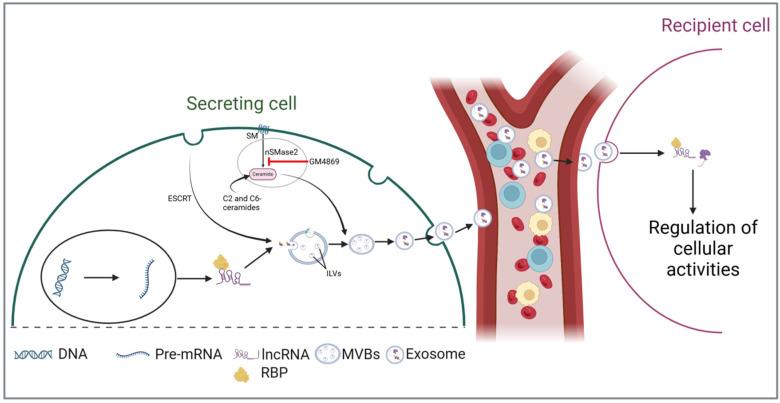
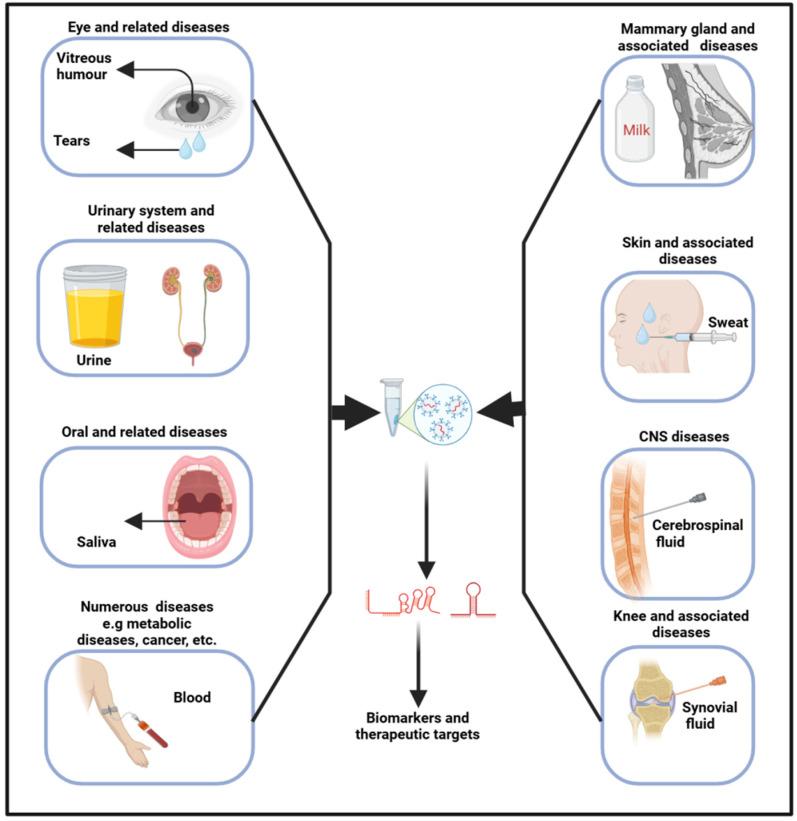
Obesity has escalated into a critical global health crisis, tripling in prevalence since the mid-1970s. This increase mirrors the rise in metabolic-associated diseases such as type 2 diabetes (T2D) and its complications, certain cancers, and cardiovascular conditions. While substantial research efforts have enriched our understanding and led to the development of innovative management strategies for these diseases, the suboptimal response rates of existing therapies remain a major obstacle to effectively managing obesity and its associated conditions. Over the years, inter-organ communication (IOC) has emerged as a crucial factor in the development and progression of metabolic disorders. Exosomes, which are nano-sized vesicular couriers released by cells, play a significant role in this communication by transporting proteins, lipids, and nucleic acids across cellular landscapes. The available evidence indicates that exosomal RNAs present in biofluids such as blood, urine, milk, vitreous humor (VH), and cerebrospinal fluid (CSF) are altered in numerous diseases, suggesting their diagnostic and therapeutic potential. Long non-coding RNAs contained in exosomes (exo-lncRNAs) have attracted considerable interest, owing to their ability to interact with critical components involved in a multitude of metabolic pathways. Recent studies have found that alterations in exo-lncRNAs in biofluids correlate with several metabolic parameters in patients with metabolic-associated conditions; however, their exact roles remain largely unclear. This review highlights the diagnostic and therapeutic potential of exosomal lncRNAs in obesity and its associated conditions, emphasizing their role in IOC and disease progression, aiming to pave the way for further research in this promising domain.
肥胖已升级为一场严重的全球健康危机,自20世纪70年代中期以来患病率增长了两倍。这种增长反映了代谢相关疾病的增加,如2型糖尿病(T2D)及其并发症、某些癌症和心血管疾病。虽然大量的研究工作丰富了我们的认识,并导致了针对这些疾病的创新管理策略的发展,但现有疗法的次优反应率仍然是有效管理肥胖及其相关疾病的主要障碍。多年来,器官间通讯(IOC)已成为代谢紊乱发生和发展的关键因素。外泌体是细胞释放的纳米级囊泡信使,通过在细胞环境中运输蛋白质、脂质和核酸,在这种通讯中发挥重要作用。现有证据表明,存在于血液、尿液、乳汁、玻璃体液(VH)和脑脊液(CSF)等生物流体中的外泌体RNA在许多疾病中发生了改变,表明它们具有诊断和治疗潜力。外泌体中包含的长链非编码RNA(exo-lncRNAs)因其能够与众多代谢途径中的关键成分相互作用而引起了相当大的关注。最近的研究发现,生物流体中exo-lncRNAs的改变与代谢相关疾病患者的几个代谢参数相关;然而,它们的确切作用在很大程度上仍不清楚。本综述强调了外泌体长链非编码RNA在肥胖及其相关疾病中的诊断和治疗潜力,强调了它们在IOC和疾病进展中的作用,旨在为这一有前景的领域的进一步研究铺平道路。

 Zotero 插件