
口服乳酸杆菌菌株可调节肺泡巨噬细胞并增强对呼吸道二重感染的防护。
Orally Administered Lactobacilli Strains Modulate Alveolar Macrophages and Improve Protection Against Respiratory Superinfection.
作者信息
Albarracin Leonardo, Dentice Maidana Stefania, Fukuyama Kohtaro, Elean Mariano, Argañaraz Aybar Julio Nicolás, Suda Yoshihito, Nishiyama Keita, Kitazawa Haruki, Villena Julio
机构信息
Laboratory of Immunobiotechnology, Reference Centre for Lactobacilli (CERELA-CONICET), San Miguel de Tucumán 4000, Argentina.
Food and Feed Immunology Group, Laboratory of Animal Food Function, Graduate School of Agricultural Science, Tohoku University, Sendai 980-8572, Japan.
出版信息
Biomolecules. 2024 Dec 14;14(12):1600. doi: 10.3390/biom14121600.
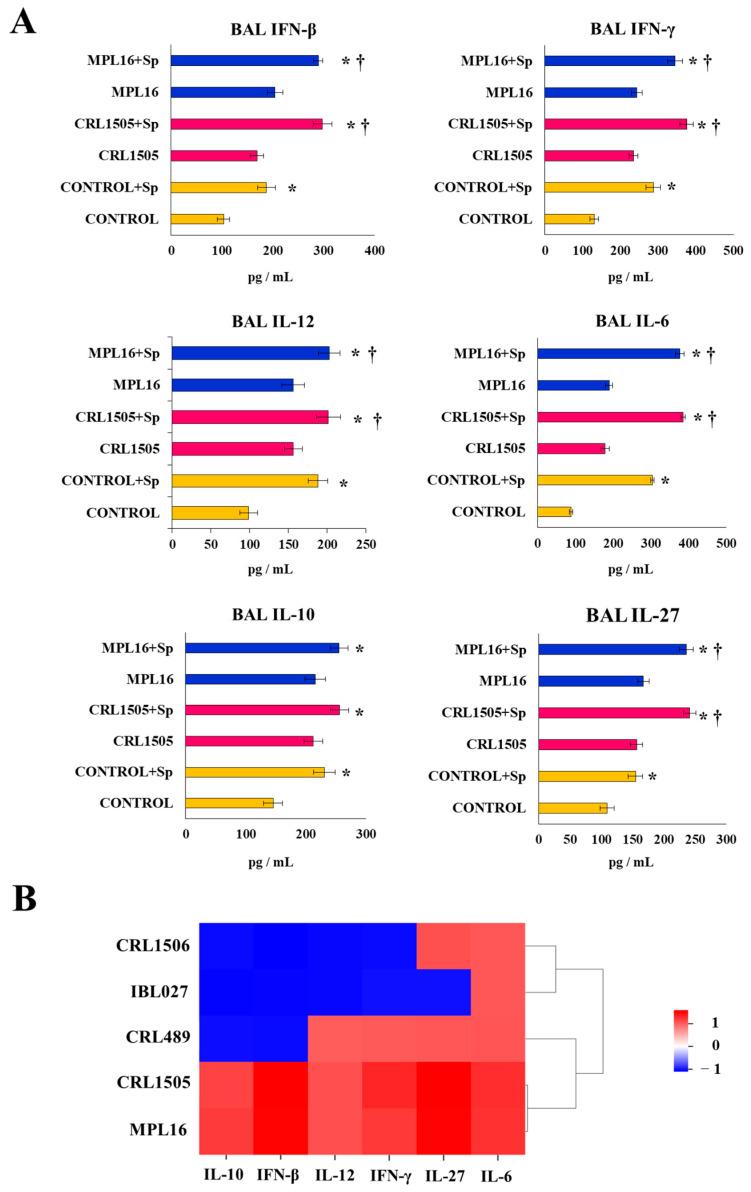
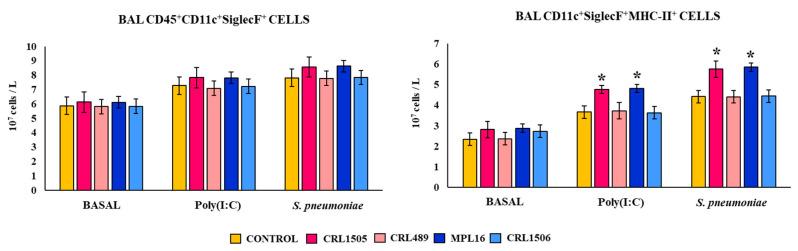
Orally administered immunomodulatory lactobacilli can stimulate respiratory immunity and enhance the resistance to primary infections with bacterial and viral pathogens. However, the potential beneficial effects of immunomodulatory lactobacilli against respiratory superinfection have not been evaluated. In this work, we showed that the feeding of infant mice with CRL1505 or MPL16 strains can reduce susceptibility to the secondary pneumococcal infection produced after the activation of TLR3 in the respiratory tract or after infection with RVS. The treatment of mice with CRL1505 or MPL16 strains by the oral route improved the production of interferons in the respiratory tract, differentially modulated the balance of pro- and anti-inflammatory cytokines, reduced bacterial replication, and diminished lung damage. Additionally, we demonstrated that orally administered lactobacilli confer longstanding protection against secondary infection and that this effect would be mediated by the stimulation of trained alveolar macrophages. This work contributes to revealing the mechanisms involved in the modulation of the gut-lung axis by beneficial microbes by demonstrating that specific lactobacilli strains, through the stimulation of the common mucosal immune system, would be able to support the development of trained alveolar macrophages that would confer longstanding protection against secondary bacterial challenges produced after a primary inflammatory event in the respiratory mucosa.
口服免疫调节性乳酸杆菌可刺激呼吸道免疫,增强对细菌和病毒病原体原发性感染的抵抗力。然而,免疫调节性乳酸杆菌对呼吸道二重感染的潜在有益作用尚未得到评估。在这项研究中,我们发现用CRL1505或MPL16菌株喂养幼鼠可降低呼吸道中TLR3激活后或感染RVS后产生的继发性肺炎球菌感染的易感性。通过口服途径用CRL1505或MPL16菌株治疗小鼠可改善呼吸道中干扰素的产生,差异性调节促炎和抗炎细胞因子的平衡,减少细菌复制,并减轻肺损伤。此外,我们证明口服乳酸杆菌可对继发性感染提供长期保护,并且这种作用将通过刺激受过训练的肺泡巨噬细胞来介导。这项研究通过证明特定的乳酸杆菌菌株通过刺激共同黏膜免疫系统,能够支持受过训练的肺泡巨噬细胞的发育,从而对呼吸道黏膜原发性炎症事件后产生的继发性细菌攻击提供长期保护,有助于揭示有益微生物调节肠-肺轴的机制。



 Zotero 插件