
加拿大社会人口统计学与上游石油和天然气作业的人口暴露情况。
Sociodemographic and Population Exposure to Upstream Oil and Gas Operations in Canada.
作者信息
Lavoie Martin, Risk David, Rainham Daniel
机构信息
Department of Earth and Environmental Sciences, St. Francis Xavier University, Antigonish, NS B2G 2W5, Canada.
School of Health and Human Performance, Dalhousie University, Halifax, NS B3H 4R2, Canada.
出版信息
Int J Environ Res Public Health. 2024 Dec 19;21(12):1692. doi: 10.3390/ijerph21121692.
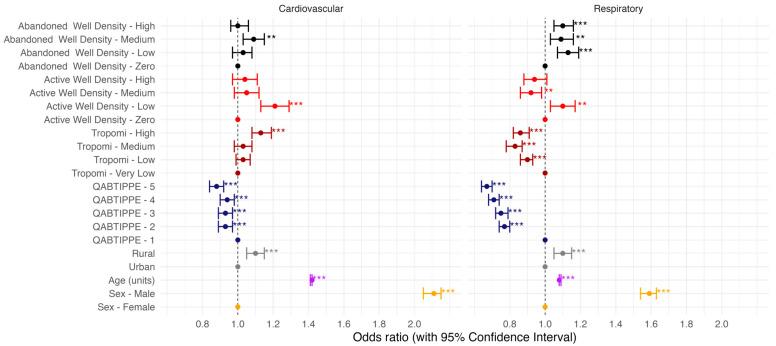
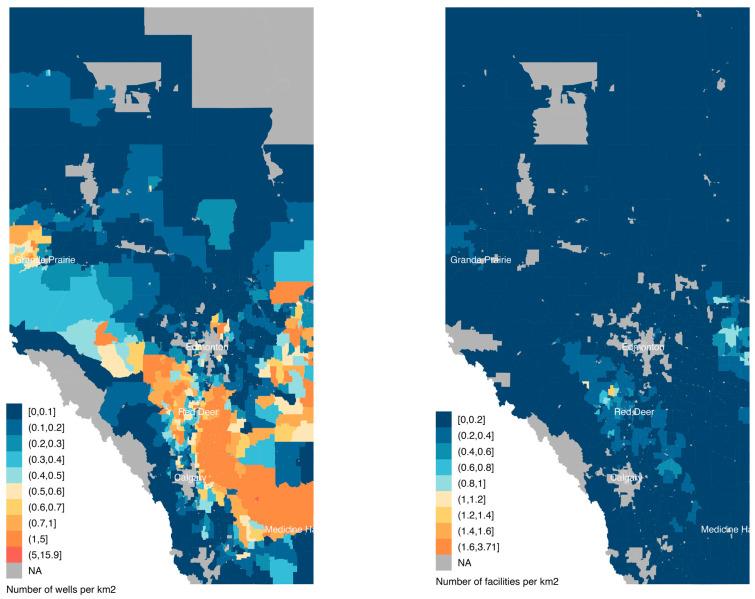
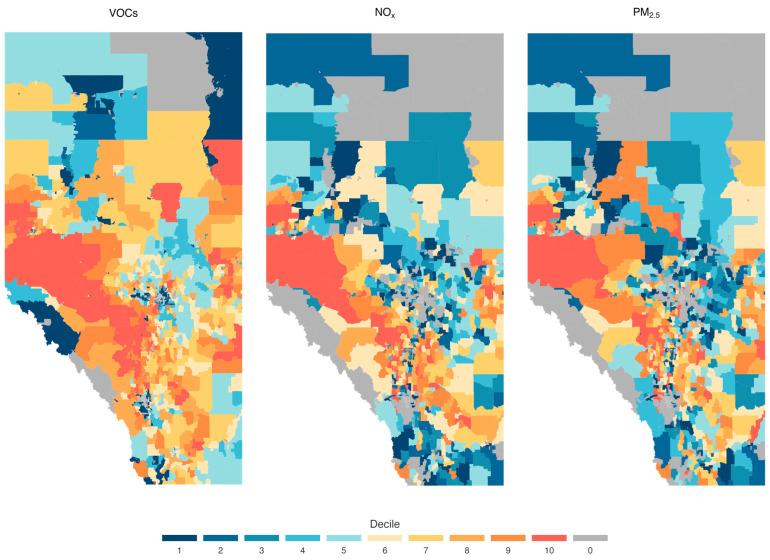
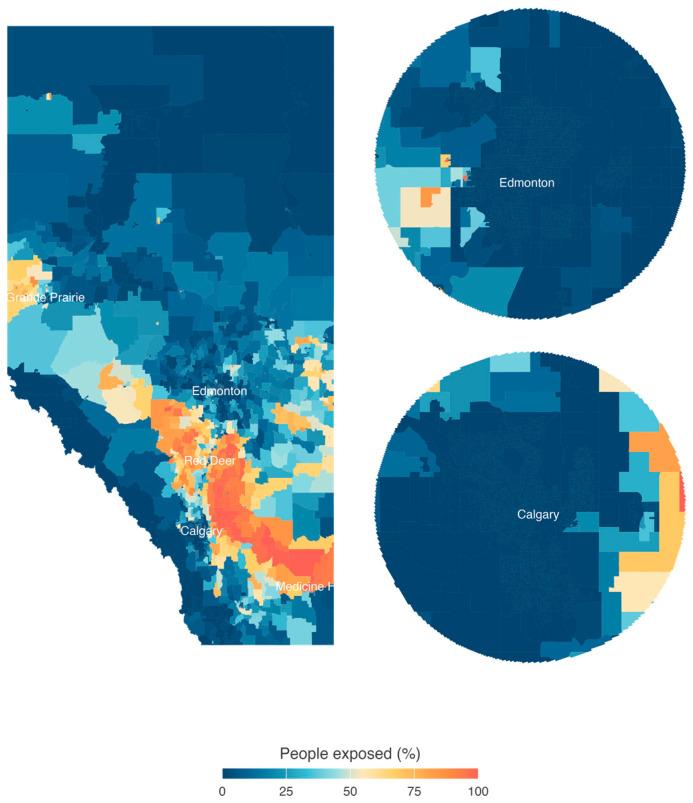
Canada, as one of the largest oil and gas producer in the world, is responsible for large emissions of methane, a powerful greenhouse gas. At low levels, methane is not a direct threat to human health; however, human health is affected by exposure to pollutants co-emitted with methane. The objectives of this research were to estimate and map pollutants emitted by the oil and gas industry, to assess the demographic of the population exposed to oil and gas activities, and to characterize the impact of well density on cardiovascular- and respiratory-related outcomes with a focus on Alberta. We estimated that ~13% and 3% people in Alberta reside, respectively, within 1.5 km of an active well and 1.5 km of a flare. Our analysis suggests that racial and socioeconomic disparities exist in residential proximity to active wells, with people of Aboriginal identity and people with less education being more exposed to active wells than the general population. We found increased odds of cardiovascular-related (1.13-1.29 for low active well density) and respiratory-related (1.07-1.19 for low active well density) outcomes with exposure to wells. Close to 100 countries produce oil and gas, making this a global issue. There is an important need for additional studies from other producing jurisdictions outside the United States.
加拿大作为全球最大的油气生产国之一,是强效温室气体甲烷的大量排放源。在低浓度水平下,甲烷对人类健康并无直接威胁;然而,人类健康会受到与甲烷共同排放的污染物的影响。本研究的目的是估算并绘制油气行业排放的污染物,评估受油气活动影响人群的人口统计学特征,并以艾伯塔省为重点,描述油井密度对心血管和呼吸系统相关疾病的影响。我们估计,艾伯塔省分别约有13%和3%的人口居住在活跃油井1.5公里范围内和火炬1.5公里范围内。我们的分析表明,在居住距离活跃油井方面存在种族和社会经济差异,原住民身份的人和受教育程度较低的人比普通人群更易接近活跃油井。我们发现,接触油井会增加心血管相关疾病(低活跃油井密度时为1.13 - 1.29)和呼吸系统相关疾病(低活跃油井密度时为1.07 - 1.19)的发病几率。近100个国家生产油气,这已成为一个全球性问题。非常有必要对美国以外的其他生产地区开展更多研究。
 Zotero 插件