
乳源细胞外囊泡对肠上皮细胞增殖的影响
The Effect of Milk-Derived Extracellular Vesicles on Intestinal Epithelial Cell Proliferation.
作者信息
Reif Shimon, Birimberg-Schwartz Liron, Grunewald Myriam, Duran Deborah, Sebbag-Sznajder Naama, Toledano Tirtsa, Musseri Mirit, Golan-Gerstl Regina
机构信息
Department of Pediatrics, Hadassah-Hebrew University Medical Center, Jerusalem 9166100, Israel.
Hadassah Organoid Center, The Hadassah Medical Organization, Jerusalem 9166100, Israel.
出版信息
Int J Mol Sci. 2024 Dec 17;25(24):13519. doi: 10.3390/ijms252413519.
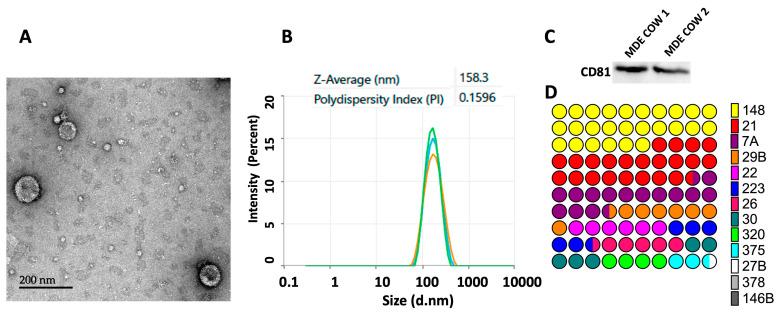
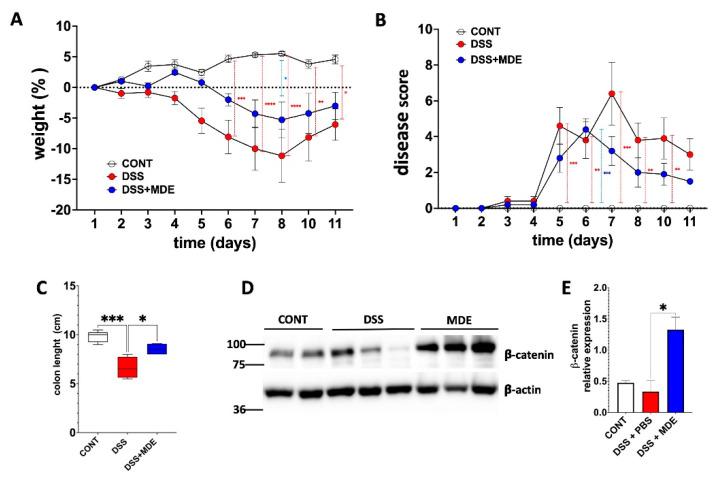
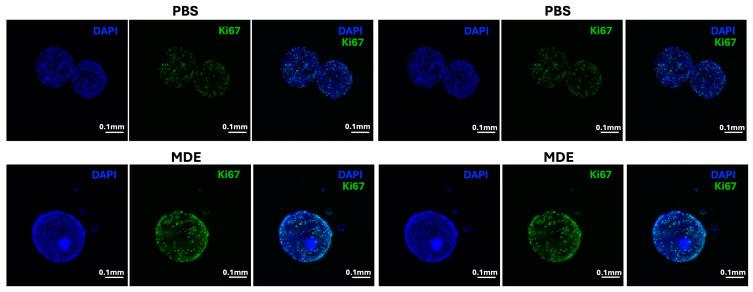
Inflammatory bowel disease (IBD) is a chronic, relapsing inflammation disorder of the gastrointestinal tract characterized by disrupted intestinal epithelial barrier function. Despite advances in treatment, including biological agents, achieving sustained remission remains challenging for many patients with IBD. This highlights the urgent need for novel therapeutic strategies. Milk-derived extracellular vesicles (MDEs) have emerged as a promising therapeutic option. In this study, we isolated and characterized MDEs and evaluated their effects on the function of intestinal epithelial cells (IECs). Using a murine model of Dextran Sulfate Sodium (DSS)-induced colitis, we observed that MDEs significantly ameliorated disease symptoms. The upregulation of β-catenin, a crucial mediator of Wnt signaling, in colonic tissues suggests that MDEs may facilitate epithelial regeneration and restore barrier function. In patient-derived colon organoids (PDCOs), MDEs were internalized and modulated the expression of key signaling molecules, such as the upregulation of β-catenin, cyclin D1, and the proliferation marker Ki67, indicating their potential to promote IEC proliferation and intestinal barrier repair. Importantly, MDEs demonstrated selective activity by downregulating β-catenin and cyclin D1 in colon cancer cells, leading to reduced proliferation. This selectivity indicates a dual therapeutic potential of MDEs for promoting healthy IEC proliferation while potentially mitigating malignancy risks.
炎症性肠病(IBD)是一种慢性复发性胃肠道炎症性疾病,其特征是肠道上皮屏障功能受损。尽管在治疗方面取得了进展,包括生物制剂,但对于许多IBD患者来说,实现持续缓解仍然具有挑战性。这凸显了对新型治疗策略的迫切需求。牛奶衍生的细胞外囊泡(MDEs)已成为一种有前景的治疗选择。在本研究中,我们分离并表征了MDEs,并评估了它们对肠上皮细胞(IECs)功能的影响。使用葡聚糖硫酸钠(DSS)诱导的结肠炎小鼠模型,我们观察到MDEs显著改善了疾病症状。结肠组织中Wnt信号的关键介质β-连环蛋白的上调表明,MDEs可能促进上皮再生并恢复屏障功能。在患者来源的结肠类器官(PDCOs)中,MDEs被内化并调节关键信号分子的表达,如β-连环蛋白、细胞周期蛋白D1的上调以及增殖标志物Ki67,表明它们具有促进IEC增殖和肠道屏障修复的潜力。重要的是,MDEs通过下调结肠癌细胞中的β-连环蛋白和细胞周期蛋白D1表现出选择性活性,导致增殖减少。这种选择性表明MDEs具有双重治疗潜力,既能促进健康的IEC增殖,又能潜在地降低恶性肿瘤风险。



 Zotero 插件