
戈谢病中的甲状腺功能与形态:探索内分泌学意义
Thyroid Function and Morphology in Gaucher Disease: Exploring the Endocrine Implications.
作者信息
Kałużna Małgorzata, Szczepanek-Parulska Ewelina, Moczko Jerzy, Czlapka-Matyasik Magdalena, Katulska Katarzyna, Ziemnicka Katarzyna, Kieć-Wilk Beata, Ruchała Marek
机构信息
Ward of Endocrinology, Metabolism and Internal Diseases Ward, University Clinical Hospital, 60-786 Poznan, Poland.
Department of Endocrinology, Metabolism and Internal Medicine, Poznan University of Medical Sciences, 60-355 Poznań, Poland.
出版信息
Int J Mol Sci. 2024 Dec 20;25(24):13636. doi: 10.3390/ijms252413636.
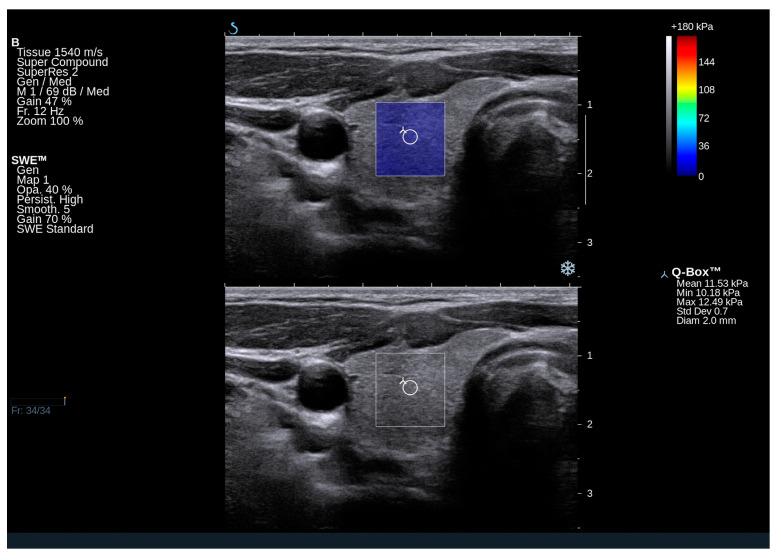
Gaucher disease (GD), the most common ultra-rare metabolic disorder, results from lipid accumulation. Systemic inflammation, cellular stress, and metabolic dysfunction may influence endocrine function, including the thyroid. This study evaluated thyroid function and morphology in 60 GD patients, alongside carbohydrate and lipid metabolism. Anthropometric, biochemical, and hormonal tests were conducted, including thyroid ultrasound and shear-wave elastography (SWE). Clinical data, bone mineral density (BMD), and body composition (BOD POD) analyses were correlated. Healthy controls, matched for age, sex, and body mass index (BMI), were included. GD patients had higher thyroid stimulating hormone (TSH) and free thyroxine (FT4) levels within normal limits. Hypothyroidism occurred in 7%, elevated anti-thyroid antibodies in 8%, and nodular goiter in 23%. Patients with nodular goiter showed lower platelet counts and higher chitotriosidase and glucosylsphingosine (lysoGb-1) levels. Patients with type 3 GD had larger thyroid volumes and greater stiffness on SWE than patients with type 1 GD. GD patients also exhibited increased metabolic risk, including central obesity and elevated glucose levels. GD patients, despite normal thyroid hormone levels, exhibit subtle alterations in thyroid function indicators. Their increased risk of central obesity and glucose metabolism disorders, alongside higher TSH and FT4 levels, underscores the need for closer monitoring and further investigation.
戈谢病(GD)是最常见的超罕见代谢紊乱疾病,由脂质蓄积引起。全身炎症、细胞应激和代谢功能障碍可能影响内分泌功能,包括甲状腺功能。本研究评估了60例GD患者的甲状腺功能和形态,以及碳水化合物和脂质代谢情况。进行了人体测量、生化和激素检测,包括甲状腺超声和剪切波弹性成像(SWE)。对临床数据、骨密度(BMD)和身体成分(BOD POD)分析进行了相关性研究。纳入了年龄、性别和体重指数(BMI)相匹配的健康对照者。GD患者的促甲状腺激素(TSH)和游离甲状腺素(FT4)水平在正常范围内较高。7%的患者发生甲状腺功能减退,8%的患者抗甲状腺抗体升高,23%的患者有结节性甲状腺肿。有结节性甲状腺肿的患者血小板计数较低,几丁质酶和葡萄糖神经酰胺(溶酶体Gb-1)水平较高。3型GD患者的甲状腺体积比1型GD患者更大,SWE检查显示硬度更高。GD患者还表现出代谢风险增加,包括中心性肥胖和血糖水平升高。GD患者尽管甲状腺激素水平正常,但甲状腺功能指标仍有细微变化。他们中心性肥胖和糖代谢紊乱的风险增加,以及较高的TSH和FT4水平,凸显了密切监测和进一步研究的必要性。


 Zotero 插件