
物种和组织差异对双氯芬酸体外葡萄糖醛酸化的影响。
Impact of Species and Tissue Differences on In Vitro Glucuronidation of Diclofenac.
作者信息
Asare Eric, Emmanuel Shalom, Du Ting, Xie Huan, Liang Dong, Gao Song
机构信息
Department of Pharmaceutical Science, College of Pharmacy and Health Sciences, Texas Southern University, 3100 Cleburne Street, Houston, TX 77004, USA.
出版信息
Molecules. 2024 Dec 12;29(24):5867. doi: 10.3390/molecules29245867.
BACKGROUND
The aim of this study is to determine the impact of species and tissue differences on the glucuronidation of diclofenac in vitro.
METHOD
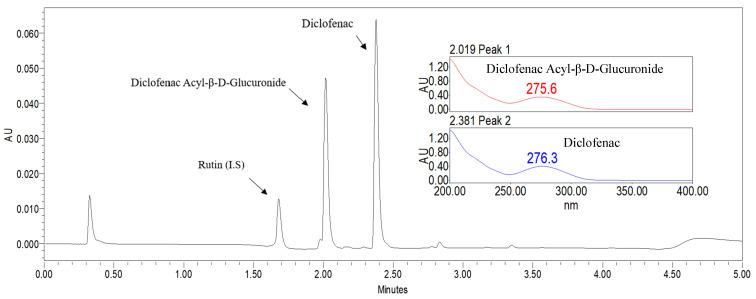
Microsomes from different species (rat, monkey, mouse, dog, and human) and rat and human tissues (liver, intestine, and kidney) were used to assess the rate of glucuronidation reaction of diclofenac. The metabolites were quantified using ultra high-performance liquid chromatography (UHPLC) and fitted into a Michaelis-Menten model to determine the metabolic kinetic parameters.
RESULTS
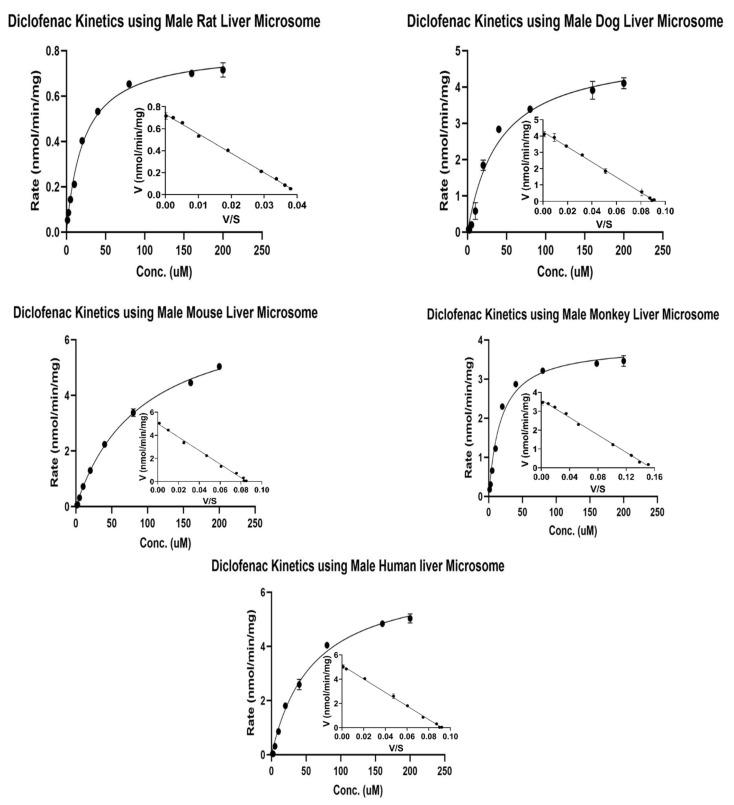
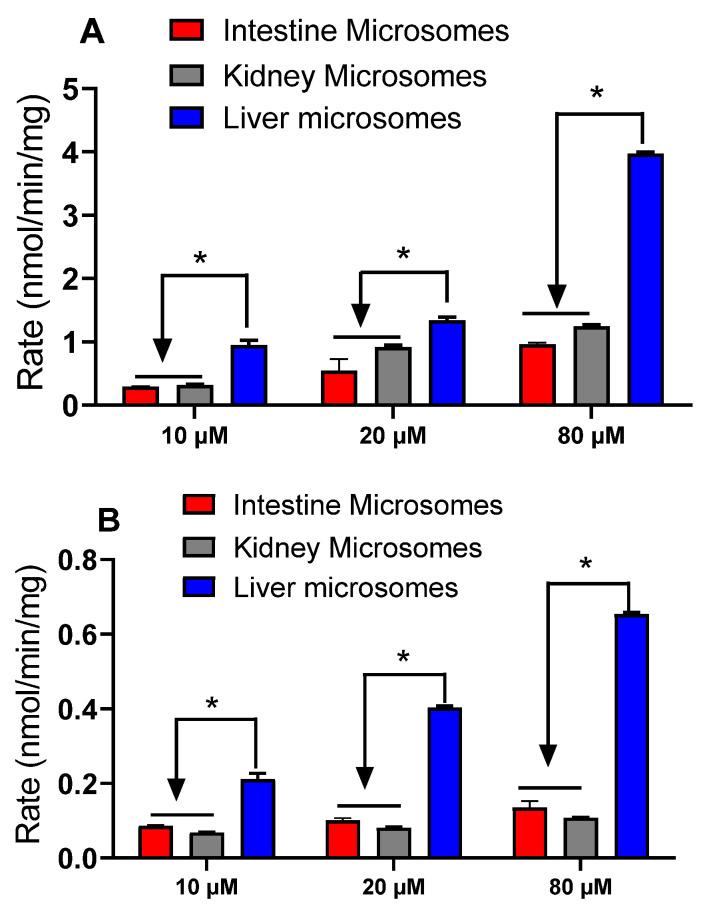
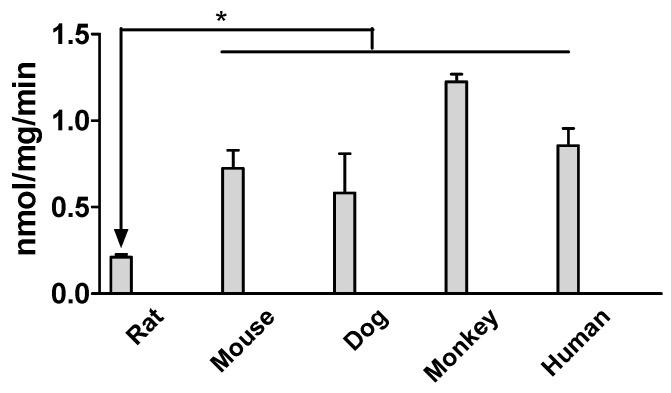
The results showed higher rates of metabolism in the liver as compared to that of the intestine and kidney by both human and rat tissues microsomes. There were also differences in the rate of metabolism in the liver across the tested species, with mouse liver microsome having the highest maximum reaction rate (V) at 7.22 nmol/min/mg followed by human liver microsome at 6.66 ± 0.33 nmol/min/mg, dog liver microsome at 5.05 ± 0.42 nmol/min/mg, monkey liver microsome at 3.88 ± 0.15 nmol/min/mg, and rat liver microsome at 0.83 ± 0.04 nmol/min/mg.
CONCLUSIONS
This study demonstrated that the liver is the major organ for the glucuronidation of diclofenac. In addition, glucuronidation of diclofenac was different across the tested species; therefore, the influence of species should be taken into consideration in the pharmacological, pharmaceutical, and toxicological study of diclofenac.
背景
本研究的目的是确定物种和组织差异对双氯芬酸体外葡萄糖醛酸化的影响。
方法
使用来自不同物种(大鼠、猴子、小鼠、狗和人类)以及大鼠和人类组织(肝脏、肠道和肾脏)的微粒体来评估双氯芬酸的葡萄糖醛酸化反应速率。使用超高效液相色谱(UHPLC)对代谢产物进行定量,并将其拟合到米氏模型中以确定代谢动力学参数。
结果
结果表明,人类和大鼠组织微粒体在肝脏中的代谢速率高于肠道和肾脏。在所测试的物种中,肝脏的代谢速率也存在差异,小鼠肝脏微粒体的最大反应速率(V)最高,为7.22 nmol/分钟/毫克,其次是人类肝脏微粒体,为6.66±0.33 nmol/分钟/毫克,狗肝脏微粒体为5.05±0.42 nmol/分钟/毫克,猴子肝脏微粒体为3.88±0.15 nmol/分钟/毫克,大鼠肝脏微粒体为0.83±0.04 nmol/分钟/毫克。
结论
本研究表明,肝脏是双氯芬酸葡萄糖醛酸化的主要器官。此外,双氯芬酸的葡萄糖醛酸化在不同测试物种中存在差异;因此,在双氯芬酸的药理学、药剂学和毒理学研究中应考虑物种的影响。

 Zotero 插件