
样品储存时间和温度对废水中呼吸道病毒和肠道病毒稳定性的影响
Impact of Sample Storage Time and Temperature on the Stability of Respiratory Viruses and Enteric Viruses in Wastewater.
作者信息
Qiu Judy Y, Mah Richardson, Brand Logan A, Pang Xiaoli, Barnett Melodie, Diggle Mathew, Tipples Graham
机构信息
Public Health Laboratory, Alberta Precision Laboratories, Edmonton, AB T6G 2J2, Canada.
Department of Laboratory Medicine and Pathology, University of Alberta, Edmonton, AB T6G 2R7, Canada.
出版信息
Microorganisms. 2024 Nov 29;12(12):2459. doi: 10.3390/microorganisms12122459.
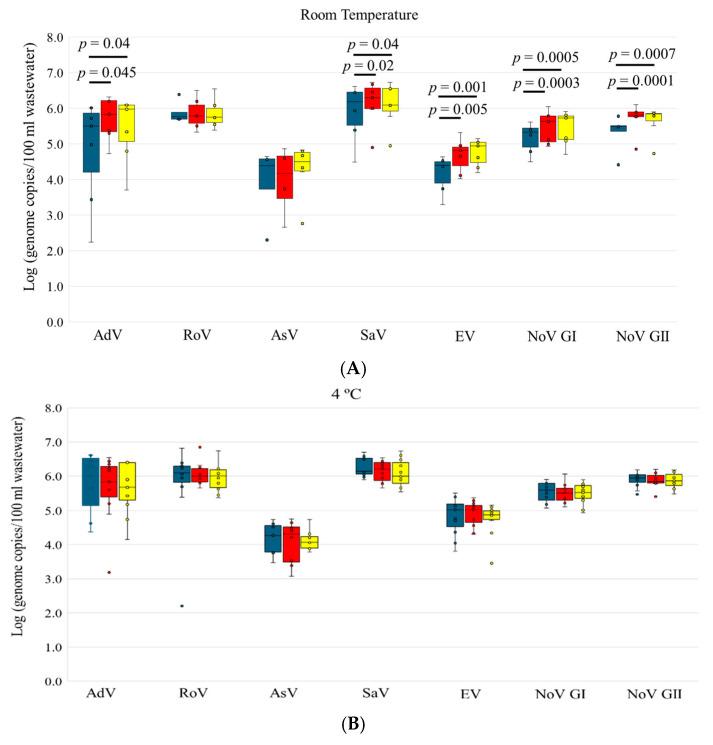
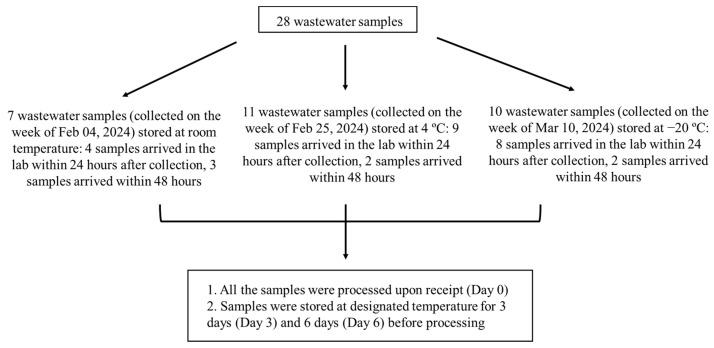
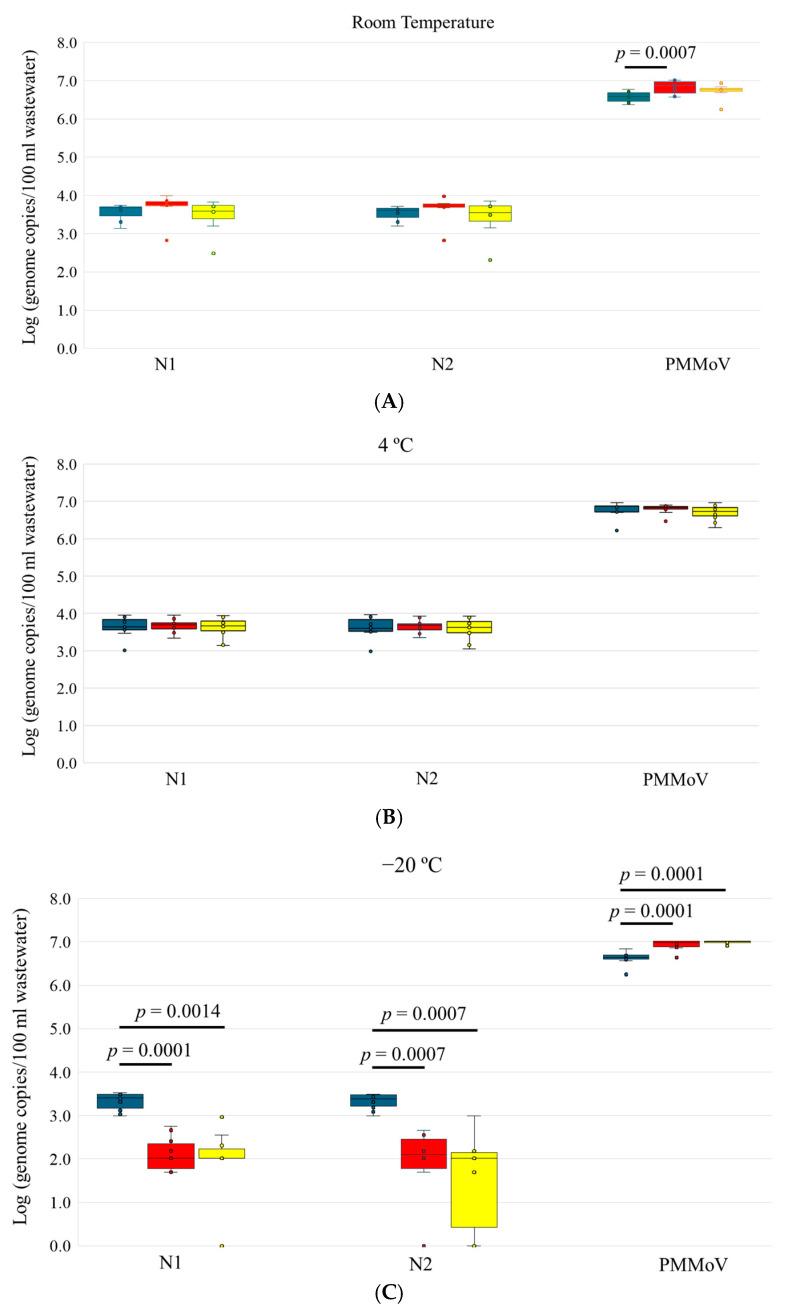
Wastewater-based surveillance (WBS) has been widely used to track SARS-CoV-2 as well as many other viruses in communities during the COVID pandemic and post-pandemic. However, it is still not clear how temperature and storage time would influence the stability of viruses in wastewater. In this study, we assessed the stability of SARS-CoV-2, pepper mild mottle virus (PMMoV), influenza viruses A (IAV) and B (IBV), respiratory syncytial virus (RSV), and enteric viruses in raw wastewater stored at room temperature, 4 °C, and -20 °C for 3 and 6 days. SARS-CoV-2, PMMoV, IAV, and enteric viruses were found to be stable up to 6 days after storing at room temperature or 4 °C. SARS-CoV-2 and RSV were more susceptible to freeze-thaw cycles compared to PMMoV and enteric viruses, which were relatively stable for up to 6 days stored at -20 °C. Low detection of IBV in wastewater made it difficult to evaluate the impact. Based on our findings, we conclude that short-term storage or transportation of wastewater samples within 6 days at ambient temperature or 4 °C is acceptable for the majority of these viruses. Freezing samples at -20 °C for even short periods is not recommended for WBS of respiratory viruses. The data obtained from this study can provide guidance for quality assurance purposes from the operational aspects of wastewater surveillance.
在新冠疫情期间及之后,基于废水的监测(WBS)已被广泛用于追踪社区中的严重急性呼吸综合征冠状病毒2(SARS-CoV-2)以及许多其他病毒。然而,温度和储存时间如何影响废水中病毒的稳定性仍不清楚。在本研究中,我们评估了SARS-CoV-2、辣椒轻斑驳病毒(PMMoV)、甲型流感病毒(IAV)和乙型流感病毒(IBV)、呼吸道合胞病毒(RSV)以及肠道病毒在室温、4℃和-20℃下储存3天和6天的原废水中的稳定性。发现SARS-CoV-2、PMMoV、IAV和肠道病毒在室温或4℃下储存6天后仍保持稳定。与PMMoV和肠道病毒相比,SARS-CoV-2和RSV对冻融循环更敏感,PMMoV和肠道病毒在-20℃下储存长达6天相对稳定。废水中IBV的检测率较低,难以评估其影响。基于我们的研究结果,我们得出结论,对于大多数这些病毒来说,废水样本在环境温度或4℃下6天内的短期储存或运输是可以接受的。不建议将样本在-20℃下冷冻哪怕很短时间用于呼吸道病毒的废水监测。本研究获得的数据可为废水监测操作层面的质量保证目的提供指导。

 Zotero 插件