
用于预测癌症患者生存情况的新型代谢预后评分
Novel metabolic prognostic score for predicting survival in patients with cancer.
作者信息
Shi Jinyu, Liu Chenan, Zheng Xin, Chen Yue, Zhang Heyang, Liu Tong, Zhang Qi, Deng Li, Shi Hanping
机构信息
Department of Gastrointestinal Surgery, Department of Clinical Nutrition, Beijing Shijitan Hospital, Capital Medical University, Beijing, 100038, China.
National Clinical Research Center for Geriatric Diseases, Xuanwu Hospital, Capital Medical University, Beijing, China.
出版信息
Sci Rep. 2025 Jan 8;15(1):1322. doi: 10.1038/s41598-025-85287-6.
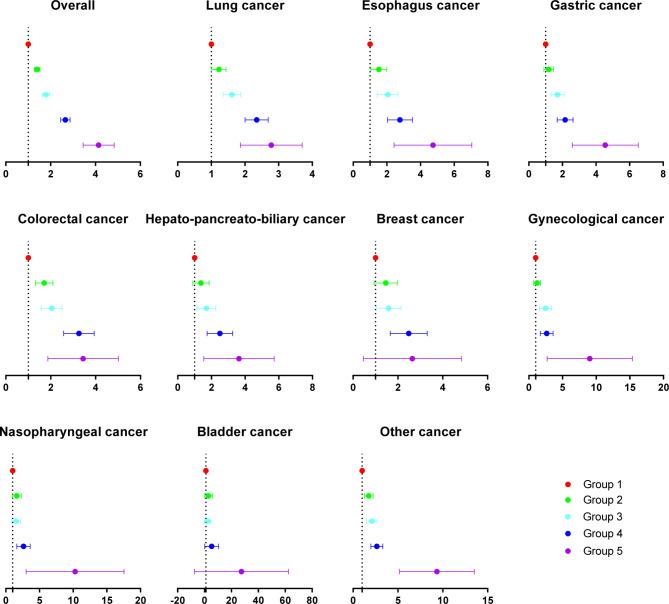
Cancer is a fatal disease with a high global prevalence and is associated with an increased incidence of metabolic disorders. This study aimed to develop a novel metabolic prognostic system to evaluate the overall metabolic disorder burden in cancer patients and its relationship with their prognosis. The patients in this study were enrolled from the Investigation on Nutrition Status and Clinical Outcome of Common Cancers (INSCOC) project. The least absolute shrinkage and selection operator (LASSO) analysis was used to screen for indicators of metabolic disorders. Cox regression analysis was used to evaluate the independent association between indicators of metabolic disorders and mortality in patients. The Kaplan-Meier method was used to evaluate the survival of patients with varying burdens of metabolic disorders. Finally, nomogram prognostic models and corresponding calculators were constructed and evaluated using the areas under the receiver operating characteristic curves (AUC), decision curve analysis (DCA), and calibration curves. Five of the 19 hematological indexes, including hemoglobin, neutrophils, direct bilirubin, albumin, and globulin, were selected as the evaluation indicators of metabolic disorder burden and independent risk factors for prognosis in cancer patients. Patients with a higher metabolic disorder burden had poorer survival rates. The AUC of the 1-year, 3-year, and 5-year overall survival of the prognostic nomogram was 0.678, 0.664, and 0.650, respectively. DCA and calibration curves indicated that the clinical benefit rate of metabolic disorder burden prognostic markers was high. Patients with a higher metabolic disorder burden had poorer survival rates. The nomogram and corresponding calculator can accurately evaluate the metabolic disorder burden and predict the prognosis of patients with cancer.
癌症是一种全球患病率很高的致命疾病,且与代谢紊乱发病率的增加有关。本研究旨在开发一种新型代谢预后系统,以评估癌症患者的整体代谢紊乱负担及其与预后的关系。本研究中的患者来自常见癌症营养状况与临床结局调查(INSCOC)项目。采用最小绝对收缩和选择算子(LASSO)分析筛选代谢紊乱指标。采用Cox回归分析评估代谢紊乱指标与患者死亡率之间的独立关联。采用Kaplan-Meier方法评估不同代谢紊乱负担患者的生存率。最后,使用受试者操作特征曲线(AUC)下面积、决策曲线分析(DCA)和校准曲线构建并评估列线图预后模型及相应计算器。19项血液学指标中的5项,包括血红蛋白、中性粒细胞、直接胆红素、白蛋白和球蛋白,被选为癌症患者代谢紊乱负担的评估指标和预后的独立危险因素。代谢紊乱负担较高的患者生存率较差。预后列线图1年、3年和5年总生存率的AUC分别为0.678、0.664和0.650。DCA和校准曲线表明代谢紊乱负担预后标志物的临床获益率较高。代谢紊乱负担较高的患者生存率较差。列线图及相应计算器可准确评估代谢紊乱负担并预测癌症患者的预后。


 Zotero 插件