
解析鸡毒支原体的抗菌药物耐药动态:抗生素与消毒剂相互作用的见解
Unraveling Antimicrobial Resistance Dynamics in Mycoplasma gallisepticum: Insights Into Antibiotic and Disinfectant Interactions.
作者信息
Kamal Mohamed A, Salem Heba M, Alhotan Rashed A, Hussein Elsayed O, Galik Branislav, Saleh Ahmed A, Kaoud Hussein A
机构信息
Department of Veterinary Hygiene and Management, Faculty of Veterinary Medicine, Cairo University, Giza, Egypt.
Department of Poultry Diseases, Faculty of Veterinary Medicine, Cairo University, Giza, Egypt.
出版信息
Vet Med Sci. 2025 Jan;11(1):e70181. doi: 10.1002/vms3.70181.
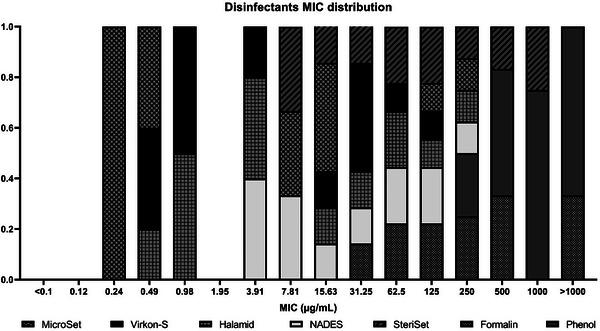
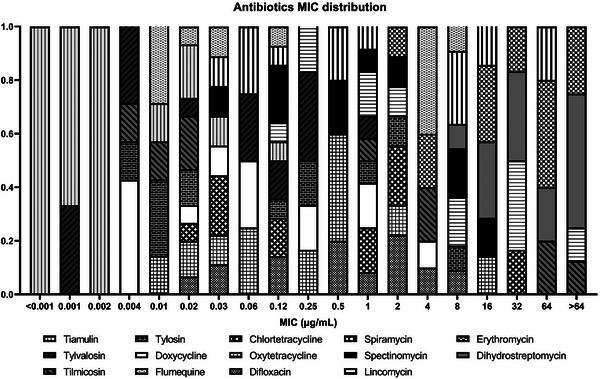
A major risk to the poultry industry is antimicrobial resistance (AMR), specifically with regard to Mycoplasma gallisepticum (MG) infections. The sensitivity patterns of 100 MG isolates to biocides and antibiotics were examined in this study to clarify the interactions between antimicrobial agents and resistance mechanisms. The antimicrobial activity against MG was assessed using broth microdilution, and the results are shown as the minimum inhibitory concentration (MIC) for each strain, the MIC distribution (range), the MIC, and/or the MIC. The statistical associations between the MICs of the antibiotics and biocides were investigated using regression model analysis and correlation coefficients. The absence of a cell wall in MG inherently confers resistance to beta-lactams, thereby necessitating the utilization of enrofloxacin, difloxacin, flumequine, oxytetracycline, chlortetracycline, doxycycline, tylosin, tilmicosin, tylvalosin, erythromycin, spiramycin, tiamulin, lincomycin, spectinomycin and dihydrostreptomycin. These antibiotics exhibited MIC values of 0.5, 0.5, 0.12, 0.062, 0.12, 0.031, 0.016, 0.016, 0.062, 16, 1, 0.008, 2, 0.5 and 32, respectively. In addition to antibiotics, disinfectants have garnered attention for their contribution to the development of AMR in MG. Notably, formalin, phenol, NADES, Halamid, Virkon-S, MicroSet and SteriSet exhibited MIC values of 125, 500, 31.25, 15.63, 15.63, 7.81 and 62.5, respectively. Significant positive correlations and direct associations were identified between various biocides and the development of antibiotic resistance, with coefficients ranging from 0.098 to 1.176. This research highlights the intricate nature of resistance profiles in MG and underscores the necessity for a thorough understanding of antimicrobial interactions. This finding emphasizes the importance of managing emerging AMR stemming from disinfectant misuse in the poultry farms to prevent additional constraints on antibiotic treatment options.
家禽业面临的一个主要风险是抗菌药物耐药性(AMR),特别是关于鸡毒支原体(MG)感染方面。本研究检测了100株MG分离株对杀菌剂和抗生素的敏感性模式,以阐明抗菌剂与耐药机制之间的相互作用。采用肉汤微量稀释法评估对MG的抗菌活性,结果以各菌株的最低抑菌浓度(MIC)、MIC分布(范围)、MIC和/或MIC表示。使用回归模型分析和相关系数研究抗生素和杀菌剂MIC之间的统计关联。MG缺乏细胞壁使其天然对β-内酰胺类耐药,因此需要使用恩诺沙星、二氟沙星、氟甲喹、土霉素、金霉素、强力霉素、泰乐菌素、替米考星、泰万菌素、红霉素、螺旋霉素、替米考星、林可霉素、壮观霉素和二氢链霉素。这些抗生素的MIC值分别为0.5、0.5、0.12、0.062、0.12、0.031、0.016、0.016、0.062、16、1、0.008、2、0.5和32。除抗生素外,消毒剂因其对MG中AMR发展的作用而受到关注。值得注意的是,福尔马林、苯酚、天然深共熔溶剂(NADES)、哈拉米德、卫可Virkon-S、MicroSet和SteriSet的MIC值分别为125、500、31.25、15.63、15.63、7.81和62.5。在各种杀菌剂与抗生素耐药性发展之间发现了显著的正相关和直接关联,系数范围为0.098至1.176。本研究突出了MG耐药谱的复杂性,并强调了全面了解抗菌相互作用的必要性。这一发现强调了管理家禽养殖场因消毒剂滥用而产生的新出现的AMR的重要性,以防止对抗生素治疗选择造成更多限制。
 Zotero 插件